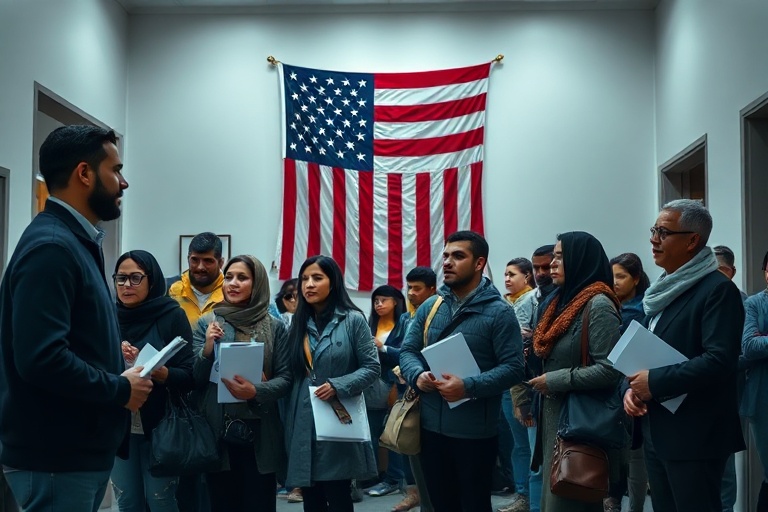
Citizenship Explained: Rights, Duties, and Global Changes
“`html
Understanding Citizenship: Rights, Responsibilities, and Modern Challenges
The concept of citizenship has evolved far beyond the simple act of holding a passport. It now encompasses a complex web of legal, social, and ethical dimensions that shape how individuals interact with their communities and governments. In an increasingly globalized world, citizenship is both a privilege and a responsibility that demands careful consideration.
The foundation of modern citizenship lies in the balance between rights granted by the state and duties expected from the individual. This relationship has developed over centuries, from ancient city-states to contemporary nation-states, reflecting changing values and power structures. Today, citizenship determines everything from voting rights to access to social services, making it one of the most significant markers of identity and belonging.
The Legal Framework of Citizenship
Citizenship is first and foremost a legal status, defined by national laws and international agreements. Most countries recognize two primary forms: birthright citizenship, acquired automatically at birth, and naturalization, which requires meeting specific criteria such as residency duration or language proficiency.
Across different nations, the requirements for citizenship vary dramatically. Some countries, like the United States and Canada, employ jus soli (right of the soil), granting citizenship to anyone born within their borders. Others, such as Germany and Israel, primarily use jus sanguinis (right of blood), where citizenship is determined by the nationality of one’s parents. These distinctions create vastly different pathways to belonging, with significant implications for immigration policy and national identity.
The legal framework also extends to dual citizenship, which has become increasingly common. While some nations encourage dual allegiance, others restrict it, requiring individuals to renounce previous citizenships. The rise of dual citizenship reflects both the mobility of modern populations and the changing nature of national identity in a connected world.
Rights and Responsibilities: The Dual Nature of Citizenship
Citizenship is not merely a collection of privileges but a reciprocal relationship between the individual and the state. This dynamic is perhaps most visible in the realm of political participation. Voting rights, jury service, and eligibility for public office represent the most direct ways citizens influence governance. However, these rights come with corresponding responsibilities: obeying laws, paying taxes, and defending the nation when called upon.
Beyond political engagement, citizenship carries social obligations that shape community life. Jury duty, while often inconvenient, serves as a cornerstone of the justice system. Tax obligations fund essential public services from schools to infrastructure. Military service, though less common in many modern nations, remains a critical duty in others. These responsibilities underscore how citizenship functions as a social contract between individuals and their collective society.
The modern era has expanded this relationship further. Environmental stewardship, for instance, is increasingly framed as a civic duty, with citizens expected to reduce carbon footprints and advocate for sustainability. Digital citizenship has emerged as another layer, requiring responsible online behavior and protection of personal data. These evolving responsibilities reflect how citizenship adapts to technological and environmental changes.
Key Aspects of Citizenship Rights and Responsibilities
- Political rights: Voting, running for office, petitioning government
- Civil rights: Freedom of speech, religion, and assembly
- Social rights: Access to education, healthcare, and social security
- Economic rights: Ability to work, own property, and engage in commerce
- Duties: Tax payment, jury service, military defense when required
- Emerging responsibilities: Environmental protection, digital literacy, community service
Citizenship in a Globalized World
The traditional model of citizenship faces unprecedented challenges in an era of globalization. Economic migration, digital nomadism, and climate-induced displacement have complicated the relationship between individuals and nations. These trends raise fundamental questions about who deserves citizenship and under what conditions.
One of the most pressing issues involves economic citizenship programs, where wealthy individuals can purchase residency or citizenship through significant investments. Countries like Malta and Portugal have developed these programs to attract foreign capital, but critics argue they commodify citizenship and create unequal access to rights. This development challenges traditional notions of citizenship as an earned privilege rather than a purchasable commodity.
Global challenges also test the limits of national citizenship. Climate change, pandemics, and cybersecurity threats cannot be contained within national borders. These issues force nations to reconsider how citizenship functions in a world where collective action often transcends individual national identities. The rise of supranational organizations like the European Union demonstrates how citizenship can evolve beyond traditional nation-state boundaries.
Technology further complicates this landscape. Digital platforms allow individuals to participate in global communities while remaining physically located elsewhere. This disconnect between physical presence and social belonging challenges traditional definitions of citizenship that rely heavily on territorial connections. Some scholars argue that we are moving toward a model of “post-national citizenship,” where rights and responsibilities extend beyond any single nation-state.
The Future of Citizenship: Emerging Models and Debates
As traditional citizenship models face pressure from globalization and technological change, new forms of belonging are emerging. Concepts like “denizen” citizenship, where long-term residents gain some rights without full status, and “digital citizenship,” where online participation carries legal weight, are gaining traction in policy discussions.
One innovative approach involves “climate citizenship,” where environmental contribution rather than national origin determines certain rights and responsibilities. This model reflects growing recognition that climate action requires coordinated global responses that transcend traditional citizenship boundaries. Similarly, the concept of “urban citizenship” acknowledges that many rights and duties now derive from residence in specific cities rather than nation-states.
These emerging models reflect a fundamental shift in how societies conceptualize belonging. The traditional link between citizenship and national identity is weakening as people develop multiple, overlapping identities tied to work, community, and digital spaces. This evolution suggests that future citizenship may be less about singular allegiance to a nation and more about participation in various overlapping communities.
The debate over citizenship is ultimately a debate about who belongs and who is excluded. As societies become more diverse and interconnected, the answers to these questions will determine not just individual fates but the very nature of collective governance. The challenge lies in creating citizenship models that balance national sovereignty with global responsibility, individual rights with community needs.
For those seeking to understand their place in this evolving landscape, cultural analysis and political commentary on Dave’s Locker provide valuable context. These discussions help illuminate how citizenship operates as both a personal identity and a collective framework that shapes our world.
Conclusion
Citizenship remains one of humanity’s most powerful and contested concepts. From its ancient origins to its modern manifestations, it has always been more than a legal status—it is a fundamental expression of belonging and responsibility. As our world becomes more interconnected and complex, the definition and practice of citizenship will continue to evolve, challenging us to reconsider what it means to belong.
The future of citizenship will likely involve a mix of traditional and innovative models, reflecting the diverse ways people connect to communities and nations. What remains constant is the need for citizenship to serve as a bridge between individual rights and collective responsibility, between local belonging and global connection. In this sense, citizenship is not just about where we come from, but about how we choose to engage with the world around us.