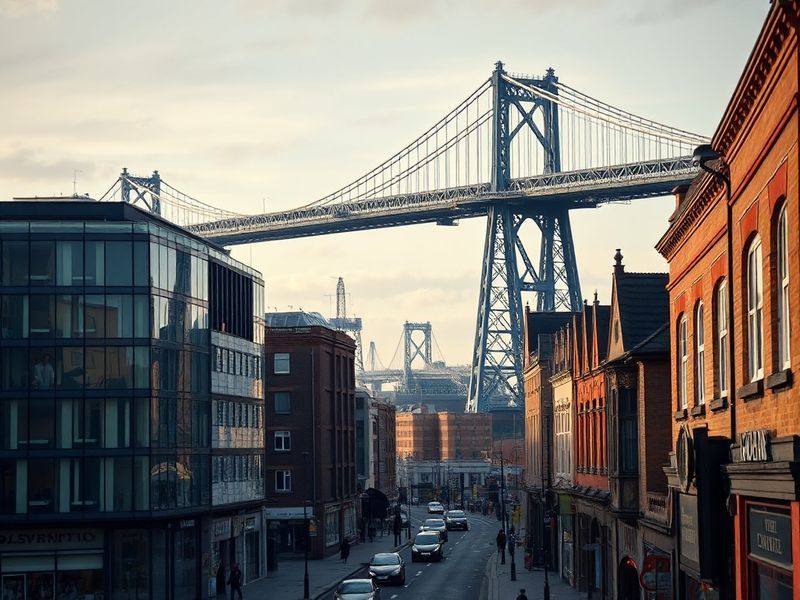
Middlesbrough: From Ironopolis to Cultural Revival in Northern England
“`html
Middlesbrough: A Northern England Gem with Industrial Roots and Cultural Pride
Nestled on the southern bank of the River Tees, Middlesbrough stands as a testament to resilience, reinvention, and regional identity in Northern England. Often overshadowed by larger metropolitan neighbors, this town of around 148,000 people has carved out a unique niche—balancing post-industrial grit with a thriving cultural scene and a strong sense of community. Its story is one of transformation, from a small rural settlement to a key player in Britain’s industrial revolution, and now, a town forging its path in the 21st century.
The Birth of an Industrial Powerhouse
Middlesbrough’s modern identity began in 1829, when industrialist Joseph Pease and a group of Quaker businessmen established a new port on the River Tees. The location was strategic: close to rich ironstone deposits in Cleveland and accessible to the North Sea. Within decades, Middlesbrough became the beating heart of iron and steel production in Britain. By the late 19th century, it was known as “Ironopolis,” a city of chimneys and furnaces that powered the nation’s industrial expansion.
The boom attracted thousands of workers from across the UK and Ireland. Irish laborers, Scottish engineers, and Welsh miners converged on the town, creating a diverse and industrious population. This influx shaped Middlesbrough’s character—hardworking, pragmatic, and unapologetically working-class. The legacy of this era remains visible in the town’s architecture, with terraced housing and grand civic buildings built to serve a growing workforce.
Yet, like many industrial towns, Middlesbrough faced decline. The collapse of the steel industry in the 1980s and 1990s left deep scars. British Steel’s closure in 1992 marked the end of an era and threw thousands out of work. The town’s unemployment rate soared, and its future seemed uncertain. But Middlesbrough refused to fade into obscurity.
Rebirth and Reinvention: A Cultural and Educational Hub
In the years since the collapse of heavy industry, Middlesbrough has undergone a quiet but significant transformation. Rather than relying solely on manufacturing, the town has diversified into education, healthcare, digital services, and the creative industries. Teesside University, with its growing reputation in digital media and engineering, has become a major anchor institution. The university’s presence has injected youthful energy into the town, supporting a thriving student community and fostering innovation.
The town’s cultural sector has also flourished. Middlesbrough Institute of Modern Art (MIMA), opened in 2007, has gained national recognition for its bold exhibitions and community-focused programming. It stands as a symbol of the town’s commitment to arts and culture, challenging perceptions of what a post-industrial town can achieve. Meanwhile, venues like the Middlesbrough Town Hall and the newly refurbished Empire Cinema host live music, theatre, and film, drawing audiences from across the region.
Sport plays a central role in local identity. Middlesbrough Football Club, despite its financial struggles, remains a point of pride. The Riverside Stadium, opened in 1995, is more than a football ground—it’s a communal space where generations gather. The club’s recent promotion to the Championship in 2023 has renewed hope, proving that sport can still be a unifying force in tough times.
Key Aspects of Middlesbrough’s Modern Identity
- Economic Diversification: Moving from steel and shipbuilding to digital, education, and green energy sectors.
- Cultural Renaissance: MIMA, Town Hall, and grassroots arts initiatives fostering creativity and inclusion.
- Strong Community Ethos: A working-class spirit that values solidarity, humor, and local pride.
- Educational Growth: Teesside University driving innovation and attracting young talent to the area.
- Green Ambitions: Plans for sustainable development, including the Tees Valley Mayor’s clean energy initiatives.
Challenges and Aspirations: What Lies Ahead?
Despite its progress, Middlesbrough continues to face challenges. Deprivation levels remain above the national average, with pockets of deep poverty and poor health outcomes. Life expectancy in some areas is several years below the UK average. These disparities reflect decades of economic neglect and underinvestment. The town’s regeneration has been uneven—some neighborhoods have seen renewal, while others lag behind.
Transport infrastructure remains a concern. While the A19 and A66 provide vital links, public transport is patchy, and rail services have suffered from underinvestment. The proposed Tees Valley Metro could improve connectivity, but progress has been slow. Meanwhile, the cost-of-living crisis has hit hard, with rising energy bills and food prices disproportionately affecting low-income families.
Yet, there are reasons for optimism. The Tees Valley Combined Authority, led by Mayor Ben Houchen, has prioritized investment in advanced manufacturing, clean energy, and digital skills. The area is positioning itself as a leader in hydrogen and carbon capture, potentially transforming the former industrial landscape into a hub for green technology. Projects like the South Tees Development Corporation aim to regenerate former industrial sites, creating jobs and attracting businesses.
Middlesbrough also benefits from its location. Just 20 minutes from the North York Moors and close to coastal towns like Redcar and Whitby, it offers a gateway to both urban and rural experiences. Its proximity to Newcastle and Durham provides access to larger job markets, while its affordability makes it attractive to young professionals and artists priced out of bigger cities.
Why Middlesbrough Matters Beyond Its Borders
Middlesbrough’s story is not unique—but it is instructive. It reflects the broader challenges and opportunities facing post-industrial towns across the UK and Europe. While cities like Manchester and Leeds have reinvented themselves with tech and media sectors, smaller towns like Middlesbrough must find their own paths. Their success often hinges on local leadership, community engagement, and national policy support.
The town’s ability to reinvent itself offers lessons in resilience. It shows that identity is not fixed; it can evolve with vision and effort. Middlesbrough’s working-class roots have not been erased by decline or gentrification—they have been reinterpreted. Today, the town embraces its industrial heritage while embracing new industries, from gaming and digital design to renewable energy.
Moreover, Middlesbrough challenges the narrative that only global cities can thrive in the modern economy. It proves that smaller urban centers can foster creativity, innovation, and community—if given the chance. Its story is one of quiet defiance: not waiting for salvation from above, but building from within.
A Town That Defines Itself
Middlesbrough is often described in terms of what it lacks—a big city, a major port, a national football team—but such comparisons underestimate its strength. This is a town that has survived collapse, redefined itself, and continues to grow on its own terms. It is a place where people are proud to say, “I’m from Middlesbrough,” not despite its challenges, but because of its character.
As the UK grapples with regional inequality and the future of post-industrial towns, Middlesbrough offers a case study in survival and adaptation. It reminds us that progress is not always about shiny new developments or high-rise skylines. Sometimes, it’s about the quiet rebuilding of a community—one that refuses to be forgotten.
In an era where economic narratives often focus on London, the Southeast, and a handful of “super-cities,” Middlesbrough stands as a reminder: the future of Britain is not monolithic. It is diverse. It is local. And it is being written every day by people who choose to stay, to build, and to believe in their town.
For more on cultural and community-driven movements shaping towns like Middlesbrough, visit Culture on Dave’s Locker.
Discover how grassroots initiatives are driving change in post-industrial regions in our Analysis section.