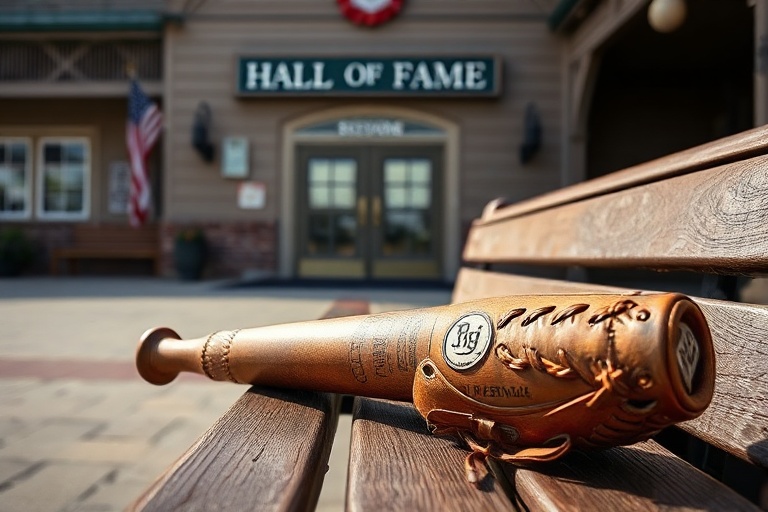
Cooperstown: Baseball’s Hallowed Ground and Timeless Legacy
“`html
Baseball’s Hallowed Ground: The Enduring Legacy of Cooperstown
Perched in the rolling hills of upstate New York, Cooperstown is more than a quaint village. It is the spiritual home of baseball, where legends are enshrined and history is etched in stone. The National Baseball Hall of Fame and Museum stands as a monument to the game’s greatest players, ensuring their stories endure long after their cleats have been retired.
The village’s connection to baseball began in 1936, when the Hall of Fame was established to honor the sport’s pioneers. Since then, Cooperstown has become synonymous with excellence, tradition, and the timeless allure of America’s pastime. For fans and players alike, a visit to the Hall of Fame is more than a pilgrimage—it’s a rite of passage.
The Birthplace of the Hall of Fame
Cooperstown’s claim to baseball fame rests on more than myth. According to legend, Abner Doubleday invented baseball here in 1839, though historians debate the accuracy of that story. What is undeniable is the village’s role in preserving the game’s legacy. The Hall of Fame was founded by the National League, the Baseball Writers’ Association of America, and the minor leagues, uniting the sport under one roof.
The museum’s collection spans over 40,000 artifacts, including Babe Ruth’s bat, Jackie Robinson’s jersey, and Derek Jeter’s cleats. Each exhibit tells a story—not just of athletic achievement, but of cultural impact. Baseball has mirrored America’s social evolution, from segregation to integration, from rural pastimes to global spectacles. Cooperstown captures that journey in vivid detail.
Beyond the Hall: Cooperstown’s Year-Round Appeal
While the Hall of Fame is the village’s crown jewel, Cooperstown offers much more. The Doubleday Café, a historic gathering spot, has served meals to baseball legends for generations. Nearby, the Fenimore Art Museum showcases Native American and folk art, adding depth to the region’s cultural tapestry.
Sports enthusiasts can tee off at the Leatherstocking Golf Course, designed by Robert Trent Jones, or cast a line in the nearby Susquehanna River. The village also hosts the annual Baseball Hall of Fame Classic, a weekend of legends playing alongside fans in a celebration of the game. Even off-season, Cooperstown pulses with life, its charm undiminished by the absence of crowds.
A Model for Sports Preservation
Cooperstown’s success as a baseball destination raises questions about how other sports might emulate its approach. The Pro Football Hall of Fame in Canton, Ohio, and the Naismith Memorial Basketball Hall of Fame in Springfield, Massachusetts, serve similar roles, but none match Cooperstown’s intimate scale or cultural resonance. What sets it apart is its ability to blend history with accessibility.
The Hall of Fame’s induction process, while occasionally controversial, ensures that only the most deserving players earn a plaque. The voting system—conducted by baseball writers—has evolved over time, reflecting shifts in how the game’s legacy is interpreted. Recent debates over modern metrics like WAR (Wins Above Replacement) highlight the tension between traditionalism and analytics in baseball’s evaluation of talent.
For younger generations, Cooperstown represents both a connection to the past and a bridge to the future. The museum’s educational programs introduce children to baseball’s history, while its digital archives make artifacts accessible worldwide. In an era of instant replays and algorithm-driven highlights, Cooperstown reminds fans that the game’s soul lies in its stories.
Why Cooperstown Still Matters Today
The village’s enduring appeal speaks to baseball’s unique place in American culture. Unlike sports driven by global expansion, baseball remains deeply tied to its roots, its traditions woven into the fabric of small-town America. Cooperstown embodies that connection, offering a rare sanctuary where history is not just remembered but felt.
For players, a trip to Cooperstown is often a career highlight. Many visit after retiring, reflecting on their journey amid the halls of fame. For fans, it’s a chance to stand where legends once stood, to touch the same walls that bore witness to history. In a world of fleeting trends, Cooperstown endures because it celebrates something permanent: the love of the game.
As baseball continues to evolve, Cooperstown remains its most steadfast guardian. It is a place where the crack of the bat echoes through time, where every artifact tells a story, and where the spirit of the game lives on. Whether you’re a die-hard fan or a casual observer, Cooperstown invites you to be part of its legacy.
Key Takeaways About Cooperstown
- The Hall of Fame’s origins: Founded in 1936, the National Baseball Hall of Fame and Museum is the village’s defining landmark, preserving the game’s history through artifacts and exhibits.
- More than just baseball: Cooperstown’s appeal extends beyond the Hall of Fame, with museums, golf courses, and seasonal events that attract visitors year-round.
- Cultural significance: The village reflects baseball’s role in American society, from its rural beginnings to its modern global reach.
- A blueprint for sports preservation: Cooperstown’s model of blending history, accessibility, and tradition offers lessons for other sports halls of fame.
- Enduring relevance: In an era of digital distractions, Cooperstown reminds fans why baseball’s stories continue to resonate across generations.
For those looking to explore baseball’s past or simply soak in the charm of a historic American village, Cooperstown delivers an experience unlike any other. It’s a place where the past and present collide, where every visit feels like a homecoming.
To dive deeper into baseball’s history and culture, visit Dave’s Locker Sports for more articles and insights. For a broader look at America’s sporting traditions, check out Dave’s Locker News for the latest updates.
Cooperstown isn’t just a destination—it’s a testament to the power of sport to unite, inspire, and endure.