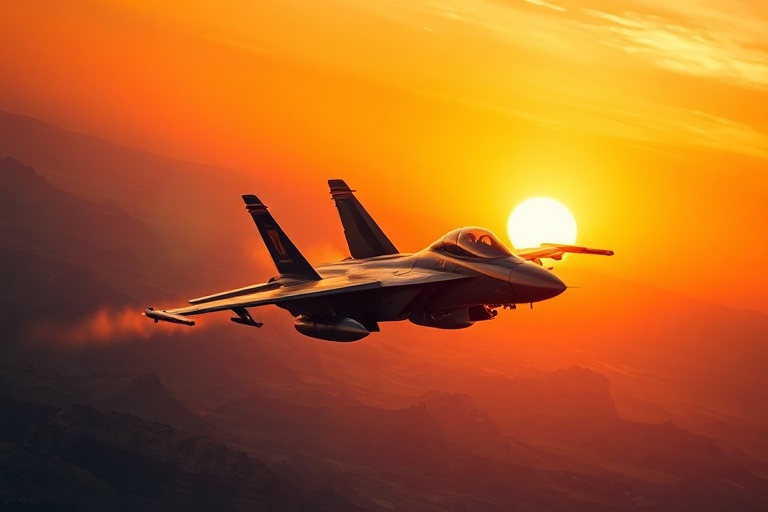
Few aircraft in military aviation history have achieved the legendary status of the Grumman F-14 Tomcat. Designed as a dual-role fighter and interceptor, the Tomcat became the backbone of U.S. Navy carrier air wings during the Cold War and beyond. Its sleek design, unmatched capabilities, and cultural impact—amplified by its starring role in Top Gun—cemented its place in both military and pop culture annals.
The Genesis of a Legend: Development and Design
The F-14 Tomcat emerged from a critical need in the late 1960s. The U.S. Navy required a new air superiority fighter to replace the F-4 Phantom II, which struggled against agile Soviet MiG fighters during the Vietnam War. Grumman, already renowned for its naval aircraft like the F-9 Cougar and F-11 Tiger, won the contract in 1969. The result was a groundbreaking machine that blended raw power with cutting-edge technology.
The Tomcat’s design was revolutionary. Its variable-sweep wings allowed pilots to optimize performance for both high-speed intercepts and low-speed maneuverability. Powered by two Pratt & Whitney TF30 turbofan engines—later upgraded to F110s—the F-14 could reach speeds exceeding Mach 2.4. Its armament was equally impressive: a 20mm M61 Vulcan cannon, AIM-54 Phoenix long-range missiles, AIM-7 Sparrows, and AIM-9 Sidewinders. The Phoenix missile, capable of engaging targets over 100 miles away, made the F-14 a formidable adversary in beyond-visual-range combat.
The aircraft’s avionics were ahead of their time. The AN/AWG-9 radar system could track up to 24 targets simultaneously while guiding missiles to six of them. The F-14 also introduced the concept of the “fighter director,” where a Radar Intercept Officer (RIO) in the back seat managed engagements, freeing the pilot to focus on flying. This crew coordination became a hallmark of the Tomcat’s operational success.
From Carrier Decks to Silver Screen: Cultural Impact and Legacy
The F-14 Tomcat’s influence extended far beyond military operations. In 1986, the jet achieved immortality when it took center stage in Top Gun, the blockbuster film starring Tom Cruise as hotshot pilot “Maverick.” The movie’s aerial sequences, featuring real F-14s performing high-G maneuvers, captivated audiences worldwide. While fictionalized for drama, Top Gun highlighted the Tomcat’s prowess and cemented its image as the ultimate fighter jet.
Beyond Hollywood, the F-14 became a symbol of American technological dominance during the Cold War. Its presence on carrier decks from the Atlantic to the Pacific served as a visible deterrent to Soviet aggression. The aircraft’s ability to project power across vast distances made it a critical asset in naval strategy, particularly during operations in the Mediterranean, Indian Ocean, and Persian Gulf.
Even after its retirement from U.S. service in 2006, the Tomcat’s legacy endured. The Islamic Republic of Iran, which acquired F-14s before the 1979 Islamic Revolution, continued to operate them, making the jet one of the few still flying decades after its debut. While Iran’s fleet is likely less capable due to sanctions and limited spare parts, the Tomcat remains in active service, a testament to its durability and adaptability.
Key Milestones and Operational Highlights
The F-14 Tomcat’s operational history is marked by several defining moments. Below are some of its most notable achievements and engagements:
- First Flight and Deployment: The F-14 made its maiden flight on December 21, 1970, and entered service with the U.S. Navy in 1974 aboard the USS Enterprise.
- Cold War Deterrence: During the 1980s, F-14s flew continuous combat air patrols in the Mediterranean and Persian Gulf, intercepting Soviet bombers and reconnaissance aircraft.
- Operation El Dorado Canyon: In 1986, F-14s from the USS America and USS Coral Sea escorted A-6 Intruders during airstrikes against Libya, demonstrating their role as both fighter and escort.
- Gulf War and Beyond: F-14s flew combat missions during the 1991 Gulf War, providing air superiority and reconnaissance. They also participated in later operations, including enforcing no-fly zones over Iraq.
- Advanced Upgrades: The F-14A Plus (later redesignated F-14B) and F-14D introduced new engines, avionics, and the LANTIRN targeting pod, enhancing its precision strike capabilities.
The Tomcat’s Enduring Influence on Modern Aviation
While the F-14 Tomcat has been retired from active U.S. service, its influence persists in modern aviation. The lessons learned from its development and operations shaped subsequent generations of fighter aircraft. The concept of a dedicated RIO, for instance, evolved into modern sensor operators in platforms like the F/A-18E/F Super Hornet. The Tomcat’s radar and missile systems also laid the groundwork for advanced air-to-air combat technologies.
The F-14’s legacy is also evident in the design philosophy of modern jets. Its blend of speed, agility, and firepower remains a benchmark for fighter aircraft. Even today, the Tomcat is studied in military academies and aviation schools as a case study in naval aviation and Cold War-era engineering.
For aviation enthusiasts and historians, the F-14 Tomcat represents more than just a machine—it embodies an era of technological ambition and military prowess. Its retirement marked the end of an iconic chapter, but its story continues to inspire new generations of pilots, engineers, and dreamers.
Conclusion: Why the F-14 Tomcat Still Matters
The Grumman F-14 Tomcat was more than just a fighter jet; it was a symbol of American ingenuity, power, and cultural impact. From its inception as a response to Cold War threats to its starring role in Top Gun, the Tomcat captured the imagination of millions. Its operational history, marked by daring intercepts and strategic deployments, underscored its importance in naval aviation.
Though no longer in service with the U.S. Navy, the Tomcat’s legacy lives on. It serves as a reminder of an era when air superiority was not just a military objective but a cultural touchstone. For those who flew it, maintained it, or simply admired it from afar, the F-14 Tomcat remains an enduring icon—a machine that defined a generation.
To explore more about military aviation and its cultural impact, visit our Culture and News categories on Dave’s Locker.