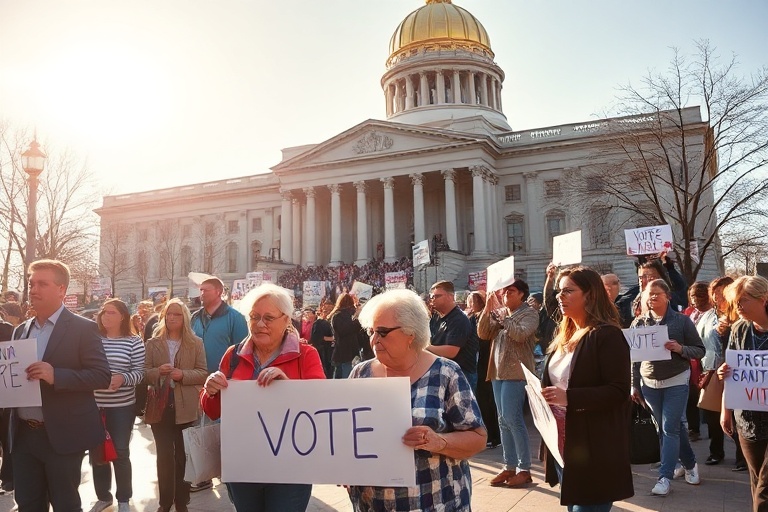
The 2026 elections in Georgia are shaping up to be a defining moment not just for the state, but for the broader American political landscape. With midterm cycles heating up and national attention pivoting toward 2028, Georgia’s contests will serve as a critical bellwether for voter sentiment, demographic shifts, and emerging political strategies. This race isn’t just about who wins or loses—it’s about how Georgia, a state that has become a microcosm of America’s cultural and political divides, navigates its evolving identity.
Georgia’s transformation from a reliably Republican stronghold to a battleground state over the past decade has been dramatic. The 2020 presidential election and subsequent runoff contests demonstrated the power of coalition-building, particularly among Black, Latino, and suburban voters. Yet, as the 2026 cycle approaches, the state faces new challenges: redistricting battles, evolving voter laws, and the rise of third-party movements that could disrupt traditional two-party dynamics. Understanding these elections means looking beyond the usual partisan narratives to examine deeper trends in America’s evolving electorate.
Key Races to Track in 2026
The 2026 elections in Georgia will feature high-stakes races at both the state and federal levels. While the gubernatorial race will likely dominate headlines, other contests could redefine the state’s political future.
- Gubernatorial Election: Governor Brian Kemp is term-limited, setting the stage for a crowded Republican primary and a potential Democratic challenge. The outcome will influence state-level policies on education, voting rights, and economic development.
- U.S. Senate Race: With Senator Jon Ossoff’s potential bid for higher office or a retirement, this race could become a focal point for national Democrats aiming to flip a Senate seat.
- State Legislature Battles: All 236 seats in the Georgia General Assembly are on the ballot, with redistricting maps already sparking legal challenges. Control of the legislature could determine future voting district boundaries.
- Local Races: Mayoral and county-level elections in fast-growing metro Atlanta suburbs like Cobb, Gwinnett, and Fulton counties will test the durability of suburban political shifts.
These races are not happening in a vacuum. Georgia’s proximity to Florida and its role as a transportation and logistics hub make its elections a point of interest for national strategists. The state’s growing tech sector, particularly in Atlanta, also introduces new economic factors that could sway voters who prioritize job growth over cultural issues.
Demographic Shifts and Voter Engagement
Georgia’s political evolution has been driven largely by demographic changes. The state’s population grew by nearly 1 million between 2010 and 2020, with Atlanta’s metro area accounting for much of that growth. This influx has diversified the electorate, with Black voters now making up roughly 30% of the state’s registered voters, and Latino and Asian American populations expanding rapidly in suburban counties.
Voter engagement trends will be critical in 2026. The 2022 midterms saw record turnout in Georgia, fueled by grassroots organizing and high-profile races. However, the 2024 elections introduced new variables, including the rise of younger voters and the impact of economic concerns. Polling suggests that while Democrats still hold an advantage among non-white voters, Republicans are making inroads with working-class white voters in rural areas and some suburbs.
One of the most closely watched indicators will be turnout in traditionally Democratic strongholds like DeKalb and Fulton counties, compared to shifting suburban areas like Forsyth and Cherokee. The ability of both parties to mobilize these groups could decide tight races. Meanwhile, the state’s new voting laws, which have been both praised for enhancing security and criticized for restricting access, will continue to influence voter behavior.
National Implications: A Test for Both Parties
Georgia’s 2026 elections are more than a state-level story—they’re a referendum on national political strategies. For Democrats, holding or expanding their gains in the state would signal that their coalition-building efforts are sustainable. For Republicans, flipping Georgia back into a solid red state would validate their approach to messaging and voter outreach.
National party committees are already investing heavily in Georgia, with both the Democratic National Committee and Republican National Committee eyeing the state as a priority for fundraising and ground operations. The outcome of these races could shape party strategies heading into 2028, influencing everything from candidate recruitment to policy platforms.
Culturally, Georgia’s elections reflect broader American trends. The state’s embrace of early voting and its competitive races have made it a model for how diverse coalitions can shape politics. Yet, it also highlights the tensions between progressive urban areas and conservative rural regions—a divide playing out in states across the country. The 2026 cycle will reveal whether Georgia’s political identity continues to evolve or if it reverts to old patterns.
What’s at Stake Beyond Politics
The decisions made in Georgia’s 2026 elections will extend far beyond the ballot box. The state’s economic future, for instance, hinges on policies that support its growing tech industry while addressing infrastructure needs in rural areas. Education funding, healthcare access, and environmental regulations are all on the table, with implications for residents and businesses alike.
Georgia’s role in national sports culture also adds a layer of significance. The state is home to major professional teams, including the Atlanta Braves and Falcons, and hosts events like the Peach Bowl and Masters Tournament. Political decisions can influence everything from stadium funding to tourism revenue, tying electoral outcomes to Georgia’s cultural and economic identity.
Moreover, Georgia’s elections serve as a case study in how American democracy adapts to change. The state’s experience with voting rights battles, demographic shifts, and political polarization offers lessons for other regions. Whether Georgia becomes a model for inclusive politics or a cautionary tale of division will depend on the choices voters and leaders make in 2026.
As the campaign season ramps up, all eyes will be on Georgia—not just as a bellwether for 2028, but as a state defining its own future. The races, the voters, and the issues at play will shape not only Georgia’s trajectory but also the broader narrative of American politics in the years to come.
Browse more Political Analysis or explore News Coverage on Dave’s Locker.