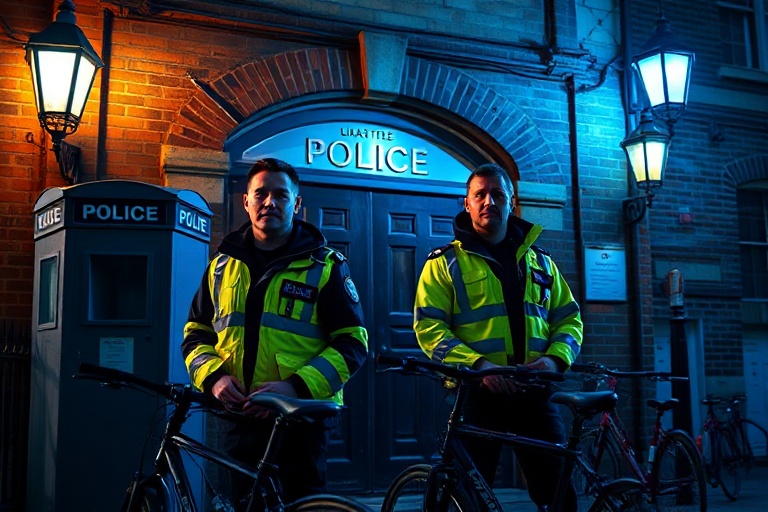
Understanding the Metropolitan Police: Challenges and Reforms in London
“`html
The Metropolitan Police: A Balancing Act Between Public Trust and Operational Challenges
The Metropolitan Police Service, often referred to as the Met, stands as the UK’s largest police force. It serves London’s 8.8 million residents across 32 boroughs, handling everything from routine patrols to major counterterrorism operations. But its role is far from simple. The Met operates under intense public scrutiny, navigating a complex web of social, political, and ethical expectations while striving to maintain law and order in one of the world’s most diverse cities.
Its challenges are manifold. Since its establishment in 1829, the force has evolved through eras of reform, scandal, and adaptation. Today, it faces fresh pressures: rising crime in certain areas, strained community relations, and the ever-present tension between proactive policing and civil liberties. Understanding the Met requires more than just looking at crime statistics—it demands a deeper look at the institution’s structure, culture, and the broader context in which it functions.
The Structure and Scope of the Metropolitan Police
The Met is organized into several key operational branches, each with a distinct focus. At its core is the territorial policing division, which divides London into Basic Command Units (BCUs) aligned with borough boundaries. These units are responsible for visible policing, emergency response, and neighborhood crime reduction. Beyond that, specialist units handle everything from firearms and public order to cybercrime and economic crime.
Notably, the Met includes the Counter Terrorism Command, which plays a central role in national security. Given London’s status as a global city, the force must maintain readiness for major incidents, including terror attacks and large-scale public events like the Notting Hill Carnival or New Year’s Eve celebrations. This dual role—serving both local communities and national interests—places immense demands on resources and leadership.
Key Responsibilities of the Metropolitan Police
- Crime prevention and detection: Investigating offenses ranging from burglary to homicide.
- Public safety and emergency response: Responding to 999 calls and managing major incidents.
- Counterterrorism and national security: Working with MI5 and international partners on threats.
- Community engagement: Building trust through initiatives like neighborhood policing and youth programs.
- Traffic and transport policing: Managing road safety and public transport security.
The Met employs over 34,000 officers and staff, supported by volunteers and special constables. Despite its scale, the force faces criticism over response times, underreporting of certain crimes, and inconsistent policing across boroughs. These issues are not merely operational—they reflect deeper questions about priorities, funding, and public confidence.
Public Trust and Recent Controversies
Trust in the police is not a given—it must be earned and maintained. In recent years, the Met has faced a series of high-profile controversies that have eroded public confidence. These include the death of Sarah Everard in 2021, which led to widespread scrutiny of police conduct and culture; the strip-searching of Child Q, a Black schoolgirl in London; and ongoing concerns about discrimination within the force.
Such incidents have fueled debates about institutional bias, accountability, and reform. The Met has responded with initiatives like the Violence Reduction Unit and efforts to increase diversity in recruitment. However, critics argue that these measures are insufficient without deeper cultural change and transparent oversight.
“Trust is built through consistent action, not just policy announcements. When communities feel policed rather than protected, the foundation of public safety weakens.” — Former Independent Advisor on Policing
Another layer of complexity comes from the use of advanced technologies. The Met has deployed facial recognition cameras and predictive policing tools, raising concerns about privacy and civil liberties. While these technologies aim to enhance efficiency, their deployment has sparked legal challenges and ethical dilemmas. The force must balance innovation with the protection of individual rights—a balance that is not always easy to strike.
Funding, Reform, and the Road Ahead
Like many public services, the Metropolitan Police operates within tight financial constraints. Austerity measures since 2010 have reduced officer numbers and cut back-office support, placing additional strain on frontline staff. At the same time, the cost of living crisis and inflation have increased pressure on communities, leading to higher demand for police services.
Reform efforts have been piecemeal. The government’s 2023 Policing Plan emphasizes “cutting crime and protecting the public,” but critics point out that sustainable reform requires more than rhetoric. Key areas for improvement include:
- Enhancing community policing: Strengthening ties between officers and local residents through consistent, visible patrols and engagement programs.
- Addressing institutional culture: Tackling discrimination, bullying, and misconduct through rigorous training and accountability mechanisms.
- Improving transparency: Publishing detailed data on stop-and-search, use of force, and complaints to rebuild public trust.
- Modernizing technology: Deploying digital tools responsibly to improve response times and investigative capabilities without compromising privacy.
- Collaborating across agencies: Working more closely with mental health services, social workers, and local authorities to address root causes of crime.
The road ahead is challenging, but not insurmountable. The Met has shown resilience in adapting to crises, from terror attacks to the COVID-19 pandemic. Now, it must turn its attention inward—reforming from within while rebuilding trust with the communities it serves.
Conclusion: A Force at a Crossroads
The Metropolitan Police remains a cornerstone of London’s safety and stability. Yet its future depends not only on operational effectiveness but on its ability to reflect the values of the society it protects. The challenges it faces—rising crime, technological disruption, and societal polarization—are not unique to London, but they are amplified in a global city where expectations and realities often collide.
For the Met, the path forward must prioritize humanity alongside efficiency. That means listening more, acting transparently, and ensuring that every officer embodies the principles of fairness and integrity. The public deserves no less. As London continues to evolve, so too must its police force—rooted in tradition, but unafraid to innovate.
One thing is clear: the Metropolitan Police cannot afford to stand still. The cost of inaction is too high—not just for the force, but for the city it serves.
To learn more about law enforcement trends and public safety issues, visit our News and Analysis sections for in-depth coverage and expert commentary.