Giro d’Italia: The Race That Defines Cycling’s Heart and Italy’s Soul
“`html
The Giro d’Italia: A Race of Endurance, Strategy, and Italian Passion
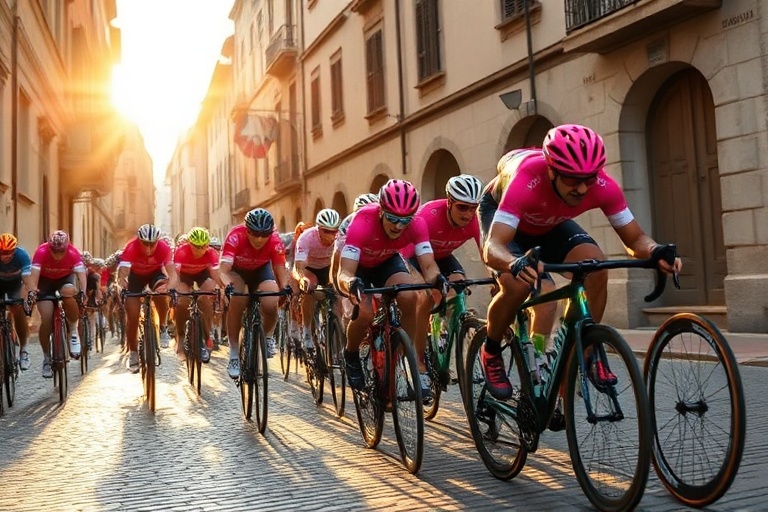
The Giro d’Italia is more than a bicycle race. It is a three-week odyssey through the heart of Italy, where riders climb the Dolomites, descend the Adriatic coast, and navigate the cobblestone streets of historic cities. Founded in 1909, the Giro has grown into one of the most prestigious events in professional cycling, second only to the Tour de France in global prestige. Yet, unlike its French counterpart, the Giro carries a uniquely Italian soul—one of drama, tradition, and unrelenting passion.
The race begins with a prologue, often in a major Italian city like Milan or Rome, before unfolding across the country’s most dramatic landscapes. The route changes every year, but the Giro is always defined by its punishing climbs and tactical complexity. Riders must master the art of pacing, aerodynamics, and teamwork while enduring temperatures that swing from Alpine chill to Mediterranean heat. For fans, it’s a spectacle of human endurance set against the backdrop of Italy’s art, architecture, and cuisine.
The Giro’s Place in Global Cycling
The Giro d’Italia holds a distinct position in the world of professional cycling. While the Tour de France dominates headlines and the Vuelta a España offers its own challenges, the Giro is celebrated for its unpredictable nature and emotional resonance. The race’s inclusion in the UCI World Tour underscores its significance, but its cultural impact extends far beyond the pelaton.
Each year, millions of spectators line the routes in towns and villages, waving flags and cheering riders with a fervor rarely seen in other sports. The Giro’s pink jersey—the maglia rosa—is one of cycling’s most iconic symbols, representing leadership in the general classification. Unlike the Tour’s yellow jersey, the pink is tied to the color of the Gazzetta dello Sport, the newspaper that founded the race. This connection to Italy’s media history adds another layer of tradition to the event.
The Giro has also played a pivotal role in cycling’s evolution. In the early 20th century, it helped popularize the sport across Italy, a country where football (soccer) traditionally dominated. Over time, it became a proving ground for legends like Fausto Coppi, Eddy Merckx, and Marco Pantani, each of whom left an indelible mark on the race’s storied history. Today, the Giro remains a magnet for both seasoned champions and rising talents eager to test themselves against its legendary climbs.
The Route: A Journey Through Italy’s Soul
The Giro’s route is meticulously designed to showcase Italy’s diversity—from the industrial north to the rural south, from coastal plains to alpine peaks. The race typically features around 20 stages, including time trials, sprint finishes, and grueling mountain stages that can decide the overall winner.
A typical Giro might include the following key elements:
- Flat and Sprint Stages: Early in the race, these stages allow sprinters like Fabio Jakobsen and Jasper Philipsen to shine. They often finish on wide, straight roads where pure speed determines the outcome.
- Medium-Mountain Stages: These stages feature rolling terrain with shorter, steeper climbs. They test riders’ ability to conserve energy while positioning for the overall classification.
- High-Mountain Stages: The Giro is famous for its cima coppie, or double climbs, where riders tackle back-to-back ascents like the Passo dello Stelvio and Gavia. These stages often become the race’s turning points.
- Individual and Team Time Trials: While less common in recent years, time trials reward precision and aerodynamics. Teams like Soudal-QuickStep excel in these disciplines.
- Final Stretch: The Dolomites and Milan: The race often concludes with a dramatic finale in the Dolomites, followed by a ceremonial stage in Milan that ends beneath the iconic Duomo.
The 2024 Giro, for example, featured a start in Turin, a traverse of the Apennines, and a finale that included the legendary Mortirolo climb. Such routes are not just about testing riders—they’re about celebrating Italy’s geography and culture. Fans camp for days along the roads, transforming small villages into temporary festivals of cycling fandom.
Cultural Significance: More Than Just a Race
The Giro d’Italia is deeply embedded in Italy’s national identity. It is a source of pride, a unifying event, and a platform for storytelling. The race’s cultural reach extends to literature, film, and art, where it has been immortalized as a symbol of perseverance and adventure.
In Italian cinema, the Giro has appeared in films like La Grande Boucle (1983), which explores the Tour de France, and documentaries like Il Grande Fausto (2013), which chronicles Fausto Coppi’s dominance. The race also inspires literature, from travelogues that follow its route to novels that use cycling as a metaphor for life’s challenges.
Beyond Italy, the Giro has cultivated a global following. In countries like Colombia, Kenya, and the Netherlands, fans avidly track the race, cheering for riders who bring their own cultural narratives to the pelaton. The Giro’s international appeal is evident in its diverse peloton, where riders from Africa, South America, and Asia compete alongside Europeans. This global participation reflects cycling’s growing inclusivity and the Giro’s role as a bridge between cultures.
The race has also become a platform for social causes. In recent years, the Giro has featured stages dedicated to environmental awareness, cancer research, and LGBTQ+ rights. These initiatives highlight the race’s commitment to using its platform for positive change, aligning with modern expectations for sports events to contribute to society beyond competition.
Challenges and Controversies
Despite its celebration, the Giro is not without its controversies. Doping scandals have marred its history, including the infamous 2001 case involving Marco Pantani, one of the race’s most beloved champions. The Giro has also faced criticism for its commercialization, with sponsors and television broadcasters shaping the race’s narrative to maximize engagement.
Logistically, the Giro presents unique challenges. Organizing a race that spans thousands of kilometers, crosses multiple time zones, and involves thousands of staff requires precision and adaptability. Weather, from snow in the Alps to heatwaves in Sicily, can disrupt even the best-laid plans. In 2020, the Giro was postponed due to the COVID-19 pandemic, forcing organizers to adapt quickly to a new reality.
Yet, these challenges only underscore the Giro’s resilience. The race has repeatedly proven its ability to evolve while maintaining its core identity. Whether through technological innovations like real-time tracking or social media engagement, the Giro continues to innovate in ways that keep fans connected to the action.
A Lasting Legacy
The Giro d’Italia is more than a sporting event—it is a cultural institution. It reflects the beauty of Italy, the grit of its riders, and the passion of its fans. For over a century, it has captivated audiences with its drama, its challenges, and its celebration of human potential.
As cycling continues to grow globally, the Giro remains a cornerstone of the sport. Its legacy is built not just on the victories of its champions, but on the stories of those who line the roads each May, draped in pink, cheering until their voices give out. The Giro is a testament to the power of sport to inspire, unite, and transcend borders. And as long as there are roads to climb and dreams to chase, the Giro d’Italia will endure.
For those looking to dive deeper into the world of professional cycling, explore our Sports section for analysis, interviews, and updates on the latest races and trends.