The French Navy, known as the Marine Nationale, stands as one of the most storied and technologically advanced naval forces in the world. With a history stretching back over four centuries, it has played a pivotal role in shaping global maritime strategy, from the age of sail to the modern era of nuclear-powered submarines and aircraft carriers. Today, the French Navy remains a critical component of France’s defense strategy and a key player in international naval operations.
Unlike many of its counterparts, the French Navy operates with a unique blend of tradition and innovation. Its fleet includes nuclear-powered aircraft carriers, advanced frigates, and a robust submarine force, all supported by cutting-edge technology and a highly trained workforce. This combination ensures France maintains its strategic autonomy while contributing to collective security efforts worldwide.
A Historical Foundation Built on Innovation and Conflict
The origins of the French Navy trace back to the early 17th century, when Cardinal Richelieu, under the reign of Louis XIII, established the first formal naval administration in 1626. This marked the beginning of France’s rise as a maritime power, a position it maintained through centuries of both triumph and adversity.
By the 18th century, the French Navy had become a dominant force in European waters, playing a crucial role in conflicts such as the Seven Years’ War. The Battle of Quiberon Bay in 1759, though a defeat, demonstrated France’s naval prowess and set the stage for future innovations. The navy’s shipbuilders pioneered advanced designs, including the legendary cutter and frigate classes, which influenced naval tactics across the continent.
The 19th and 20th centuries saw the French Navy adapt to rapid technological changes, from the introduction of steam power to the development of aircraft carriers. The Charles de Gaulle, France’s only nuclear-powered aircraft carrier, launched in 2001, exemplifies this evolution. It remains the flagship of the fleet and a symbol of France’s commitment to maintaining a blue-water navy capable of projecting power globally.
Modern Capabilities: Technology, Strategy, and Global Reach
Today, the French Navy is structured around several core components, each designed to ensure operational flexibility and strategic depth. Its fleet is divided into four primary mission areas: deterrence, power projection, maritime security, and crisis response.
The navy’s deterrence capability is anchored by its fleet of nuclear-powered ballistic missile submarines (SSBNs), known as the Force Océanique Stratégique. These submarines, equipped with M51 ballistic missiles, form the backbone of France’s nuclear triad and provide a credible second-strike capability. The silent operation and near-invisibility of these submarines make them a cornerstone of France’s defense posture.
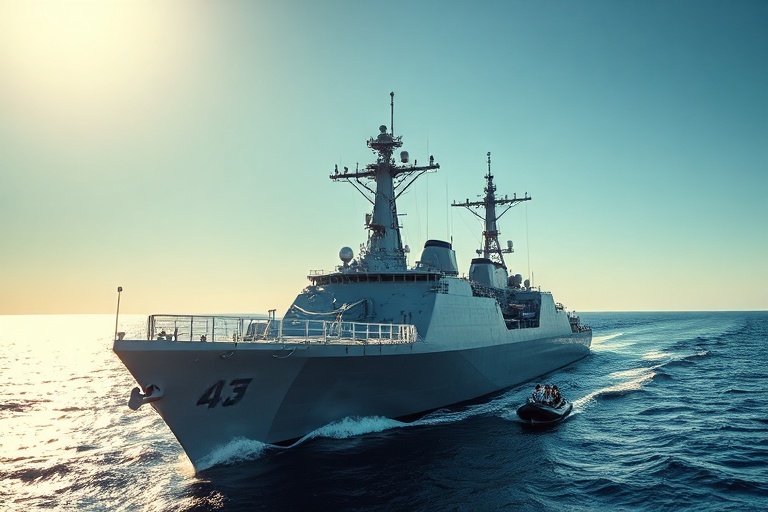
Power projection is achieved through the Charles de Gaulle aircraft carrier, which operates a mix of Rafale M fighter jets and E-2C Hawkeye airborne early warning aircraft. This carrier group enables France to conduct expeditionary operations, support allies, and assert sovereignty in distant theaters. Complementing the carrier are the Horizon and FREMM class frigates, which provide anti-air, anti-submarine, and anti-surface warfare capabilities.
Maritime security is a growing priority, particularly in the face of piracy, illegal fishing, and regional conflicts. The French Navy maintains a persistent presence in critical areas such as the Mediterranean, the Indian Ocean, and the Gulf of Aden. Its operations in these regions often involve coordination with international partners, including NATO and the European Union’s Atalanta mission.
Key Components of the Modern French Navy
- Charles de Gaulle Aircraft Carrier: The only nuclear-powered carrier in the EU, capable of deploying up to 40 aircraft and supporting expeditionary operations.
- Triomphant-class SSBNs: Four nuclear-powered ballistic missile submarines equipped with M51 missiles, ensuring France’s nuclear deterrence.
- FREMM-class Frigates: Multi-purpose frigates designed for anti-submarine, anti-air, and anti-surface warfare, with advanced radar and missile systems.
- Barracuda-class SSNs: Nuclear-powered attack submarines currently being delivered, replacing the aging Rubis-class submarines.
- Mine Countermeasures Vessels: Specialized ships for detecting and neutralizing naval mines in high-risk areas.
Strategic Importance and Broader Implications
The French Navy’s role extends beyond national defense. As a permanent member of the United Nations Security Council and a leader within the European Union, France leverages its naval power to shape global security architectures. Its participation in NATO’s Standing Maritime Groups and the EU’s Common Security and Defense Policy underscores its commitment to collective defense and crisis management.
France’s strategic autonomy is a defining feature of its defense policy. Unlike many European nations that rely heavily on NATO or U.S. support, France maintains independent nuclear and conventional capabilities. This autonomy allows it to act decisively in crises without the constraints of allied consensus, as seen during operations in Libya (2011) and the Sahel region (ongoing).
The navy’s operations also have economic implications. France’s exclusive economic zone (EEZ) spans over 11 million square kilometers, the second-largest in the world. Protecting this vast maritime domain is essential for preserving fishing rights, offshore energy resources, and undersea cable infrastructure. The French Navy’s presence ensures the security of these critical assets, which are vital to France’s economy and global trade.
Moreover, the French Navy serves as a technological incubator. Its investment in next-generation systems, such as the FDI (Frégate de Défense et d’Intervention) and the Suffren-class submarines, drives innovation in naval architecture, propulsion, and cyber defense. These advancements often trickle down to civilian industries, reinforcing France’s position as a leader in maritime technology.
The Future: Challenges and Opportunations
Looking ahead, the French Navy faces a complex set of challenges. Rising tensions in the South China Sea, increased Russian submarine activity in the North Atlantic, and the proliferation of anti-access/area-denial (A2/AD) systems threaten to erode its operational freedom. Additionally, budgetary constraints and the need to modernize aging platforms pose significant hurdles.
However, these challenges also present opportunities. France is investing heavily in unmanned systems, artificial intelligence, and cyber capabilities to offset traditional threats. The upcoming PANG (Porte-Avérons Nouvelle Génération) program, a replacement for the Charles de Gaulle due in the 2030s, will incorporate cutting-edge technologies to ensure continued relevance.
The navy is also expanding its partnerships with like-minded nations, such as India and Australia, to enhance interoperability and share technological advancements. These collaborations could lead to new joint ventures in shipbuilding, missile defense, and underwater surveillance.
For those interested in exploring the intersection of military strategy and technology, the Military section on Dave’s Locker offers in-depth analysis and updates on global defense developments. Similarly, the Technology section provides insights into how innovation is reshaping modern warfare and naval operations.
Conclusion: A Navy for the 21st Century and Beyond
The French Navy represents a rare blend of historical legacy and forward-thinking strategy. It is a force that not only protects France’s interests but also contributes to global stability. As geopolitical tensions rise and new threats emerge, the navy’s adaptability and technological edge will be crucial in maintaining maritime security.
For historians, strategists, and enthusiasts alike, the French Navy offers a compelling case study in how tradition and innovation can coexist. Its future will undoubtedly shape not just France’s defense posture, but the broader security landscape of the 21st century.