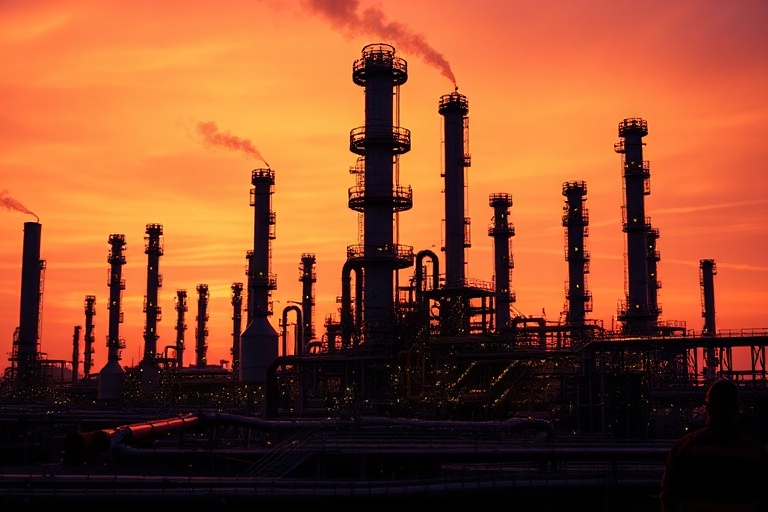
How Oil Refineries Work and Why They Matter in 2024
“`html
Understanding Oil Refineries: The Backbone of Modern Energy
The oil refinery stands as one of the most complex industrial facilities in the world. It transforms crude oil—a dark, viscous liquid extracted from the earth—into the fuels and materials that power modern civilization. From gasoline that fuels cars to jet fuel that propels airplanes, refineries are essential to global energy infrastructure. Yet their operations remain largely invisible to the average person, hidden behind layers of technical processes and regulatory frameworks. This article explores how oil refineries function, their role in the energy economy, the challenges they face, and their evolving future.
The Refining Process: From Crude to Usable Products
At the heart of every refinery is a series of sophisticated processes designed to separate and transform crude oil into valuable products. The journey begins with distillation, where crude oil is heated in a massive tower called a distillation column. As it rises, different hydrocarbons vaporize at various temperatures and are collected as distinct fractions, such as naphtha, kerosene, diesel, and heavy gas oils. This separation is based on boiling points, with lighter products rising to the top and heavier residues settling at the bottom.
These primary fractions are then refined further through secondary processes. Catalytic cracking, for instance, breaks down large hydrocarbon molecules into smaller, more valuable ones like gasoline. Hydrocracking uses hydrogen and catalysts to convert heavy gas oils into lighter fuels. Meanwhile, reforming transforms low-octane naphtha into high-octane gasoline components. Sulfur removal, or desulfurization, is another critical step, ensuring that fuels meet environmental standards before they reach consumers.
The efficiency of these processes directly impacts the refinery’s output and profitability. Advanced refineries employ computerized control systems to optimize operations, reducing waste and maximizing yield. Yet even with cutting-edge technology, refining remains energy-intensive, consuming significant amounts of electricity and steam.
Key Products from an Oil Refinery
- Gasoline: The most visible product, powering cars and light vehicles.
- Diesel: Used in trucks, ships, and heavy machinery due to its energy density.
- Jet Fuel: A highly refined kerosene-based fuel for aviation.
- Petrochemical Feedstocks: Naphtha and ethane feed into plastics, synthetic rubber, and fertilizers.
- Asphalt: Used for road construction and roofing materials.
- Liquefied Petroleum Gas (LPG): Propane and butane used for heating and cooking.
The Economic and Geopolitical Role of Refineries
Oil refineries are not just industrial facilities; they are geopolitical assets. Their locations are strategically chosen to minimize transportation costs and maximize access to markets. For example, refineries in the Gulf Coast of the United States benefit from proximity to major oil fields and export terminals. In contrast, European refineries often rely on imported crude due to limited domestic production. This reliance shapes trade relationships and can influence international policies.
The economic impact of refineries extends beyond fuel production. They generate thousands of jobs—from engineers and chemists to plant operators and logistics specialists. In regions like Texas, Louisiana, and the Middle East, refineries are economic engines, supporting local businesses and infrastructure. However, this dependence also creates vulnerabilities. Fluctuations in oil prices, regulatory changes, and shifts in global demand can threaten refinery viability. The rise of electric vehicles, for instance, has prompted some refineries to diversify into petrochemical production to secure future revenue streams.
Refineries also play a role in energy security. Countries with large refining capacities, such as the United States and China, can reduce reliance on foreign fuel imports. Conversely, nations with limited refining infrastructure may face supply chain vulnerabilities. The COVID-19 pandemic demonstrated this fragility, as disruptions in refining operations led to fuel shortages and price spikes in some regions.
Environmental Challenges and Innovations
Despite their economic importance, oil refineries are under intense scrutiny for their environmental impact. The refining process emits greenhouse gases, volatile organic compounds (VOCs), and particulate matter, contributing to air pollution and climate change. According to the U.S. Environmental Protection Agency (EPA), refineries are among the largest industrial sources of toxic air pollutants in the country. These emissions disproportionately affect communities located near refinery sites, often low-income and minority neighborhoods.
To address these concerns, refineries are adopting cleaner technologies. Carbon capture and storage (CCS) systems are being tested to reduce CO₂ emissions, while renewable diesel and biofuels are integrated into refining processes. Some refineries are also exploring hydrogen production using renewable energy, positioning themselves for a future low-carbon economy. However, these innovations require significant investment and regulatory support.
The shift toward sustainability is not just ethical—it is becoming a business imperative. Investors and consumers increasingly favor companies with strong environmental, social, and governance (ESG) credentials. Refineries that fail to adapt risk losing market share to cleaner alternatives or face regulatory penalties. For example, the European Union’s Green Deal aims to reduce emissions from refineries by 55% by 2030, forcing operators to rethink their business models.
Emerging Trends in Refining
- Digitalization: AI and machine learning optimize refinery operations, reducing downtime and improving efficiency.
- Petrochemical Integration: Refineries are expanding into chemical production to offset declining fuel demand.
- Renewable Fuels: Production of biofuels and synthetic fuels is growing as alternatives to traditional petroleum products.
- Modular Refineries: Smaller, scalable refineries are being developed for remote or emerging markets.
The Future of Oil Refining: Balancing Tradition and Transition
The oil refining industry faces an uncertain future. On one hand, global energy demand continues to rise, driven by population growth and industrialization. On the other, the urgency of climate change demands a rapid transition to low-carbon energy sources. Refineries are caught in this tension, tasked with maintaining energy supplies while adapting to a changing world.
One possible path forward is the concept of the “refinery of the future”, which blends traditional refining with renewable energy and circular economy principles. For example, some refineries are experimenting with electrofuels, which combine green hydrogen with captured CO₂ to produce synthetic fuels. Others are integrating waste-to-energy systems to reduce landfill use and generate power. These innovations could help refineries remain relevant in a decarbonized economy.
However, the transition will not be seamless. The infrastructure required for renewable fuels and hydrogen is still in its infancy, and the cost of retrofitting existing refineries is prohibitive for many operators. Policymakers and industry leaders must collaborate to create incentives for sustainable refining, such as tax credits for carbon capture or grants for renewable fuel production. Without such support, the decline of traditional refining could outpace the rise of alternatives, leading to energy shortages and economic disruption.
For consumers, the implications are clear: the fuels and materials we rely on today will likely look different in the coming decades. The challenge lies in ensuring that this transition is just, equitable, and sustainable for all stakeholders.
Conclusion: Refineries in a Changing World
Oil refineries are a testament to human ingenuity, transforming a raw natural resource into the lifeblood of modern society. Yet their continued operation is no longer just an engineering challenge—it is a societal one. As the world grapples with climate change, geopolitical shifts, and technological disruption, refineries must evolve or risk obsolescence. The path forward will require innovation, investment, and a willingness to reimagine an industry that has defined the 20th and 21st centuries.
For those interested in exploring the broader energy landscape, Dave’s Locker’s Energy section offers in-depth analysis on trends shaping the sector. Similarly, our Sustainability category provides insights into the technologies and policies driving the transition to cleaner energy.