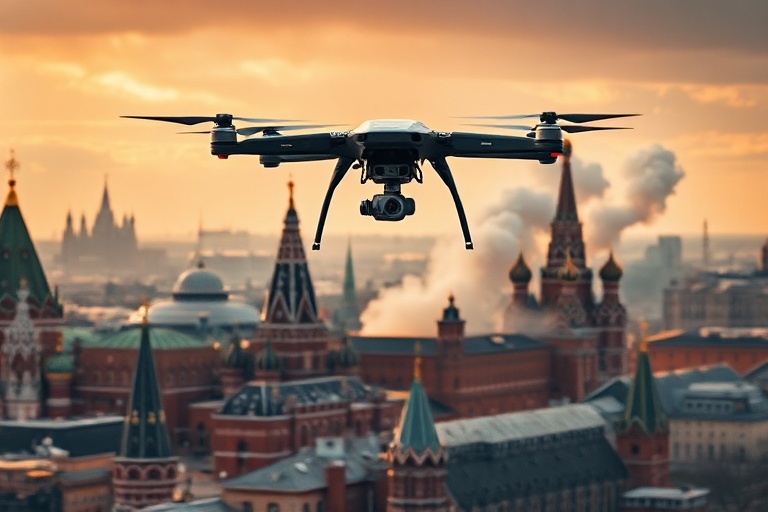
How Ukrainian Drones Are Changing the War in Moscow
“`html
Ukrainian Drone Attacks on Moscow: A New Phase in the Conflict
The drone attacks on Moscow this month mark a significant escalation in Ukraine’s campaign against Russian infrastructure. These strikes, which began on May 30, targeted residential areas and government buildings, demonstrating both technological sophistication and strategic intent. While Russia has dismissed these attacks as ineffective, the psychological and economic impact on Moscow’s population cannot be ignored.
The first wave of attacks occurred in the early hours, with multiple drones flying undetected through Russia’s air defense systems. According to Russian authorities, five drones were intercepted, but two caused minor damage to buildings in southwestern Moscow. The Kremlin initially downplayed the incidents, attributing them to “terrorist tactics,” but subsequent strikes have forced a more measured response.
The Strategic Calculus Behind the Strikes
Ukraine’s drone operations represent a calculated shift from traditional battlefield engagements to long-range asymmetric warfare. Unlike missile strikes, drones can be launched from closer proximity and are harder to detect on radar. Military analysts suggest this tactic serves multiple purposes: disrupting Russian logistics, testing air defense capabilities, and demonstrating Ukraine’s ability to project power deep into enemy territory.
According to Ukrainian defense officials, the drones used in these attacks are modified commercial quadcopters equipped with explosives. Their relatively low cost and ease of modification make them an attractive option for asymmetric warfare. Unlike ballistic missiles, which require extensive infrastructure to launch, drones can be deployed from virtually any location within range.
- Cost-effectiveness: A single drone costs a fraction of a cruise missile, allowing Ukraine to stretch limited defense budgets.
- Plausible deniability: Drones can be launched from civilian areas, complicating Russian retaliation.
- Psychological impact: The constant threat of drone strikes creates anxiety among Moscow residents, undermining the perception of security.
Russian military bloggers have noted that Moscow’s air defenses, designed to counter Western precision-guided munitions, may be ill-equipped for swarm drone tactics. The Russian Ministry of Defense has acknowledged these vulnerabilities, announcing plans to deploy additional electronic warfare systems to disrupt drone navigation.
Moscow’s Response and Civilian Reactions
The Russian government’s response has been a mix of denial and adaptation. Officials initially claimed the attacks caused no significant damage, but subsequent reports revealed structural damage to residential buildings in the Solntsevo district. Videos circulating on social media show firefighters responding to blazes caused by drone fragments, contradicting official statements.
Residents in southwestern Moscow have described a growing sense of unease. Many have installed anti-drone nets on balconies and purchased air raid sirens for their homes. Local businesses report a decline in foot traffic, particularly in areas near previous strike zones. The psychological toll is evident in social media posts, where Muscovites share evacuation routes and drone detection tips.
In response to public pressure, the Moscow city government has established emergency hotlines and temporary shelters. However, critics argue these measures are reactive rather than preventive. The Kremlin’s emphasis on “normalizing” life in the capital contrasts sharply with the visible signs of disruption—closed metro stations, increased police patrols, and regular drone alerts.
Geopolitical Implications and Future Risks
The drone attacks have drawn international attention, with NATO allies expressing cautious support for Ukraine’s right to self-defense. However, the strikes also raise concerns about escalation. Russian officials have warned of “retaliatory measures,” though the nature of these remains ambiguous. Some analysts suggest Russia may increase its attacks on Ukrainian energy infrastructure to force Kyiv to divert resources from drone production.
For Ukraine, the drone campaign represents a low-risk, high-reward strategy. Unlike missile strikes, which risk provoking a broader conflict, drones allow Ukraine to maintain plausible deniability while slowly eroding Russian morale. Western military experts suggest this approach could become a long-term feature of the war, particularly if Ukraine receives more advanced drone technology from allies.
The attacks also highlight the evolving nature of modern warfare. Traditional air defense systems, designed to intercept missiles and aircraft, struggle against swarms of small, slow-moving drones. This has prompted discussions in military circles about the need for dedicated counter-drone technologies, such as AI-powered tracking systems and directed-energy weapons.
What Comes Next?
As Ukraine continues to refine its drone tactics, Moscow faces a difficult choice: either invest heavily in new air defense systems or accept the reality of living under constant drone threats. The psychological and economic costs of these attacks may ultimately prove more damaging to Russia than any single military engagement.
For now, the drone strikes serve as a reminder that this war is far from over. Each successful attack chips away at Russian confidence, while each failed interception exposes vulnerabilities in Moscow’s defenses. The coming months will reveal whether Ukraine can sustain this campaign—or whether Russia will find a way to counter it.
One thing is clear: the era of drone warfare has arrived, and its impact will be felt far beyond the battlefields of Ukraine.
For more on the evolving tactics of modern warfare, visit our Analysis section. To understand the broader context of the conflict, explore our News coverage.