metropolitan police
“`html
The Metropolitan Police: A Global Model Under Scrutiny
The Metropolitan Police Service, commonly known as the Met, stands as one of the most scrutinized law enforcement agencies in the world. Serving London’s 8.8 million residents, the Met’s influence extends far beyond the UK’s borders, shaping international policing standards and sparking debates on accountability, reform, and public trust. Its history, marked by both innovation and controversy, reflects the challenges of policing in a multicultural, densely populated global city.
Founded in 1829 by Sir Robert Peel, the Met was the first professional police force in the world. Peel’s principles emphasized crime prevention, community engagement, and minimal force—ideals that still underpin modern policing. Yet, as London evolved into a global metropolis, so too did the demands placed on its police force. Today, the Met operates in a city where over 300 languages are spoken, and where cultural diversity is both an asset and a challenge for law enforcement.
The Structure and Challenges of Modern Policing
The Metropolitan Police is organized into several key units, each addressing different aspects of urban safety. The most visible is the Territorial Policing Command, responsible for day-to-day law enforcement across London’s 32 boroughs. Other critical divisions include Specialist Crime and Operations, which handles serious crimes like terrorism and cybercrime, and the Roads and Transport Policing Command, which secures the city’s extensive public transit network.
Yet, the Met’s structure is not without its critics. In recent years, the force has faced intense scrutiny over issues of racial bias, use of force, and organizational culture. High-profile cases, such as the 2020 killing of Sarah Everard by a serving Met officer, Wayne Couzens, have eroded public confidence. The subsequent inquiry by Baroness Louise Casey revealed a culture of bullying, misogyny, and racism within the force, prompting urgent calls for reform. The report’s findings were a stark reminder that even the world’s oldest police service is not immune to systemic failures.
Globally, police forces look to the Met as both a model and a cautionary tale. In cities like New York, Paris, and Tokyo, law enforcement agencies have adopted elements of Peel’s principles while adapting to their own cultural contexts. However, the Met’s struggles with accountability have also inspired reforms elsewhere. In Australia, for example, police forces have implemented stricter oversight mechanisms in response to similar concerns about institutional bias and misconduct.
Cultural Context: Policing in a Diverse Metropolis
London’s status as a global hub means its police force must navigate a complex web of cultural, religious, and social dynamics. The Met’s workforce reflects this diversity—over 17% of its officers come from Black, Asian, and minority ethnic backgrounds—but representation alone does not guarantee trust. Community relations remain a persistent challenge, particularly in boroughs with histories of tension between police and minority groups.
One area where the Met has sought to adapt is in its approach to hate crime. London’s diverse population makes it particularly vulnerable to such offenses, and the Met has invested in specialized units to address them. However, critics argue that enforcement alone is insufficient. Community policing initiatives, such as neighborhood watch programs and youth engagement projects, have been lauded for bridging gaps between officers and the public. Yet, these efforts are often overshadowed by high-profile scandals, leaving many residents skeptical about the Met’s commitment to change.
The Met’s relationship with London’s LGBTQ+ community offers another lens into its cultural challenges. While the force has made strides in addressing hate crimes against LGBTQ+ individuals, incidents like the 2019 mishandling of the investigation into the murders of Anthony Walgate, Gabriel Kovari, and Daniel Whitworth have raised doubts. The force’s handling of these cases highlighted issues of trust and transparency, reinforcing the need for sustained cultural reform.
Lessons for Global Policing
The Metropolitan Police’s experiences offer valuable lessons for law enforcement agencies worldwide. One of the most critical is the importance of transparency. In an era where cellphone footage and social media can expose police misconduct in real time, agencies must prioritize accountability. The Met’s Independent Office for Police Conduct (IOPC) was established to investigate complaints, but its effectiveness has been questioned. Strengthening such oversight bodies is essential for rebuilding public trust.
Another lesson is the need for adaptive leadership. The Met has undergone several leadership changes in recent years, each accompanied by promises of reform. Yet, structural change requires more than new policies—it demands a shift in organizational culture. The Met’s efforts to improve diversity and inclusion, for example, have been undermined by reports of discriminatory behavior within its ranks. True progress will require not just training programs but a fundamental rethinking of what it means to serve and protect.
Globally, police forces are grappling with similar challenges. In the United States, the aftermath of George Floyd’s murder led to widespread calls for defunding or reforming police departments. In Europe, agencies are contending with rising far-right movements that exploit public distrust of law enforcement. The Met’s journey—marked by both progress and setbacks—serves as a microcosm of these global struggles. Its ability to adapt will determine not only its future but also the future of policing in diverse, multicultural cities everywhere.
Looking Ahead: The Future of the Metropolitan Police
The Metropolitan Police stands at a crossroads. On one hand, it remains a symbol of professional policing, with innovations like its use of predictive analytics and community outreach programs setting benchmarks for other forces. On the other, its reputation has been tarnished by scandals, systemic failures, and a loss of public confidence. Rebuilding trust will require more than superficial changes—it will demand a commitment to transparency, accountability, and cultural transformation.
For Londoners, the stakes could not be higher. The city’s safety, diversity, and global standing all depend on the effectiveness of its police force. The Met’s ability to learn from its mistakes and embrace reform will shape not only its own future but also the broader conversation about policing in the 21st century. As cities around the world confront similar challenges, the lessons of the Metropolitan Police’s journey will resonate far beyond London’s borders.
In the end, the Met’s story is one of contrasts—a force that has pioneered policing models while also struggling to live up to its own ideals. Its path forward will be closely watched, not just by Londoners, but by anyone interested in the future of law enforcement in an increasingly complex world.
For those interested in exploring similar topics, News and Analysis sections on Dave’s Locker offer deeper insights into global policing trends and societal impacts.
—
METADATA
{
“title”: “Metropolitan Police Under Fire: Reform, Scrutiny, and Global Lessons”,
“metaDescription”: “Explore the Metropolitan Police’s challenges, reforms, and global impact amid scrutiny over bias, misconduct, and accountability in modern policing.”,
“categories”: [“News”, “Analysis”],
“tags”: [“Metropolitan Police”, “London policing”, “police reform”, “public trust”, “law enforcement”],
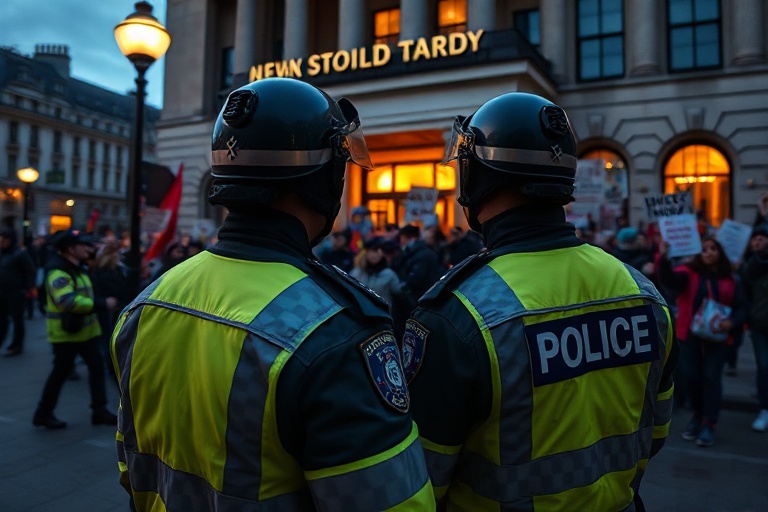
“imageDescription”: “A diverse group of Metropolitan Police officers in uniform engaging with Londoners in a busy urban setting, reflecting community policing amid modern challenges.”
}
—END METADATA—
“`