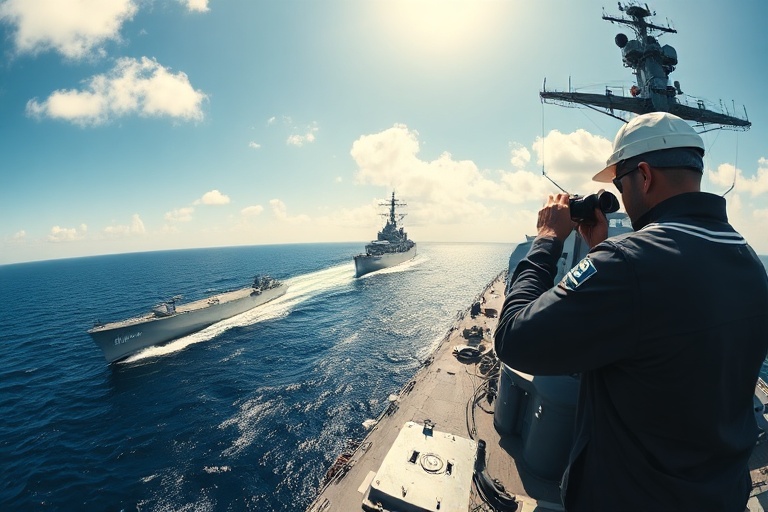
The role of a Navy lookout is one of the most critical yet often overlooked positions in naval operations. Positioned high above the deck in the ship’s crow’s nest, these sailors serve as the first line of defense against potential threats. Their vigilance ensures the safety of the vessel and its crew, making them indispensable to modern maritime security.
The Responsibilities of a Navy Lookout
A Navy lookout’s duties extend far beyond simply scanning the horizon. Their primary responsibility is to identify and report any objects, vessels, or anomalies that could pose a threat to the ship. This includes tracking other ships, detecting aircraft, spotting floating debris, and even identifying weather changes that could impact navigation. The lookout must maintain constant awareness, as even a momentary lapse in attention could have serious consequences.
The position requires exceptional visual acuity, sharp focus, and the ability to distinguish between different types of objects at varying distances. Lookouts are trained to recognize the silhouettes of various vessels, the patterns of aircraft, and the subtle signs of potential hazards like icebergs or unmarked buoys. Their reports are relayed to the bridge, where officers use the information to make critical navigational decisions.
In addition to visual monitoring, Navy lookouts are often tasked with operating radar and other electronic surveillance equipment. While technology has advanced significantly, the human eye remains an essential component of maritime security. The combination of trained lookouts and modern technology creates a layered defense system that enhances the ship’s overall safety.
Training and Preparation
Becoming a Navy lookout is not as simple as climbing into the crow’s nest and staring into the distance. Prospective lookouts undergo rigorous training that includes visual perception exercises, object recognition drills, and simulation-based scenario training. They learn to identify ships by their unique profiles, recognize the wakes of submarines, and distinguish between friendly and potentially hostile vessels.
The training also emphasizes the importance of mental discipline. Lookouts must maintain concentration for extended periods, often in harsh environmental conditions. They are taught to manage fatigue, stay alert, and avoid distractions that could compromise their effectiveness. Physical fitness is another key component, as the job requires climbing ladders, enduring extreme weather, and maintaining balance in rough seas.
Once deployed, lookouts work in shifts to ensure continuous coverage. The standard rotation is typically two hours on watch followed by four hours off, allowing them to rest and recharge. However, during critical operations or in high-risk areas, shifts may be shortened to maintain heightened vigilance.
Tools of the Trade: Equipment Used by Navy Lookouts
While the human eye is the foundation of a lookout’s effectiveness, they rely on a variety of tools to enhance their capabilities. The most iconic of these is the pair of binoculars, often mounted on a swivel base for steady viewing. High-quality binoculars provide magnification and clarity, allowing lookouts to identify distant objects with precision. Some models are equipped with image stabilization technology to compensate for the ship’s movement.
Radar systems are another essential component of a lookout’s toolkit. Modern naval vessels are equipped with advanced radar that can detect objects hundreds of miles away, even in poor visibility conditions. Lookouts are trained to interpret radar data, cross-referencing visual observations with electronic readings to provide a comprehensive situational awareness.
In addition to binoculars and radar, lookouts use a range of other equipment, including:
- Night vision goggles: These devices amplify available light, allowing lookouts to see clearly in low-light conditions. They are particularly useful during night patrols or in areas with limited illumination.
- Laser rangefinders: These tools measure the distance to distant objects with pinpoint accuracy, helping the lookout determine the proximity of potential threats.
- Thermal imaging cameras: These devices detect heat signatures, making it possible to identify vessels or objects that might be obscured by fog, darkness, or camouflage.
- Communication headsets: Lookouts maintain constant communication with the ship’s bridge, relaying real-time updates on their observations. These headsets are designed to be noise-canceling, ensuring clear transmission even in windy or turbulent conditions.
The Psychological Demands of the Job
Being a Navy lookout is as much a mental challenge as it is a physical one. The job requires an extraordinary level of focus and patience, often in monotonous or stressful environments. Lookouts must remain alert for hours on end, with little to no stimulation beyond the horizon. The isolation of the crow’s nest can amplify feelings of fatigue or boredom, making it difficult to maintain concentration.
Stress levels can spike during high-tension situations, such as when navigating through contested waters or during military exercises. Lookouts must remain calm under pressure, providing accurate and timely reports without succumbing to panic. Training programs often include stress inoculation exercises to prepare lookouts for these scenarios, teaching them to manage their emotions and maintain composure.
The psychological toll is further compounded by the knowledge that a single mistake could have catastrophic consequences. Whether it’s failing to spot an approaching vessel or misidentifying a friendly ship, the stakes are always high. This responsibility weighs heavily on lookouts, who understand the gravity of their role in protecting the ship and its crew.
Challenges and Rewards of the Navy Lookout Role
One of the most significant challenges faced by Navy lookouts is the ever-changing nature of their environment. Weather conditions can shift rapidly, from calm seas to violent storms, each presenting unique obstacles. Fog, rain, and rough waters can obscure visibility, forcing lookouts to rely more heavily on radar and other electronic systems. Similarly, the vastness of the ocean means that potential threats can emerge from any direction, requiring constant vigilance.
Technological advancements have also introduced new challenges. While modern equipment enhances a lookout’s capabilities, it also requires continuous training to stay proficient. Software updates, new radar systems, and evolving threat detection methods mean that lookouts must regularly update their skills. The pace of technological change demands adaptability and a commitment to lifelong learning.
Despite these challenges, the role of a Navy lookout offers unique rewards. There is a deep sense of pride in serving one’s country and contributing to the safety of the fleet. Lookouts often form close bonds with their fellow sailors, relying on teamwork and communication to fulfill their duties. The job also provides opportunities for personal growth, as lookouts develop discipline, resilience, and a heightened awareness of their surroundings.
For those who excel in the role, there are opportunities for advancement. Experienced lookouts may be promoted to positions such as Petty Officer in Charge of the Lookout Team or even transition into roles within naval intelligence or operations. The skills acquired as a lookout—situational awareness, attention to detail, and critical thinking—are highly transferable and valued across the military.
The Future of Navy Lookouts
The role of the Navy lookout is evolving in response to changing threats and technological advancements. While automation and artificial intelligence are increasingly integrated into naval operations, the human element remains irreplaceable. Machines can process data and detect patterns, but they lack the intuition and judgment that come with experience. The future of Navy lookouts will likely involve a hybrid approach, where humans and technology work in tandem to enhance maritime security.
One area of innovation is the development of augmented reality (AR) systems for lookouts. These systems overlay digital information onto the user’s field of vision, providing real-time data on potential threats, navigation routes, and environmental conditions. AR could revolutionize the way lookouts operate, making their jobs more efficient and reducing the risk of human error.
Another trend is the increased focus on cybersecurity within naval operations. As ships become more connected, they become vulnerable to cyber threats that could compromise navigation systems or communication networks. Navy lookouts may play a role in monitoring for unusual electronic activity, adding another layer of defense against modern threats.
The enduring importance of Navy lookouts is a testament to the value of human vigilance in an increasingly automated world. While technology continues to advance, the role of the lookout remains a cornerstone of maritime security. Their dedication ensures that naval vessels can navigate safely, respond to threats effectively, and protect the lives of those aboard.
For those considering a career as a Navy lookout, the path is challenging but deeply rewarding. It offers a unique blend of adventure, responsibility, and service to one’s country. As the maritime landscape continues to evolve, the skills and vigilance of Navy lookouts will remain as vital as ever.
To learn more about naval careers and opportunities, visit our Military section. For insights into the latest advancements in maritime technology, check out our Technology category.