How Jackson Pollock Rewrote Art History with Drip Paintings
“`html
Jackson Pollock: The Radical American Painter Who Redefined Art
Jackson Pollock remains one of the most influential and controversial figures in modern art. Born in 1912 in Cody, Wyoming, Pollock rose to prominence in the mid-20th century as the leading figure of the Abstract Expressionist movement. His unconventional techniques and explosive energy transformed painting into a raw, physical act. Pollock’s drip paintings, created by flinging and pouring paint onto vast canvases laid on the floor, shattered traditional artistic norms. They challenged viewers to reconsider the boundaries between chaos and control, spontaneity and discipline.
Pollock’s work emerged during a time of profound global transformation. The post-World War II era in the United States was marked by economic recovery, cultural confidence, and Cold War tensions. American art, once overshadowed by European traditions, began to assert itself as a dominant force. Within this context, Pollock became a symbol of artistic freedom—a rebel who rejected the rigid structures of the past in favor of instinct and intuition. His rise paralleled the growth of New York as the new center of the art world, displacing Paris and establishing the city as a hub for creative experimentation.
The Technique That Changed Painting Forever
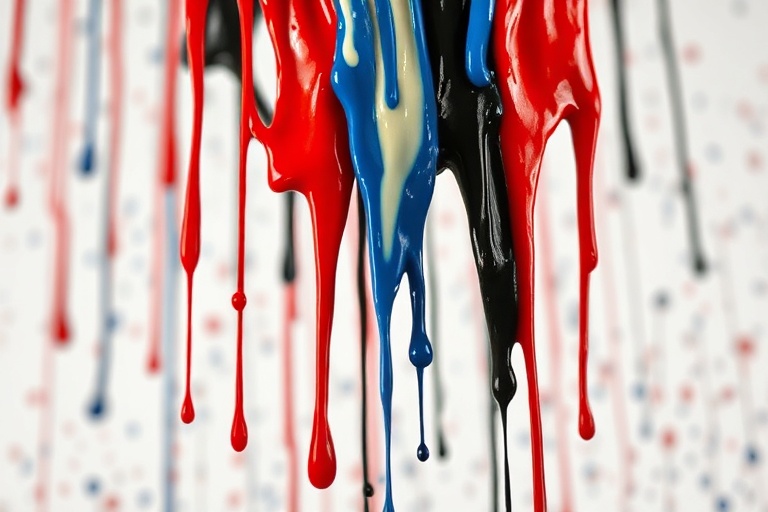
Pollock’s signature method involved placing his canvases on the studio floor and moving around them, using sticks, trowels, and even syringes to flick, drip, and splatter paint. This “action painting” approach emphasized the artist’s physical engagement with the material. Unlike the careful brushstrokes of classical painting, Pollock’s gestures were impulsive, rhythmic, and full of emotional charge. The result was a web of lines, splatters, and pools of color that seemed to capture movement and energy in stillness.
His technique was not merely a stylistic choice—it was a philosophical statement. Pollock rejected the idea that art should represent the visible world. Instead, he believed painting should emerge from the subconscious, reflecting inner turmoil and creative impulse. Critics and supporters alike were divided. Some saw his work as groundbreaking, a liberation from academic constraints. Others dismissed it as chaotic or even meaningless. Yet, over time, Pollock’s paintings became icons of 20th-century art, housed in museums from New York to Tokyo.
The act of painting, for Pollock, was as important as the final image. He once said, “I am nature,” suggesting a deep connection between his artistic process and the natural world. His canvases often resemble landscapes—swirling rivers, dense forests, or stormy skies—though entirely abstract. This paradox—between control and surrender—lies at the heart of his genius.
A Life of Turmoil and Triumph
Pollock’s personal life was as turbulent as his art. He struggled with alcoholism, depression, and self-doubt throughout his career. His relationship with fellow artist Lee Krasner was intense and complex; she served as both his muse and his anchor. Krasner managed his career, curated his exhibitions, and often edited his work. Their partnership reflected the collaborative yet isolating nature of artistic genius.
Despite his success, Pollock never fully escaped his demons. He died in 1956 at age 44 in a car crash, under the influence of alcohol. His untimely death cemented his legend, transforming him into a mythic figure—part tormented genius, part cultural revolutionary. Today, his paintings hang in the Museum of Modern Art in New York, the Tate Modern in London, and the Centre Pompidou in Paris, each drawing millions of visitors annually.
Pollock’s story resonates globally because it speaks to universal themes: creativity, struggle, and the search for meaning. In Japan, his work influenced the Gutai Group, a collective of artists who embraced spontaneity and physicality in their performances. In Europe, critics like Michel Tapié championed his work as part of the Informel movement, which rejected geometric abstraction in favor of emotional expression. Even in the digital age, Pollock’s influence persists—his techniques have been referenced in digital art and generative design, proving that his legacy transcends medium and time.
The Enduring Debate: Is It Art or Just Chaos?
The question of whether Pollock’s paintings are “art” or mere chaos has never fully faded. In 1999, a physicist named Richard Taylor used fractal analysis to study Pollock’s drip patterns, arguing that they contained mathematical complexity akin to natural phenomena. Other scholars have analyzed his brushwork for hidden symbols or psychological meaning. Yet, the debate remains open.
What is undeniable is Pollock’s impact. He didn’t just create paintings—he redefined what art could be. By removing the canvas from the easel, he transformed the act of painting into a performance. By embracing chance, he invited viewers to find their own meaning in the chaos. This openness is perhaps why his work continues to inspire artists, scholars, and audiences worldwide.
In an era when art is increasingly digital and conceptual, Pollock’s legacy reminds us of the power of physicality, instinct, and raw expression. His paintings are not just objects on a wall—they are records of a moment, a movement, a man wrestling with his own mind. They challenge us to look deeper, to question, and to feel.
A Global Legacy: Pollock’s Influence Across Continents
Pollock’s influence extends far beyond the United States. In Latin America, artists like Wifredo Lam and Roberto Matta incorporated his techniques into their surrealist and abstract styles. In Australia, the Antipodean Group embraced his emotional intensity while maintaining a connection to figuration. Even in Africa, where abstract art had long existed in traditional forms, Pollock’s work was studied as part of a broader dialogue about modernism and cultural identity.
In contemporary art, Pollock’s shadow looms large. Artists such as Julie Mehretu and Anselm Kiefer have cited him as an influence, blending his gestural energy with new technologies and global perspectives. Museums worldwide continue to mount retrospectives, ensuring that new generations encounter his work not as historical relics, but as living, breathing forces in art.
Pollock once said, “The painting has a life of its own. I try to let it come through.” In that simple statement lies the essence of his genius—and the reason his art still captivates the world.
Conclusion: Why Pollock Still Matters
Jackson Pollock was more than an artist. He was a cultural earthquake—a man who shook the foundations of what art could be. In a world increasingly dominated by digital perfection and curated aesthetics, his raw, unfiltered approach feels more relevant than ever. His paintings do not offer answers. They offer experiences—visceral, unpredictable, and deeply human.
As we stand in a museum gallery or scroll through an image online, we are not just looking at paint on canvas. We are witnessing a moment of creation, a burst of energy, a life lived in full color and contradiction. That is the power of Pollock. That is why, decades after his death, he continues to inspire, provoke, and challenge us.
—