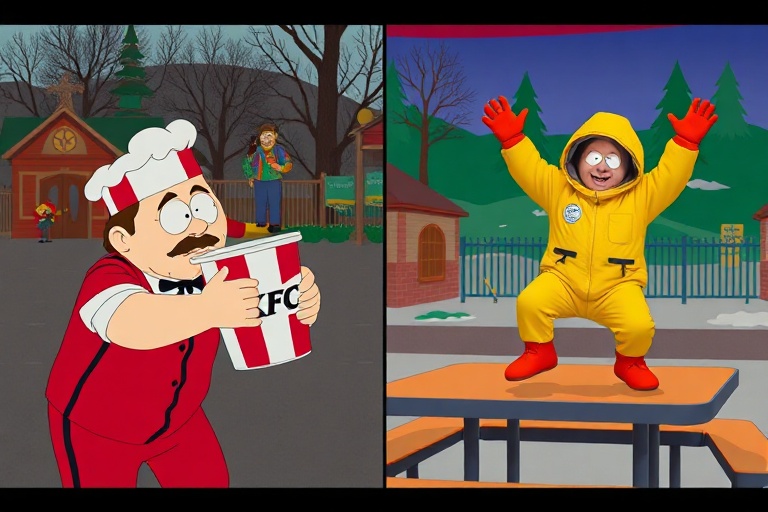
South Park Season 29: A Bold Return to Form
When South Park premiered its 29th season in September 2025, fans and critics alike wondered whether the show could recapture its signature blend of satire and absurdity after a few seasons that felt uneven. The season arrived with renewed energy, tackling contemporary issues with the show’s trademark irreverence. From its opening episode, which skewered cancel culture with its usual ferocity, to later installments that lampooned everything from influencer culture to political extremism, Season 29 proved why the series remains one of television’s most fearless comedies.
The season consisted of six episodes, a shorter run than usual but one that allowed for tighter storytelling and sharper writing. This brevity was a deliberate choice, giving the creators more room to refine their jokes and avoid the sprawling, uneven arcs that sometimes plagued earlier seasons. The result was a season that felt both fresh and familiar, a testament to South Park’s ability to evolve while staying true to its roots.
The Season’s Standout Episodes
Season 29’s strongest episodes were those that balanced topical humor with the show’s classic absurdity. The premiere, “The Pandemic Special: Part 3”, continued the storyline from the previous year’s COVID-19-themed episodes, this time exploring the chaos of vaccine mandates and political polarization. The episode’s climax—a literal battle between pro-vaccine and anti-vaccine factions in the town of South Park—was both hilarious and biting, a perfect distillation of the season’s themes.
Another highlight was “Band in China 2: The Return of the Ring”, which revisited the show’s 2008 episode “Band in China” to critique corporate censorship and the global reach of streaming platforms. The episode’s plot followed Randy Marsh as he attempted to launch a new boy band in China, only to run afoul of government censors. The satire was sharp, targeting not just Chinese censorship but also Hollywood’s complicity in self-censorship to appease foreign markets.
The season also included “The Marvelous Misadventures of Flappy Mueller”, an episode that parodied both the gaming industry and the absurdity of corporate rebranding. The plot centered on Randy’s ill-fated attempt to create a viral mobile game, only to have it co-opted by a soulless tech conglomerate. The episode’s humor was rooted in its recognition of how quickly trends and intellectual property can be exploited, a theme that resonated in an era of endless corporate reboots.
Tonal Consistency and Narrative Focus
One of the season’s defining strengths was its tonal consistency. Unlike some previous seasons, where the show’s writers occasionally struggled to balance multiple storylines, Season 29 maintained a clear focus. Each episode built on the season’s central themes—corporate greed, political extremism, and the erosion of free speech—while still delivering the show’s trademark shock humor. The writing was tighter, with fewer detours into surrealism for its own sake, and more emphasis on sharp, concise satire.
The season’s visual style also reflected this renewed focus. The animation retained South Park’s signature crude aesthetic, but the backgrounds and character designs felt more polished than in recent years. This attention to detail extended to the voice acting, with Trey Parker and Matt Stone once again delivering standout performances. Parker’s portrayal of Randy Marsh, in particular, felt more nuanced this season, balancing the character’s usual idiocy with moments of unexpected pathos.
Cultural Commentary in the Digital Age
South Park has always thrived on its ability to skewer cultural trends, and Season 29 was no exception. The season’s episodes reflected a world where misinformation spreads as quickly as truth, where corporations wield more power than governments, and where political discourse has devolved into performative outrage. The show’s writers didn’t shy away from these topics, instead embracing them with a mix of humor and cynicism.
One of the season’s most timely episodes, “The One Where They Cancel South Park”, explored the paradox of cancel culture from both sides. The episode followed the boys as they attempted to cancel themselves after a controversial tweet, only to find that their efforts backfired spectacularly. The satire was biting, targeting both the performative nature of online activism and the hypocrisy of those who claim to fight for free speech while simultaneously policing others. The episode’s climax—a courtroom scene where the boys were forced to defend their right to offend—was a masterclass in comedic timing.
The season also delved into the absurdity of modern media consumption. In “Streaming Wars: The Revenge of the Nerds”, the boys launched their own streaming platform to compete with Netflix and Disney+, only to be crushed by the sheer scale of corporate competition. The episode’s humor lay in its exaggeration of the streaming industry’s cutthroat nature, from algorithmic suppression of content to the endless cycle of reboots and spin-offs. It was a reminder that South Park remains one of the few shows willing to hold the entertainment industry accountable for its excesses.
The Future of South Park
As Season 29 drew to a close, fans were left wondering what the show’s creators had in store for the future. The season’s success suggested that South Park is still capable of producing sharp, relevant satire, but the show’s long-term viability remains an open question. With Trey Parker and Matt Stone increasingly focused on their Broadway ventures and other projects, the question of whether South Park can continue indefinitely looms large.
However, the season also demonstrated that the show’s core appeal—its willingness to tackle uncomfortable topics with humor and honesty—remains intact. In an era where so much comedy is either overly cautious or outright cynical, South Park stands out as a rare beacon of fearless satire. Whether it’s skewering political extremism, corporate greed, or the absurdity of modern life, the show continues to prove that laughter is one of the most effective tools for critiquing the world around us.
For fans of the show, Season 29 was a reminder of why South Park has endured for nearly three decades. It wasn’t just a collection of jokes; it was a reflection of the cultural moment, filtered through the show’s unique lens. And in a television landscape dominated by safe, formulaic content, that’s something worth celebrating.
Where to Watch and What’s Next
If you’re looking to dive into Season 29, all episodes are available on Dave’s Locker’s streaming category, where you can find the best platforms to watch the show. The season is also a great entry point for new viewers, as it stands on its own while still rewarding longtime fans with callbacks and references.
As for what’s next, South Park has already announced plans for a 30th season, though details remain scarce. Given the show’s track record, it’s safe to assume that the next season will continue to push boundaries, whether through new characters, fresh storylines, or even more outrageous satire. One thing is certain: if there’s a cultural trend worth mocking, South Park will find a way to do it.
For now, Season 29 serves as a reminder that even in an age of endless content, there’s still room for comedy that challenges, provokes, and ultimately entertains. South Park may not always get it right, but when it does, it’s unlike anything else on television.