Starship: SpaceX’s Revolutionary Spacecraft and Its Future Impact
“`html
What Is Starship and Why It’s Redefining Space Exploration
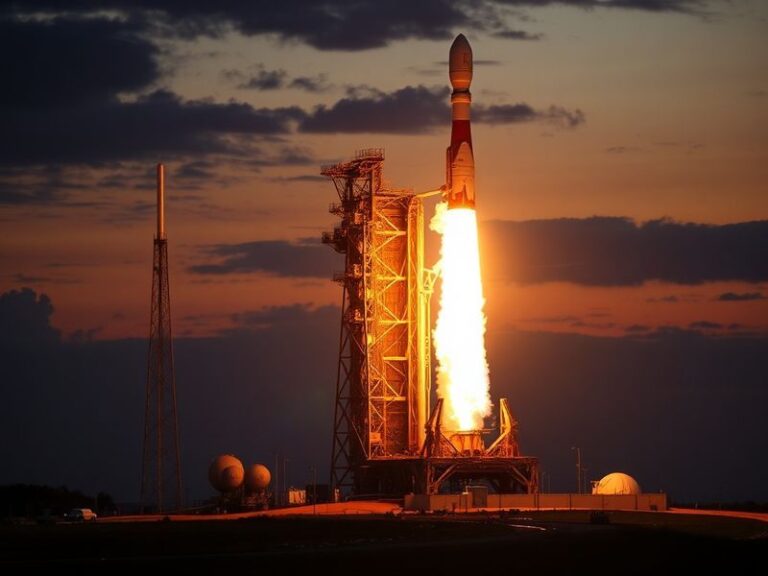
Starship, developed by SpaceX, stands as the most ambitious spacecraft system ever built. Designed to carry both crew and cargo, it represents a leap in reusable rocket technology. With a fully integrated launch and landing system, Starship aims to make interplanetary travel accessible and sustainable. Unlike traditional rockets, it is built for rapid reuse, drastically reducing the cost of space missions.
At its core, Starship consists of two main components: the Super Heavy booster and the Starship spacecraft. The booster serves as the first stage, providing the thrust needed to escape Earth’s gravity. The upper stage, simply called Starship, functions as both a spaceship and a second-stage rocket. Together, they form a fully reusable transportation system capable of reaching the Moon, Mars, and beyond.
The Design Philosophy Behind Starship’s Innovation
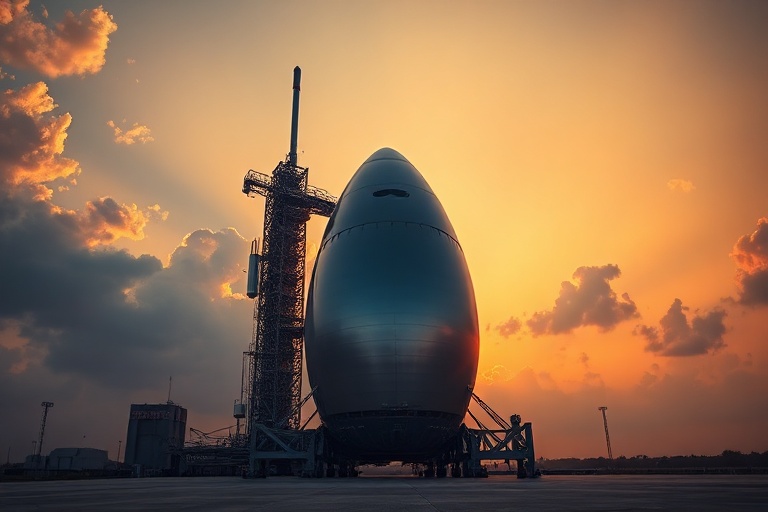
The design of Starship is driven by simplicity, reusability, and performance. Constructed primarily from stainless steel, it is both durable and cost-effective compared to traditional aluminum-lithium alloys. The steel structure withstands the extreme temperatures of reentry, reducing the need for complex thermal protection systems.
A key innovation is the Raptor engine, fueled by liquid methane and oxygen. This choice allows for in-situ resource utilization on Mars, where methane can be synthesized from the planet’s atmosphere. The engines are clustered in a way that maximizes thrust while maintaining control during ascent and descent.
The spacecraft’s stainless steel body also serves a secondary purpose: it reflects heat during reentry, reducing thermal stress. This approach contrasts with the ceramic tiles used on the Space Shuttle, which required extensive refurbishment after each flight. Starship’s design eliminates much of that maintenance, enabling faster turnaround between missions.
Key Milestones in Starship’s Development Timeline
SpaceX’s journey with Starship began with smaller prototypes, starting with the Starhopper in 2019. This short-hop test vehicle validated the basic flight mechanics of a single Raptor engine. Subsequent prototypes, including SN5 and SN6, demonstrated controlled hops of up to 150 meters, proving the vehicle’s stability.
In 2020 and 2021, SpaceX shifted focus to orbital prototypes. Starship SN8 achieved a high-altitude flight, reaching nearly 12.5 kilometers before attempting a landing. Although it exploded on impact, the test provided crucial data on aerodynamic control and engine performance. Later prototypes, such as SN10, SN11, and SN15, refined these capabilities, with SN15 successfully landing in May 2021.
The next major milestone came in May 2024, when Starship completed its first full-scale integrated flight test. The vehicle launched from Starbase in Boca Chica, Texas, and while it experienced a rapid unscheduled disassembly during ascent, it demonstrated key systems like stage separation and in-flight engine relighting. Each test builds toward the ultimate goal: a fully operational, orbital-class spacecraft.
Starship’s Role in NASA’s Artemis Program and Beyond
NASA selected Starship as the lunar lander for its Artemis program, which aims to return humans to the Moon by 2026. The contract, worth $2.9 billion, tasked SpaceX with developing a version of Starship capable of landing astronauts on the lunar surface. This mission will rely on the Lunar Starship, a modified version equipped with landing legs and a docking system for the Orion spacecraft.
The collaboration between NASA and SpaceX highlights a shift in space exploration strategy. Traditional government-led missions are now complemented by private sector innovation. Starship’s ability to carry large payloads—up to 100 metric tons to the Moon—makes it ideal for establishing a sustainable lunar base. Future missions could include delivering habitats, rovers, and scientific instruments.
Beyond the Moon, Starship is also a candidate for Mars missions. Elon Musk has repeatedly emphasized Mars as the ultimate goal, envisioning a fleet of Starships transporting one million people to the Red Planet within the next few decades. While this remains aspirational, the technology being developed for Starship is laying the groundwork for interplanetary colonization.
Challenges and Criticisms Facing Starship’s Future
Despite its promise, Starship faces significant challenges. Regulatory hurdles, particularly from the Federal Aviation Administration (FAA), have delayed testing and launches. Environmental groups have raised concerns about the impact of frequent launches on the Boca Chica ecosystem, leading to lawsuits and additional review processes.
Technical challenges also persist. Reusability requires not just landing the vehicle intact but also refurbishing it quickly and safely. SpaceX has made progress, but the company acknowledges that the path to rapid reuse is still uncharted. Engine reliability, thermal management, and structural integrity under repeated stress are all areas requiring further refinement.
Critics argue that Starship’s development has been plagued by overpromising and underdelivering. Delays in testing schedules and the high cost of iterations have drawn scrutiny. However, supporters point out that such a groundbreaking project naturally encounters obstacles. The iterative approach—build, test, learn, improve—is a hallmark of SpaceX’s methodology.
To address these concerns, SpaceX has expanded its testing facilities and increased collaboration with regulatory agencies. The company has also diversified its launch sites, with plans to establish a second spaceport in Florida. These steps aim to mitigate risk and accelerate the timeline for operational flights.
How Starship Could Change the Space Industry
Starship is poised to disrupt multiple sectors within the space industry. Its low-cost, high-capacity design could revolutionize satellite deployment, enabling the launch of large constellations at a fraction of current costs. Companies like Starlink, already a major SpaceX customer, stand to benefit from more efficient launch schedules.
The spacecraft’s potential for deep-space missions opens new frontiers for scientific research. Missions to Europa, Enceladus, and other celestial bodies could carry heavier instruments and return larger sample sizes. This capability could lead to breakthroughs in astrobiology and planetary science.
Moreover, Starship could democratize access to space. By reducing launch costs to as low as $10 million per mission, it makes space more accessible to smaller nations, research institutions, and even private individuals. This shift could spur innovation in fields ranging from manufacturing to medicine.
The economic impact is equally significant. A fully operational Starship could generate billions in revenue through commercial launches, lunar tourism, and Mars colonization efforts. It may also spur the growth of a space-based economy, including in-space manufacturing and asteroid mining.
What’s Next for Starship and Space Exploration
Looking ahead, SpaceX plans to conduct more integrated flight tests, with the goal of achieving a successful orbital launch and return. Each test will bring the company closer to certifying Starship for crewed missions. NASA’s Artemis program remains a critical milestone, with the first crewed lunar landing expected in the mid-2020s.
For Mars, the timeline is less certain but no less ambitious. Musk has suggested that uncrewed cargo missions could precede human missions by the late 2020s, with the first crewed flights following in the 2030s. While these dates are speculative, the progress of Starship suggests they are within the realm of possibility.
Starship is more than a spacecraft—it’s a catalyst for a new era of space exploration. Its success could redefine humanity’s relationship with the cosmos, turning science fiction into reality. As testing continues and milestones are achieved, the world watches with anticipation, aware that each flight brings us one step closer to the stars.
For those interested in following space industry developments, Technology and Science sections on Dave’s Locker provide in-depth coverage of aerospace advancements and their broader implications.