SpaceX Falcon Heavy Launch: A New Era in Space Exploration
“`html
SpaceX Falcon Heavy Launch: A New Era in Space Exploration
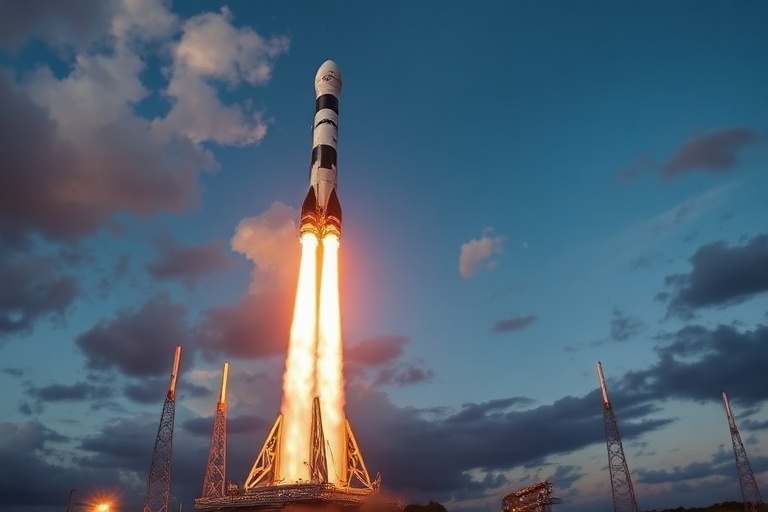
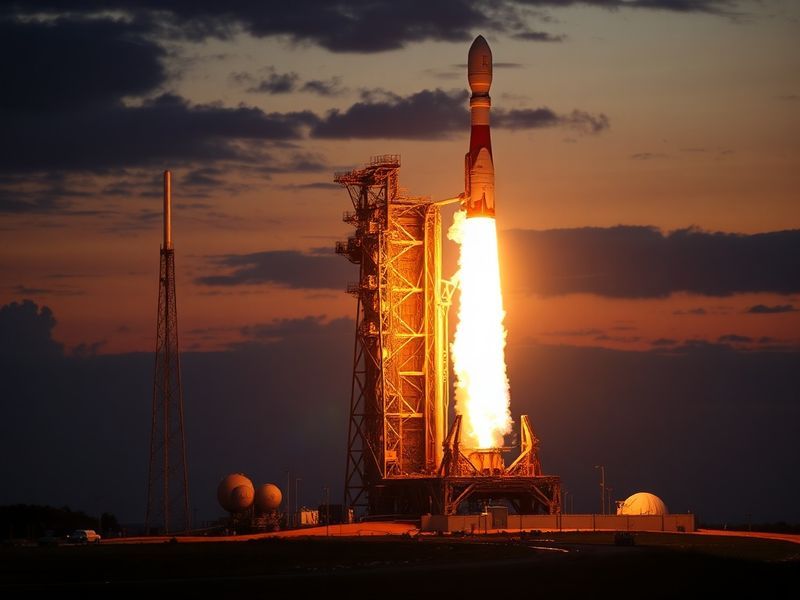
The SpaceX Falcon Heavy, the world’s most powerful operational rocket, has once again demonstrated its capabilities with its latest launch. This mission not only carried payloads into orbit but also signaled a shift in how we approach space exploration, commercial spaceflight, and even interplanetary travel. The Falcon Heavy’s design, built on the foundation of SpaceX’s proven Falcon 9, combines three reusable cores to deliver unparalleled payload capacity and cost efficiency.
What makes this launch particularly noteworthy is its timing and payload. The rocket carried a mix of commercial satellites and a classified payload for the U.S. Space Force, highlighting its dual-use potential for both civilian and military applications. The successful deployment of these payloads underscores the rocket’s reliability and versatility, cementing its role as a cornerstone of modern space operations.
The Technical Breakthroughs Behind Falcon Heavy
The Falcon Heavy is not just a scaled-up version of the Falcon 9. It represents a series of engineering innovations that push the boundaries of what’s possible in rocketry. At its core, the rocket consists of three Falcon 9 first-stage boosters, each equipped with nine Merlin engines. Together, they generate over 5 million pounds of thrust at liftoff, making it the most powerful operational rocket in the world.
One of the most impressive aspects of the Falcon Heavy is its reusability. SpaceX has designed the rocket to return its boosters to Earth for refurbishment and reuse, significantly reducing the cost of space missions. The latest launch saw all three boosters land successfully—two on land and one on a drone ship at sea—demonstrating the precision and reliability of SpaceX’s recovery systems. This reusability is a game-changer for the space industry, as it slashes launch costs from hundreds of millions to tens of millions per mission.
Another key innovation is the rocket’s payload capacity. The Falcon Heavy can carry up to 64 metric tons to low Earth orbit (LEO), more than twice the capacity of the next closest operational rocket, the Delta IV Heavy. This massive payload capacity opens up new possibilities for deep-space missions, including crewed missions to the Moon and Mars, as well as the deployment of large-scale satellite constellations.
Broader Implications for Space Exploration and Industry
The implications of the Falcon Heavy’s success extend far beyond the technical achievements. This rocket is a critical enabler for NASA’s Artemis program, which aims to return humans to the Moon by 2025. The Falcon Heavy’s heavy-lift capabilities make it an ideal candidate for launching the lunar lander and other components of the Artemis mission. Additionally, its reusability aligns with NASA’s goals of sustainable and cost-effective space exploration.
Commercially, the Falcon Heavy is reshaping the satellite industry. Companies like SpaceX’s Starlink and competitors like OneWeb are deploying massive constellations of satellites to provide global broadband internet. The Falcon Heavy’s ability to launch multiple satellites in a single mission reduces the time and cost of deploying these constellations, accelerating the race to deliver high-speed internet to every corner of the globe.
The military implications are equally significant. The U.S. Space Force has increasingly relied on commercial rockets like the Falcon Heavy to deploy critical assets such as communication satellites and surveillance platforms. The rocket’s ability to carry classified payloads demonstrates its strategic value in national security operations. This trend is likely to continue, as the Department of Defense seeks to leverage commercial innovation to maintain its technological edge.
Key Achievements of the Falcon Heavy Program
- First launch (February 2018): The Falcon Heavy’s maiden flight carried SpaceX CEO Elon Musk’s Tesla Roadster into space, a symbolic gesture that captured global attention and proved the rocket’s capabilities.
- First commercial launch (April 2019): The rocket deployed Arabsat-6A, a communications satellite, marking its transition from a test vehicle to a commercially viable launch platform.
- First military launch (June 2019): The Space Test Program-2 mission carried multiple payloads for the Department of Defense, demonstrating the rocket’s reliability for national security missions.
- Latest launch (2024): The most recent mission successfully deployed a mix of commercial and classified payloads, further solidifying the rocket’s role in both civilian and military space operations.
A Closer Look at the Mission and Its Payloads
The latest Falcon Heavy launch carried a diverse set of payloads, each serving a unique purpose. Among the most notable was a cluster of commercial satellites designed to enhance global communications and Earth observation capabilities. These satellites are part of growing constellations that aim to provide real-time data for industries ranging from agriculture to disaster response.
In addition to the commercial payloads, the mission included a classified payload for the U.S. Space Force. While details about the payload remain undisclosed, its inclusion highlights the growing role of commercial rockets in national security operations. The Space Force’s reliance on platforms like the Falcon Heavy underscores the importance of public-private partnerships in maintaining America’s dominance in space.
The launch also served as a testbed for future technologies. SpaceX used this mission to evaluate improvements to the rocket’s second stage, which is critical for long-duration missions such as those to the Moon or Mars. These upgrades could pave the way for even more ambitious missions in the coming years, including crewed flights aboard the Starship, SpaceX’s next-generation rocket.
What’s Next for SpaceX and the Falcon Heavy?
The future of the Falcon Heavy is closely tied to SpaceX’s broader ambitions. While the rocket remains the most powerful operational launch vehicle, SpaceX is already looking ahead to the Starship, which promises even greater payload capacity and reusability. The Starship is designed to eventually replace both the Falcon 9 and Falcon Heavy, but the latter will likely remain in service for years to come, particularly for missions that require its unique heavy-lift capabilities.
In the near term, the Falcon Heavy is poised to play a central role in NASA’s Artemis program. The rocket is expected to launch the first elements of the Lunar Gateway, a space station orbiting the Moon that will serve as a staging point for crewed missions to the lunar surface. Additionally, the Falcon Heavy could be used to launch large-scale scientific missions, such as telescopes or probes to explore the outer solar system.
Commercially, the Falcon Heavy will continue to support the deployment of satellite constellations, particularly those aimed at global broadband internet. The rocket’s ability to launch multiple satellites in a single mission makes it an attractive option for companies like SpaceX’s Starlink and competitors like Amazon’s Project Kuiper. As demand for global connectivity grows, the Falcon Heavy will be a key player in meeting that demand.
For enthusiasts and industry observers, the Falcon Heavy represents more than just a technological marvel. It is a symbol of humanity’s expanding reach into the cosmos, a tangible proof that the final frontier is within our grasp. As SpaceX continues to push the boundaries of what’s possible, the Falcon Heavy will remain a critical tool in humanity’s journey to the stars.
For those interested in staying updated on the latest developments in space exploration and technology, Dave’s Locker Science section offers in-depth coverage of missions like the Falcon Heavy. Additionally, the Technology section provides analysis on the broader impact of innovations like reusable rockets.
Conclusion
The SpaceX Falcon Heavy launch is more than just a technical achievement—it is a milestone in humanity’s quest to explore and utilize space. With its unparalleled payload capacity, reusability, and versatility, the Falcon Heavy is reshaping the space industry, enabling new missions, and driving down the cost of access to space. As we look to the future, the rocket will play a pivotal role in NASA’s Artemis program, commercial satellite deployments, and national security operations. For the space community, the Falcon Heavy is not just a rocket; it is a symbol of what’s possible when innovation meets ambition.