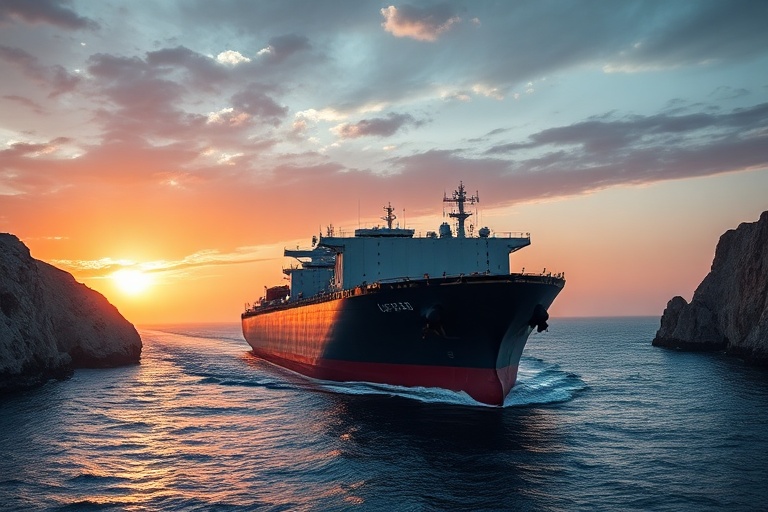
The Strait of Hormuz is more than just a narrow waterway in the Persian Gulf—it is the circulatory system of the global oil market. Connecting the Gulf of Oman to the Persian Gulf, this 21-mile-wide channel sees an estimated 21 million barrels of oil pass through it daily, accounting for roughly one-third of the world’s seaborne oil shipments. Disruptions here send shockwaves through energy markets, affecting everything from gasoline prices at the pump to geopolitical alliances.
Its strategic importance cannot be overstated. The strait lies between Iran and Oman, and its waters are patrolled by a complex web of naval forces from the U.S., U.K., and other nations. Any instability—whether through military tensions, sabotage, or political maneuvering—can trigger immediate economic consequences. Understanding the Strait of Hormuz means recognizing its role as both a vital resource corridor and a potential flashpoint in global energy security.
The Economic Importance of the Strait
Every day, supertankers loaded with crude oil from Saudi Arabia, Iraq, the United Arab Emirates, and Iran transit the Strait of Hormuz. These shipments feed refineries from Asia to Europe, making the strait indispensable to the global economy. In 2022 alone, nearly 88% of the oil exported from Persian Gulf countries passed through this narrow channel. The economic stakes are enormous: even a temporary closure could disrupt oil supplies, leading to price spikes and supply shortages.
Oil prices are highly sensitive to developments in the Strait of Hormuz. During periods of heightened tension—such as the 2019 attacks on tankers near the strait or Iran’s seizure of a British-flagged vessel in 2019—Brent crude prices have risen by 10% or more within days. This volatility affects everything from airline ticket prices to consumer goods, as energy costs ripple through supply chains.
- Key oil exporters using the Strait of Hormuz: Saudi Arabia, Iraq, UAE, Kuwait, Iran
- Major importers relying on these shipments: China, India, Japan, South Korea, Europe
- Estimated daily oil flow: 21 million barrels (as of recent data)
Beyond oil, the strait is also a critical route for liquefied natural gas (LNG). Qatar, the world’s largest LNG exporter, sends nearly all its gas shipments through the Strait of Hormuz. Any disruption here would not only tighten oil markets but also send LNG prices surging, further destabilizing energy markets.
Geopolitical Tensions and Military Presence
The Strait of Hormuz is not just an economic chokepoint—it is a geopolitical powder keg. Iran has repeatedly threatened to block the strait in response to sanctions or perceived threats, most notably in 2018 when then-President Hassan Rouhani warned that Iran could “close the Strait of Hormuz” if the U.S. continued to impose oil sanctions. Such statements are taken seriously because Iran has demonstrated the capability to disrupt shipping through mines, anti-ship missiles, and fast-attack boats.
The U.S. has maintained a strong military presence in the region to counter these threats. The U.S. Fifth Fleet, based in Bahrain, is tasked with ensuring the free flow of maritime traffic. Other nations, including the U.K. and France, have also deployed naval assets to the area. This presence has led to tense standoffs, such as the 2021 collision between an Iranian vessel and an Israeli-linked ship, or the 2023 seizure of a tanker by Iran’s Revolutionary Guard.
Diplomatic efforts to de-escalate tensions have had mixed results. The 2015 nuclear deal (JCPOA) temporarily eased concerns, but its collapse in 2018 renewed fears of military conflict. Meanwhile, regional players like Saudi Arabia and the UAE have invested in alternative export routes, such as the Abu Dhabi Crude Oil Pipeline, to reduce their dependence on the Strait of Hormuz. Still, these alternatives cannot fully replace the volume of oil moving through the strait.
Alternatives and Mitigation Strategies
Given the risks associated with the Strait of Hormuz, several countries and companies have explored alternatives to mitigate potential disruptions. One of the most significant efforts has been the development of overland pipelines that bypass the strait entirely. For example:
- East-West Pipeline (Saudi Arabia): This 1,200 km pipeline transports oil from Saudi Arabia’s eastern fields to the Red Sea port of Yanbu, bypassing the Strait of Hormuz entirely.
- Abu Dhabi Crude Oil Pipeline (UAE): This pipeline moves oil from Abu Dhabi’s Habshan fields to Fujairah on the Gulf of Oman, reducing reliance on the strait.
- Iraqi Pipeline to Turkey: While this route passes through Kurdish regions, it provides an alternative export option for Iraqi oil.
These alternatives offer partial relief, but they come with their own challenges. Pipelines can be vulnerable to sabotage or political disputes, and they often have limited capacity compared to seaborne shipments. Additionally, countries that reduce their dependence on the Strait of Hormuz may still face secondary effects, such as higher insurance costs for ships transiting the region.
Another strategy is the use of floating storage and offshore terminals, which allow oil to be loaded onto tankers without entering the strait. These facilities, such as the UAE’s Fujairah terminal, provide a buffer against disruptions but require significant investment and infrastructure.
The Future of the Strait: Risks and Resilience
The Strait of Hormuz remains the most critical chokepoint in global energy security, and its future is fraught with uncertainty. Several factors will shape its role in the coming years:
- Iran’s Nuclear Program: If diplomacy fails and sanctions tighten, Iran may escalate its rhetoric or actions, increasing the risk of conflict.
- U.S.-China Rivalry: As China’s oil imports from the Persian Gulf grow, its naval presence in the region may increase, further complicating security dynamics.
- Technological Advancements: The rise of renewable energy and electric vehicles could reduce global oil dependence, but this transition is likely decades away.
- Climate Change: Rising temperatures and extreme weather events could affect shipping patterns, but the strait’s geopolitical risks will likely remain unchanged.
Despite these challenges, the global economy remains deeply intertwined with the Strait of Hormuz. Even as nations diversify their energy sources, the strait’s role as a critical transit route is unlikely to diminish in the near term. This reality underscores the need for strong international cooperation to ensure the free flow of oil while preventing conflicts that could destabilize energy markets.
For policymakers, energy executives, and consumers alike, the Strait of Hormuz is a reminder of how interconnected the world has become. A single disruption in this narrow waterway can ripple across continents, affecting livelihoods and economies. As such, its security is not just a regional concern—it is a global imperative.
“The Strait of Hormuz is the single most important chokepoint in the world’s energy system. Any disruption here would have immediate and far-reaching consequences for the global economy.” — International Energy Agency (IEA)
As we look to the future, the challenge will be balancing the need for energy security with the imperative of avoiding conflict. Whether through diplomacy, technological innovation, or strategic investments, the world must find ways to safeguard this vital artery of global trade.