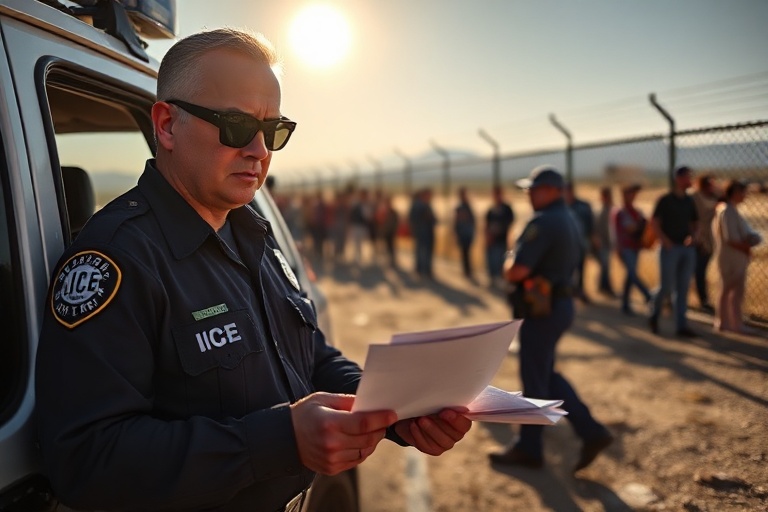
united states immigration and customs enforcement
“`html
Understanding ICE: The Role of U.S. Immigration and Customs Enforcement
Immigration and Customs Enforcement (ICE) stands as one of the most pivotal yet controversial agencies within the United States government. Established in 2003 as part of the Department of Homeland Security (DHS), ICE enforces federal laws governing border control, customs, trade, and immigration—including the investigation of criminal activity tied to these areas. Its mission is broad, spanning from combating human trafficking to dismantling transnational criminal organizations. Yet, ICE’s operations have consistently sparked intense debate, reflecting deeper societal divides over immigration policy, national security, and human rights.
The agency’s dual focus on immigration enforcement and border protection places it at the center of global discussions about sovereignty, humanitarian obligations, and the rule of law. To understand ICE’s global impact, it’s essential to examine its structure, key functions, and the cultural narratives that shape its perception both domestically and abroad.
The Structure and Responsibilities of ICE
ICE operates through two main directorates: Homeland Security Investigations (HSI) and Enforcement and Removal Operations (ERO). HSI focuses on investigating crimes such as human trafficking, cybercrimes, financial fraud, and narcotics smuggling, often collaborating with international agencies like Europol and Interpol. ERO, on the other hand, handles the detention and deportation of undocumented immigrants, a role that has drawn significant scrutiny.
These divisions reflect ICE’s multifaceted mandate, which extends beyond U.S. borders. For example, HSI agents have worked alongside European law enforcement to dismantle child exploitation rings operating across multiple continents. Similarly, ERO’s removal efforts have repatriated individuals from countries as diverse as Mexico, the Philippines, and Somalia, illustrating the agency’s far-reaching influence.
The agency’s reach is not confined to law enforcement. ICE also plays a role in trade and customs enforcement, targeting counterfeit goods, illegal wildlife trafficking, and violations of intellectual property rights. These efforts have global implications, particularly in regions where counterfeit products undermine local economies and public health.
Controversies and Ethical Debates
Despite its broad mandate, ICE has been a lightning rod for controversy. Critics argue that its enforcement practices disproportionately target vulnerable communities, including asylum seekers and undocumented immigrants with no criminal record. Reports of family separations, prolonged detention conditions, and allegations of abuse in ICE facilities have fueled international condemnation, with organizations like Amnesty International and the United Nations calling for reforms.
The agency’s approach to immigration enforcement has also strained diplomatic relations. For instance, when ICE conducted raids in 2019 targeting undocumented workers at agricultural facilities in Mississippi, the operation left hundreds of children without parents, prompting outrage from global leaders and humanitarian groups. Such incidents have led to comparisons with immigration policies in other nations, where enforcement is often viewed through a more humanitarian lens.
Supporters of ICE, however, emphasize its role in maintaining national security and upholding the rule of law. They point to successful operations that have disrupted human trafficking networks and prevented terrorist threats as evidence of the agency’s necessity. For these advocates, ICE represents a critical line of defense against transnational crime and illegal immigration.
The Cultural Narrative: ICE in Media and Public Perception
ICE’s portrayal in media and popular culture further complicates its public image. Television shows like Border Wars and documentaries such as Human Flow have framed the agency either as a necessary enforcer or a symbol of systemic oppression, depending on the perspective. In the United States, ICE has become a polarizing figure in political discourse, with its policies often serving as a litmus test for broader debates about immigration reform.
Globally, ICE’s reputation varies widely. In countries with strict immigration controls, such as Australia or Israel, the agency is sometimes viewed as a model for balancing enforcement with humanitarian concerns. Conversely, in nations with more lenient policies, ICE is often criticized for its aggressive tactics and perceived disregard for human rights.
The cultural divide is also evident in how different communities interact with ICE. For many immigrants in the U.S., the agency evokes fear and uncertainty, particularly in communities where local law enforcement collaborates with ICE through programs like 287(g). This collaboration has led to mistrust in immigrant populations, who may avoid reporting crimes or seeking medical help due to fear of deportation.
Looking Ahead: The Future of ICE and Global Immigration Policy
The future of ICE will likely be shaped by evolving immigration policies, both in the U.S. and abroad. As climate change and economic disparities drive migration patterns, agencies like ICE will face increasing pressure to adapt. Some experts advocate for a more humanitarian approach, prioritizing pathways to legal status over deportation. Others argue for stricter enforcement to protect national security and economic interests.
Regardless of the direction, ICE’s role in global immigration enforcement ensures that it will remain a topic of intense discussion. The agency’s ability to balance its dual mandate—protecting borders while upholding human rights—will determine whether it is seen as a force for order or a symbol of division.
For now, ICE continues to operate at the intersection of law, policy, and culture, reflecting the complexities of a world grappling with migration, security, and identity.
—
METADATA
{
“title”: “What Is ICE? Inside U.S. Immigration and Customs Enforcement”,
“metaDescription”: “Explore the role, controversies, and global impact of ICE—from enforcement to humanitarian debates shaping U.S. immigration policy.”,
“categories”: [“Politics”, “Analysis”],
“tags”: [“ICE”, “immigration enforcement”, “Homeland Security”, “ERO”, “HSI”],
“imageDescription”: “A divided image showing ICE agents at a border checkpoint on one side and a protest with signs reading ‘Abolish ICE’ on the other, set against an urban backdrop with a somber, documentary-style mood.”
}
—END METADATA—
“`