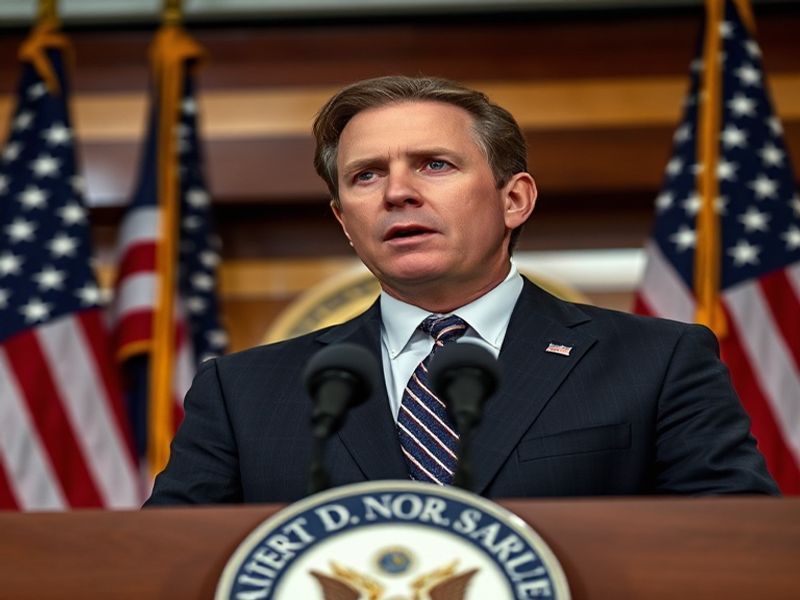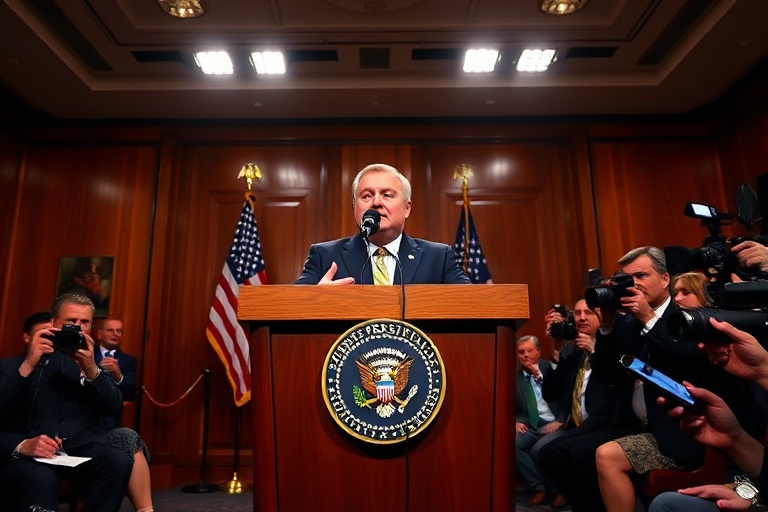
Vice President Vance Holds Press Conference on Economic Policy
Vice President JD Vance convened a press conference today at the White House briefing room, addressing recent economic developments and the administration’s strategy for addressing inflation. Speaking to reporters from major outlets, Vance emphasized the need for fiscal restraint while defending the president’s recent spending proposals.
The vice president opened with a 15-minute statement, outlining three core priorities: reducing regulatory burdens on small businesses, accelerating domestic energy production, and negotiating targeted trade agreements. His remarks came amid growing concerns over rising consumer prices and mixed signals from the Federal Reserve regarding interest rate adjustments.
“We cannot grow our way out of inflation by printing more money,” Vance stated, referencing recent reports showing a 0.4% increase in the Consumer Price Index for May. He pointed to supply-chain disruptions and labor shortages as contributing factors, calling for a “balanced approach” that supports growth without fueling further price instability.
Key Takeaways from the Vice President’s Remarks
Vance’s address touched on multiple policy areas, with several moments drawing particular attention from political observers and market analysts. Below are the most discussed points:
- Energy Independence: Vance reaffirmed the administration’s commitment to expanding domestic oil and gas production, framing it as both an economic and national security issue. He cited recent bipartisan energy legislation as a step in the right direction.
- Trade Policy: He criticized recent tariffs on imported goods, suggesting they could inadvertently raise costs for American consumers. Instead, he advocated for “smart trade agreements” that protect American workers while opening new markets for U.S. exports.
- Small Business Support: Vance announced a new initiative aimed at simplifying permitting processes for entrepreneurs, highlighting small businesses as “the engine of job creation.” He referenced data from the U.S. Small Business Administration showing that 43% of new jobs come from firms with fewer than 50 employees.
- Federal Reserve Collaboration: While avoiding direct criticism of the central bank, Vance underscored the importance of coordination between fiscal and monetary policy. He called for “predictable, long-term planning” to reduce uncertainty in financial markets.
Reactions from Capitol Hill and Beyond
Lawmakers on Capitol Hill offered mixed responses to the vice president’s remarks. Senate Majority Leader Chuck Schumer released a statement calling Vance’s proposals “too narrow,” arguing they failed to address wage stagnation and healthcare costs. Meanwhile, House Speaker Mike Johnson praised the administration’s focus on energy and regulatory reform, calling it “a refreshing departure from recent fiscal irresponsibility.”
Outside Washington, business groups reacted cautiously. The U.S. Chamber of Commerce issued a guarded endorsement, stating that while regulatory relief was welcome, “fiscal discipline cannot be sacrificed at the altar of growth.” Labor unions, represented by the AFL-CIO, criticized Vance’s energy policies as environmentally short-sighted and warned of potential job losses in green industries.
Economists interviewed by major financial outlets offered nuanced perspectives. Some, like former Treasury Secretary Lawrence Summers, praised the administration’s emphasis on supply-side measures but warned that without addressing structural deficits, inflation risks could persist. Others, such as Moody’s Analytics Chief Economist Mark Zandi, cautioned that Vance’s proposals lacked sufficient detail to assess their macroeconomic impact.
What’s Next for the Administration’s Economic Agenda
Vance’s press conference served as a preview of the administration’s broader economic strategy heading into the summer. Several initiatives are expected to move forward in the coming weeks:
- Regulatory Reform Bill: A bipartisan proposal aimed at streamlining permitting for energy projects and small businesses is reportedly nearing a vote in the House. The bill has drawn support from industry groups but faces skepticism from progressive Democrats concerned about environmental protections.
- Trade Negotiations with Europe: Vance confirmed ongoing talks with EU officials to reduce non-tariff barriers on digital trade and agricultural products. The negotiations, if successful, could provide a boost to U.S. exporters in the second half of the year.
- Energy Infrastructure Investments: The Department of Energy is expected to announce funding opportunities for grid modernization and clean energy storage projects. The initiative aligns with Vance’s broader energy independence goals while incorporating renewable technologies.
- Fed Oversight Hearings: In response to recent inflation data, the House Financial Services Committee has scheduled hearings to examine the Federal Reserve’s policy framework. Vance’s comments suggest the administration will push for greater transparency and accountability from the central bank.
Analysts note that the vice president’s economic messaging represents a shift from the administration’s earlier focus on cultural and social issues. While those topics remain part of the broader political strategy, Vance’s emphasis on inflation, jobs, and fiscal policy signals a pivot toward pocketbook concerns ahead of the next election cycle.
Political strategists suggest this could be a deliberate move to appeal to independent and undecided voters who have grown frustrated with rising prices. Polling data from late June indicates that inflation remains the top concern for 62% of registered voters, surpassing concerns about immigration or foreign policy.
Broader Implications for the 2024 Election
The vice president’s press conference is unlikely to quell debates over the administration’s economic record, but it does provide a clearer roadmap for the coming months. With the election less than five months away, economic performance will likely dominate campaign messaging from both parties.
Republicans are expected to highlight inflation and border security, while Democrats will likely emphasize job growth and infrastructure investments. Vance’s role in shaping the administration’s economic narrative could elevate his profile as a potential successor to the president in 2028.
For now, the White House appears focused on messaging discipline and policy execution. Whether these efforts will translate into measurable improvements in the economy remains an open question—one that will be answered not in press conferences, but in the experiences of American families at grocery stores, gas stations, and job sites.
As the administration moves forward, all eyes will be on the next jobs report, inflation data, and Federal Reserve decisions. These metrics will determine whether Vance’s vision for economic recovery gains traction—or if it becomes another talking point in an increasingly polarized political landscape.
For more analysis on economic policy and political trends, visit our News and Politics sections.