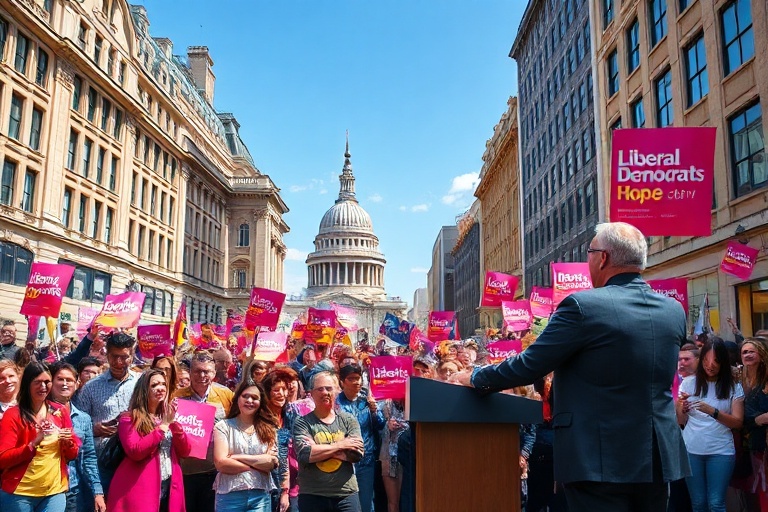
The Liberal Democrats have long positioned themselves as a progressive force in British politics, advocating for civil liberties, environmental sustainability, and international cooperation. While often overshadowed by the larger Labour and Conservative parties, their policies have influenced debates on education, healthcare, and digital rights across Europe and beyond.
Founded in 1988 through the merger of the Liberal Party and the Social Democratic Party, the Lib Dems emerged as a centrist alternative with a strong emphasis on constitutional reform, human rights, and economic fairness. Their policies reflect a blend of liberal and social democratic principles, creating a platform that resonates with voters disillusioned by traditional party politics.
The Core Pillars of Liberal Democrat Policies
The party’s policy platform is built on four foundational pillars: civil liberties, environmental action, economic reform, and international cooperation. These priorities distinguish the Lib Dems from their rivals and offer a vision for a more inclusive and sustainable society.
Civil liberties remain a cornerstone of their agenda. The party has consistently opposed surveillance laws that infringe on privacy, pushed for drug policy reform, and championed LGBTQ+ rights. Their stance on digital rights, including opposition to the Investigatory Powers Act, has drawn praise from privacy advocates worldwide.
Environmental Leadership and Climate Action
Climate change has been a defining issue for the Liberal Democrats, who were early advocates for binding carbon reduction targets. Their 2019 manifesto called for net-zero emissions by 2045, a more ambitious timeline than the Conservative government’s 2050 goal. Policies include substantial investment in renewable energy, a ban on fracking, and a “green jobs” program to transition workers into sustainable industries.
Internationally, the Lib Dems have aligned with the European Green Deal and supported cross-border climate initiatives. Their influence can be seen in the UK’s adoption of a carbon pricing mechanism and the expansion of offshore wind farms, sectors where Britain now leads globally.
Economic Reform: Fairness and Innovation
The party’s economic policies prioritize fairness, innovation, and long-term stability. They advocate for a higher minimum wage, stronger workers’ rights, and a wealth tax to fund public services. Their approach contrasts with the Conservative focus on austerity, instead proposing targeted spending to address inequality.
On taxation, the Lib Dems have pushed for closing loopholes that benefit corporations and the ultra-wealthy. Their “Fairer Share” plan aims to redistribute wealth through a progressive tax system, ensuring that multinational firms contribute their fair share to public coffers.
Education and Healthcare: A Commitment to Public Services
Education and healthcare are areas where the Lib Dems have made a tangible impact. They have campaigned for increased funding for schools, the abolition of university tuition fees, and the restoration of maintenance grants for low-income students. Their policies reflect a belief in education as a public good, rather than a market commodity.
In healthcare, the party has been vocal about the need to address mental health crises, expand NHS funding, and integrate social care with health services. Their proposals for a “Wellbeing Budget” aim to prioritize preventative care and community-based support, reducing pressure on overburdened hospitals.
Global Engagement and Human Rights
The Liberal Democrats have historically been strong advocates for international cooperation, human rights, and diplomacy over military intervention. Their policies emphasize conflict resolution, refugee support, and trade agreements that prioritize ethical labor standards and environmental protections.
The party has been particularly critical of the UK’s arms sales to authoritarian regimes and has pushed for sanctions against countries violating human rights. Their commitment to international law is reflected in their support for the International Criminal Court and the United Nations Sustainable Development Goals.
In Europe, the Lib Dems have been staunch supporters of the European Union, campaigning against Brexit and advocating for closer ties with neighboring countries. Their pro-European stance has resonated with younger voters and those who see the EU as a guarantor of peace and prosperity.
A Global Perspective: How Lib Dem Policies Compare
While the Liberal Democrats operate within the UK’s political system, their policies often align with broader international trends. For example:
- Climate Policy: The Lib Dems’ net-zero target mirrors the EU’s Green Deal and aligns with the Paris Agreement’s goals. Their focus on renewable energy investment is similar to policies pursued by Germany and Scandinavian countries.
- Digital Rights: The party’s opposition to mass surveillance echoes the stance of digital rights groups like Privacy International and the Electronic Frontier Foundation, which operate globally.
- Economic Fairness: Their wealth tax proposal is comparable to policies in countries like France and the United States, where progressive taxation is used to fund social programs.
- Human Rights: The Lib Dems’ advocacy for refugees and opposition to arms sales align with the policies of countries like Canada and New Zealand, which prioritize ethical foreign policy.
These parallels highlight how the Lib Dems contribute to a global conversation about governance, sustainability, and social justice. Their policies often serve as a benchmark for what progressive politics can look like in practice.
The Challenges and Criticisms
Despite their influence, the Liberal Democrats face significant challenges. Their electoral success has been limited, with the party struggling to break through the first-past-the-post system that favors the two major parties. Their pro-European stance has also alienated some voters who supported Brexit.
Critics argue that the party’s policies are too idealistic, particularly in an era of economic uncertainty and geopolitical instability. Some economists question the feasibility of a wealth tax, while others argue that their climate policies lack the urgency required to meet global targets.
However, the Lib Dems’ ability to shape the political debate—even when not in power—demonstrates the power of ideas in influencing mainstream politics. Their policies on digital rights, environmental action, and economic fairness have been adopted by other parties and civil society groups, proving their relevance in a rapidly changing world.
Conclusion: The Lib Dems’ Lasting Impact
The Liberal Democrats may not always dominate the headlines, but their policies have left a lasting imprint on British and global politics. From championing civil liberties to driving climate action, the party continues to advocate for a society that balances freedom, fairness, and sustainability.
As the UK navigates its post-Brexit identity and faces pressing challenges like climate change and economic inequality, the Lib Dems’ vision offers an alternative path forward. Whether through influencing mainstream parties or inspiring grassroots movements, their policies remind us that progressive change is possible—even in the most challenging of political landscapes.
For those interested in exploring how these policies intersect with broader cultural and political trends, Politics and Culture sections on Dave’s Locker provide deeper analysis and commentary.