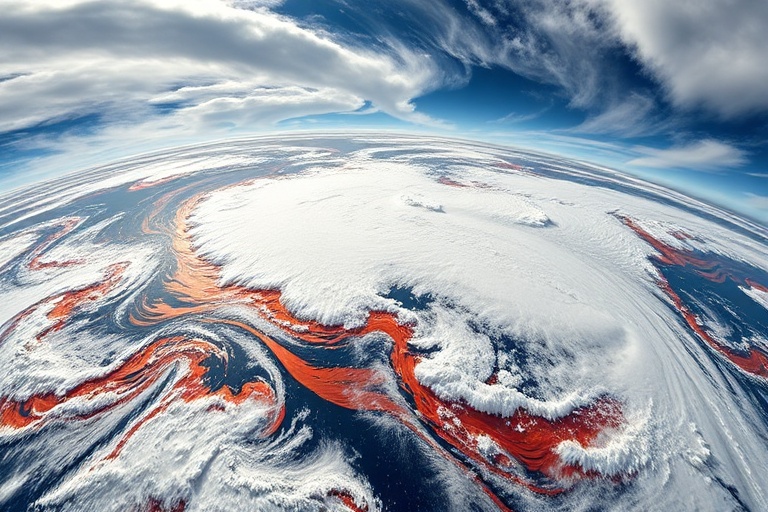
Meteorologists and climate scientists are closely monitoring the developing conditions that could lead to an intense El Niño event in 2026. While current forecasts remain preliminary, early indicators suggest this cycle may rival or exceed the strength of the historic 2015-2016 episode. Understanding the potential impacts requires examining oceanic patterns, atmospheric responses, and historical precedents.
The El Niño-Southern Oscillation (ENSO) cycle operates on a roughly 2-7 year timescale, with warm phases (El Niño) alternating with cooler La Niña conditions. The transition between these phases often occurs gradually, but the buildup to a strong El Niño can accelerate rapidly during the second half of the year preceding the event. Sea surface temperature anomalies in the central and eastern Pacific currently show concerning similarities to patterns observed before previous major events.
Current Oceanic Conditions
As of mid-2024, Pacific Ocean temperatures are showing significant warming trends that climatologists associate with early-stage El Niño development. The Niño 3.4 region—the primary monitoring area for ENSO conditions—has recorded anomalies approaching +0.8°C above average, a threshold that typically precedes stronger warming phases. Historical data reveals that when these anomalies reach +1.5°C by the end of the calendar year, the likelihood of a very strong El Niño increases substantially.
Several key factors contribute to the current assessment:
- Subsurface Temperature Heat Content: Measurements from the upper 300 meters of the Pacific show a substantial volume of warmer-than-average water moving eastward, providing fuel for surface warming.
- Trade Wind Patterns: A reversal or significant weakening of the normally east-to-west trade winds has been observed, which typically precedes major El Niño events by 6-12 months.
- Southern Oscillation Index (SOI): The sustained negative values of the SOI (below -7) indicate that air pressure differences between Tahiti and Darwin are weakening, another classic El Niño indicator.
- Kelvin Wave Activity: Multiple downwelling Kelvin waves have propagated eastward across the Pacific, transporting warm water toward the South American coast.
The combination of these oceanic and atmospheric signals creates a scenario where a strong El Niño event in 2026 appears increasingly likely. However, as with all long-range forecasts, significant uncertainties remain regarding the exact timing and intensity of peak warming.
Potential Global Impacts
When a strong El Niño develops, its effects ripple across the globe through atmospheric teleconnections. The 2026 event, if realized, could bring dramatic climate anomalies to multiple continents. Agricultural regions, water supplies, and coastal communities would face the most immediate consequences, while broader economic systems could experience secondary effects.
Notable potential impacts include:
- North America:
- Increased storm activity across the southern United States, particularly in California and the Gulf Coast
- Milder-than-average winter temperatures in the northern states
- Reduced Atlantic hurricane activity due to increased wind shear
- South America:
- Heavy rainfall and flooding in normally arid regions of Peru and Ecuador
- Drought conditions in northern Brazil and the Amazon basin
- Significant disruptions to fishing industries along the Peruvian coast due to warm water displacing nutrient-rich upwellings
- Asia and Australia:
- Severe drought in Indonesia and parts of Australia, increasing wildfire risks
- Reduced monsoon rainfall in India, potentially affecting crop yields
- Increased tropical cyclone activity in the Pacific basin
- Africa:
- Eastern Africa experiencing wetter-than-average conditions, raising flood risks
- Southern Africa likely to face drier conditions, exacerbating existing droughts
The economic implications of a strong El Niño are substantial. The News section has documented how previous events disrupted supply chains, particularly for commodities like coffee, cocoa, and palm oil. The 2015-2016 El Niño alone caused an estimated $3.4 billion in agricultural losses in Southeast Asia, with global cocoa prices spiking by over 50% during the peak of the event.
Historical Comparisons
To understand what 2026 might hold, climate scientists often reference past strong El Niño events. Three episodes stand out for their intensity and global impacts: 1982-83, 1997-98, and 2015-16. Each reached peak Oceanic Niño Index (ONI) values of +2.0°C or higher, a threshold that may be approached or exceeded in the coming cycle.
The 1997-98 event remains the benchmark for modern El Niño forecasting. Peak temperatures in the Niño 3.4 region reached +2.3°C, triggering:
- $35 billion in global economic damages
- 23,000 deaths attributed to climate-related disasters
- Devastating floods in California and Peru
- Severe droughts in Indonesia that contributed to massive forest fires
The 2015-16 event matched the 1997-98 intensity but occurred in a warmer global climate, amplifying its effects. This time, baseline temperatures are even higher, suggesting that any 2026 event could produce more extreme outcomes. The World Meteorological Organization has noted that the frequency of “very strong” El Niño events may increase as global temperatures rise, potentially making 2026 part of a new normal for climate extremes.
Preparation and Adaptation Strategies
While the forecast remains probabilistic, the potential for a high-intensity El Niño in 2026 demands proactive preparation from governments, businesses, and individuals. The lessons from previous events provide a roadmap for mitigation efforts, though the specific challenges of 2026 will require tailored responses.
Public agencies are already beginning to plan for various scenarios:
- Water Resource Management: Reservoir operators in drought-prone regions are revisiting storage strategies to prepare for potential flooding while maintaining supplies during dry periods. The Science section has covered how California’s water districts are modeling scenarios based on 1997-98 flood data.
- Agricultural Adjustments: Farmers in vulnerable regions are diversifying crops and adjusting planting schedules. Coffee growers in Colombia and Brazil, for example, are exploring shade-tolerant varieties that might withstand drought conditions.
- Infrastructure Reinforcement: Cities in flood-prone areas are inspecting drainage systems and considering temporary flood barriers. The Port of Los Angeles, which experienced $14 million in damages during the 1997-98 event, has invested in structural reinforcements.
- Public Health Preparedness: Health officials are preparing for potential disease outbreaks linked to flooding or drought. The spread of mosquito-borne illnesses like dengue fever often increases following heavy rainfall events associated with El Niño.
For individuals, preparation might include reviewing flood insurance policies, securing emergency supplies, and staying informed through official weather channels. The Federal Emergency Management Agency recommends having at least three days of food, water, and medications on hand during potential weather extremes.
The 2026 El Niño forecast serves as a reminder of the interconnected nature of global climate systems. While technological advances have improved forecasting capabilities, the inherent uncertainties of long-range predictions mean that communities must remain adaptable. The difference between effective preparation and crisis response often lies in the decisions made in the coming months.
As we approach the peak monitoring periods for ENSO development in late 2024 and early 2025, updated forecasts will provide greater clarity on the likely intensity of the 2026 event. Until then, the combination of historical precedent, current oceanic conditions, and climate trends suggests that stakeholders should treat this as a potential high-impact scenario rather than an abstract possibility.