Prime Minister’s Questions: The Art of Political Grilling Under the Global Spotlight
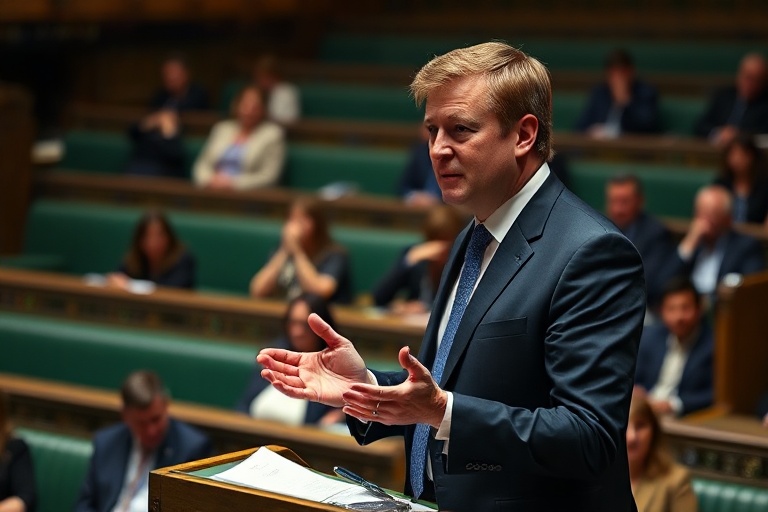
Each Wednesday at noon, a ritual unfolds in the heart of Westminster that has captivated audiences far beyond British shores. Prime Minister’s Questions (PMQs) is not merely a domestic political event; it is a high-stakes parliamentary theater watched by diplomats, journalists, and citizens across continents. At its center stands the grilling of the Prime Minister by the Leader of the Opposition—a tradition that tests leadership under pressure, exposes policy weaknesses, and often shapes international perceptions of British governance.
Keir Starmer, the current occupant of 10 Downing Street, has faced this weekly ordeal since taking office in July 2024. His performance at PMQs reflects not only his leadership style but also the evolving expectations of democratic accountability in a world where transparency and rhetorical precision are increasingly scrutinized on the global stage. As Starmer navigates domestic crises, economic pressures, and geopolitical tensions, his exchanges in the Commons offer a window into how modern leadership is communicated—and contested—under the glare of the international media.
The Structure of the Grill: How PMQs Works
PMQs is a tightly choreographed event, structured around a six-minute slot where the Leader of the Opposition poses questions to the Prime Minister. Traditionally, the Speaker selects MPs to ask supplementaries—follow-up questions that probe deeper into policy or performance. The format demands quick thinking, sharp wit, and the ability to distill complex issues into soundbites that resonate with both the chamber and the public.
The session begins with the Leader of the Opposition rising to ask the first question, often phrased as a direct challenge: “If the Prime Minister is such a strong leader, why has inflation remained stubbornly high?” or “Will the Prime Minister admit that his policies have failed the working families of Britain?” Such questions are less about seeking information and more about forcing the PM to defend their record under sustained interrogation.
The stakes are amplified by the presence of live television cameras and social media feeds that amplify every pause, stumble, or sarcastic aside. In an era where political leaders are dissected on platforms like X (formerly Twitter) and TikTok within minutes, PMQs is no longer confined to Westminster—it is a global broadcast.
Starmer’s Strategy: Calm Authority or Tactical Ambiguity?
Starmer’s approach to PMQs has been defined by a deliberate shift from the fiery rhetoric of his predecessor. While Boris Johnson leaned into showmanship and Liz Truss relied on ideological bluntness, Starmer has cultivated a style rooted in measured authority. His responses are often prefaced with phrases like “Let me be clear” or “The facts speak for themselves,” signaling a desire to project competence and control.
Yet this strategy carries risks. In a political culture that often rewards charisma over substance, Starmer’s restraint can be perceived as aloofness. His critics argue that his refusal to engage in personal attacks or theatrical performances makes him appear detached—particularly when crises like strikes, NHS waiting lists, or housing shortages dominate the news cycle.
During his first year in office, Starmer has faced challenges from both sides of the aisle. Opposition leaders such as Ed Davey of the Liberal Democrats and Carla Denyer of the Green Party have used PMQs to highlight local and environmental issues, forcing Starmer to address concerns beyond traditional party lines. This cross-party pressure reflects a broader trend in European politics, where coalition-building and consensus-building are increasingly valued over partisan dominance.
Global Echoes: How Other Democracies Handle the Grill
The concept of a weekly grilling is not unique to the UK. In many parliamentary democracies, leaders face regular accountability sessions that draw international attention. In Canada, the Prime Minister participates in “Question Period,” a raucous session where opposition MPs shout across the floor, testing the PM’s composure under fire. Similarly, in India, the Prime Minister faces “Question Hour” in Parliament, where issues ranging from agriculture to national security are debated with unrelenting intensity.
Across the Atlantic, the United States lacks a direct equivalent to PMQs, but the State of the Union address and congressional hearings serve a comparable function—though with less frequency and more partisan spectacle. The absence of a weekly accountability mechanism in the U.S. has led some political scientists to argue that American democracy suffers from a deficit in real-time scrutiny, particularly during election years.
In contrast, countries like Germany and New Zealand host structured “Prime Minister’s Questions” modeled closely on the British format. In Germany, the Chancellor faces the Bundestag in a session known as “Regierungsbefragung,” where opposition leaders probe policy with rigorous precision. New Zealand’s version, held monthly, has gained praise for its civility and depth, offering a stark contrast to the adversarial tone of Westminster.
These variations reflect deeper cultural attitudes toward leadership and dissent. In the UK, the combative nature of PMQs mirrors a long tradition of adversarial politics, where strength is measured by one’s ability to withstand verbal assault. In New Zealand, the emphasis on respect and decorum aligns with a societal preference for consensus and collaboration—values increasingly valued in an era of global polarization.
The Cultural Weight of PMQs: More Than Just a Parliamentary Show
PMQs is more than a political spectacle; it is a cultural institution. It reinforces the idea that democracy is not a spectator sport but a participatory process, even if the participation is largely symbolic. For international observers, the session offers insights into British governance, media freedom, and public trust in institutions—all of which influence global perceptions of the UK as a stable and reliable partner.
During times of crisis—such as the COVID-19 pandemic or the war in Ukraine—PMQs became a platform for both domestic reassurance and international messaging. Starmer’s responses to global events are scrutinized not only by British voters but by investors, diplomats, and allies evaluating the UK’s reliability on the world stage.
The session also serves as a training ground for future leaders. Many current cabinet ministers, including Chancellor Rachel Reeves and Foreign Secretary David Lammy, honed their rhetorical skills in the rough-and-tumble of PMQs. Their performances are watched closely by political analysts as indicators of their readiness for higher office.
Moreover, PMQs has become a cultural export. Clips from the session are shared widely on social media, often with subtitles for global audiences. Memes and satirical takes circulate on platforms like Reddit and TikTok, where British political culture is both celebrated and critiqued. This digital dissemination has turned PMQs into a form of soft power—shaping perceptions of British democracy far beyond its borders.
Conclusion: The Enduring Power of the Grill
Prime Minister’s Questions endures because it fulfills a fundamental democratic need: the demand for accountability. In an age of misinformation and rapid news cycles, the ritual of weekly scrutiny reminds citizens that leadership is not an abstract concept but a daily responsibility. Keir Starmer’s tenure at PMQs reflects the challenges of modern governance—balancing calm authority with the relentless pressure of public accountability.
As global audiences watch these exchanges, they are not merely observing British politics; they are witnessing a model of democratic engagement that resonates in varied forms across the world. Whether through fiery debate or measured response, the art of the grilling remains a vital force in the life of nations.
For those interested in the broader landscape of political accountability, Politics on Dave’s Locker offers deeper analysis on governance, leadership, and democratic institutions worldwide.