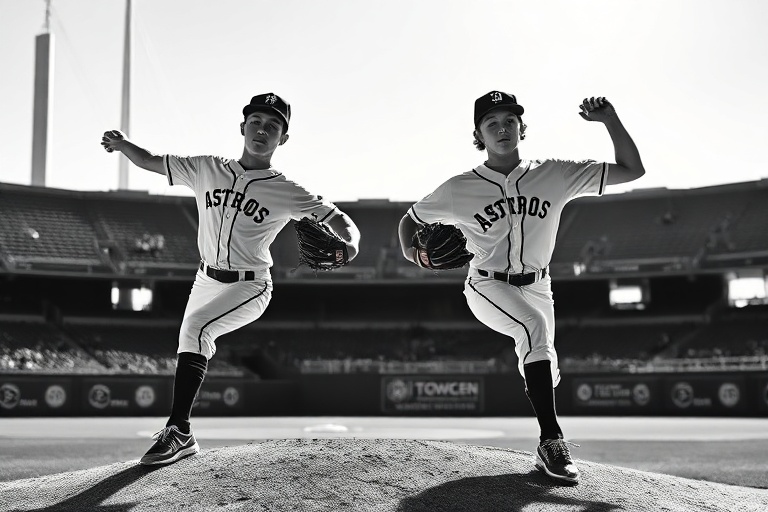
The Houston Astros and Minnesota Twins entered the 2024 season with dramatically different expectations and approaches to baseball. The Astros, perennial contenders with a roster stacked with talent, entered the year as favorites in the American League. Meanwhile, the Twins, despite flashes of brilliance, remained in the shadow of their division rivals. Their recent series in Minneapolis highlighted these disparities, offering a fascinating contrast in strategy, execution, and long-term outlook.
The Astros’ Winning Formula: Depth and Experience
Houston’s success over the past half-decade can be attributed to a winning combination of elite pitching, power-hitting, and organizational depth. The Astros’ rotation, anchored by Justin Verlander and Framber Valdez, remains one of the most formidable in baseball. Their bullpen, led by closer Ryan Pressly, provides late-inning stability. At the plate, José Altuve and Yordan Alvarez continue to produce at an elite level, while young stars like Jeremy Peña offer defensive versatility and clutch hitting.
What sets the Astros apart, however, is their ability to develop talent from within. The farm system has consistently replenished the major league roster with impact players, ensuring that injuries or slumps don’t derail their season. This depth allows manager Dusty Baker to mix and match lineups and rotations without sacrificing performance. The Astros’ front office, led by general manager Dana Brown, has built a team that thrives in both regular-season grind and high-pressure postseason moments.
The Twins’ Uphill Battle: Potential vs. Consistency
The Twins, on the other hand, enter 2024 with a roster brimming with potential but struggling to convert it into consistent success. Byron Buxton remains one of the most dynamic players in baseball when healthy, and the midseason acquisition of Carlos Correa in 2023 added a star-level shortstop. Yet, injuries and underperformance from key contributors have repeatedly derailed Minnesota’s playoff hopes. The Twins’ reliance on homegrown talent—such as Royce Lewis and Austin Barnes—has been both a strength and a vulnerability.
Their pitching staff, once a weakness, has improved with the emergence of Pablo López and Sonny Gray. However, the Twins still lack the elite arms that define contenders like Houston. The front office, led by Derek Falvey, has shown a willingness to spend on free agents, but the results have been mixed. The Twins’ challenge is not just assembling a talented roster but ensuring that talent stays on the field and performs at a high level.
Key Differences in Their Approaches
The Astros and Twins represent two distinct philosophies in modern baseball. Houston’s model prioritizes sustainability through player development and smart acquisitions. The Twins, while also investing in their farm system, have leaned more heavily on high-ceiling free-agent signings to fill gaps. This difference is evident in their roster construction:
- Astros: Balanced lineup with multiple 20+ HR threats, elite starting pitching, and a deep bullpen. Strong platoon flexibility.
- Twins: Power-heavy lineup with Buxton and Correa as the focal points, but more reliance on individual brilliance rather than collective depth.
- Defense: Astros feature elite defensive metrics across the board, while the Twins often prioritize offensive production over defensive versatility.
- Managerial Style: Dusty Baker emphasizes small-ball tactics and situational hitting, whereas Rocco Baldelli often defers to his players’ strengths in high-leverage spots.
Broader Implications for the American League
The Astros-Twins dynamic reflects larger trends in MLB. Houston’s model—built on analytics, player development, and organizational cohesion—has become the gold standard. Teams like the Atlanta Braves and Los Angeles Dodgers have followed similar blueprints, prioritizing long-term sustainability over short-term splashes. The Astros’ success has also sparked debates about the role of analytics in roster construction, particularly in how they deploy defensive shifts and manage pitch counts.
For the Twins, the stakes are higher than ever. The window for their core group—Buxton, Correa, López, and Gray—is narrowing. Injuries have already cost them critical games, and another missed opportunity could force a rebuild. The Twins’ front office faces a pivotal decision: double down on this core with targeted upgrades or begin transitioning to the next generation of talent.
Their recent series against the Astros offered a microcosm of these challenges. Houston’s pitching dominated, while Minnesota’s offense sputtered against elite arms. The Twins’ struggles to manufacture runs highlighted their reliance on power, a strategy that can backfire against dominant starters. Meanwhile, the Astros’ ability to grind out at-bats and manufacture runs through contact underscored their tactical advantage.
What Comes Next for Both Teams
The Astros, despite their regular-season success, remain underdogs in the eyes of many analysts due to their lack of a true ace in the rotation. Verlander and Valdez are undeniably elite, but Houston has yet to produce a Cy Young-caliber season from its top starter in recent years. The postseason, where pitching depth is magnified, remains their biggest hurdle. If they can navigate the gauntlet of the AL West and secure home-field advantage, they’ll be poised to make another deep run.
The Twins, meanwhile, must decide whether to make a final push for contention or accept a rebuild. Their farm system, once barren, now boasts prospects like Emmanuel Rodriguez and Brooks Lee, who could be ready by 2025. The question is whether Falvey and company will gamble on another high-stakes free-agent signing or trust the process of rebuilding from within. With the Cleveland Guardians and Chicago White Sox also in the mix, Minnesota’s margin for error is slim.
For fans of both teams, the contrast is stark but instructive. The Astros’ model offers a blueprint for sustained success, while the Twins’ journey serves as a cautionary tale about the perils of relying too heavily on individual stars. Baseball, at its core, remains a game of adjustments—both on the field and in the front office.
Final Thoughts
The Astros vs. Twins matchup is more than just a battle between two teams. It’s a clash of philosophies, a referendum on modern baseball’s evolving strategies, and a reminder that talent alone doesn’t guarantee success. Houston’s depth and execution contrast sharply with Minnesota’s boom-or-bust mentality. As the season progresses, both teams will face pivotal moments that could define their futures.
For Astros fans, the goal remains clear: add another ring to the collection. For Twins supporters, the challenge is to turn potential into reality before it’s too late. One thing is certain—baseball’s landscape is never static, and the lessons from this rivalry will echo far beyond the 2024 season.
For more on the Astros’ path to contention, visit our MLB coverage. To dive deeper into the Twins’ roster decisions, check out our baseball analysis section.