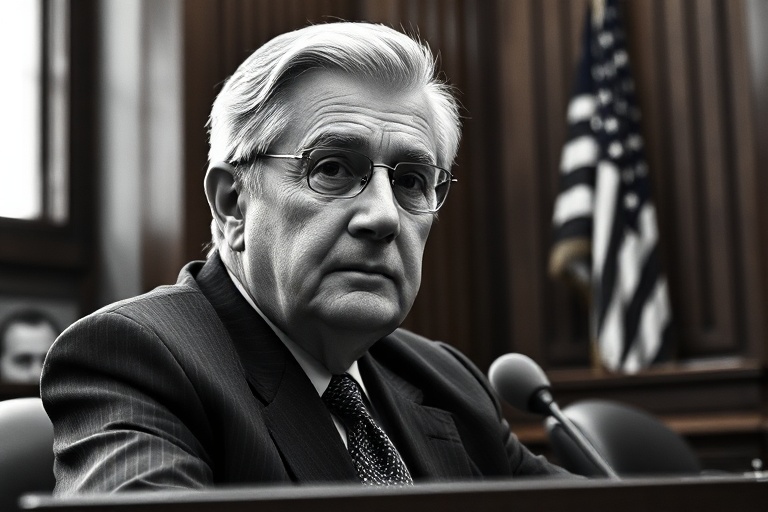
Barney Frank: How One Politician Changed LGBTQ+ Representation
“`html
Barney Frank: The Politician Who Redefined LGBTQ+ Representation
For nearly four decades, Barney Frank served as a trailblazer in American politics, not just as a champion of progressive causes but as an unapologetic voice for queer representation in government. His career, spanning from 1973 to 2013, coincided with pivotal moments in LGBTQ+ rights, and his personal journey from closeted academic to openly gay congressman reshaped the political landscape.
Early Life and Political Beginnings
Born in 1940 in Bayonne, New Jersey, Frank grew up in a working-class Jewish family. His early ambitions leaned toward academia, where he earned degrees from Harvard before teaching political science at the University of Wisconsin. Politics, however, soon called. In 1972, he moved to Massachusetts, where he became an assistant to Boston Mayor Kevin White. This role positioned him for his first elected position: a seat in the Massachusetts House of Representatives in 1973.
Frank’s early political career unfolded during a time when being openly gay in office was nearly unthinkable. He came out to close colleagues in the 1970s but maintained a careful balance between his personal life and public persona. It wasn’t until 1987, after years of speculation and rumors, that he publicly acknowledged his sexuality in an interview with the Boston Globe. The revelation didn’t derail his career—instead, it galvanized support among progressive voters who admired his authenticity.
The Defining Moments of His Congressional Career
Frank’s ascent to the U.S. House of Representatives in 1981 marked the beginning of his national influence. Over his 32-year tenure, he became known for his sharp wit, uncompromising stance on civil rights, and pragmatic approach to governance. His legislative record reflects a career dedicated to dismantling systemic inequities while navigating the complexities of a divided Congress.
Some of his most significant contributions include:
- Defense of Marriage Act (DOMA) Repeal: Frank was a vocal critic of DOMA, which he saw as a discriminatory relic. His advocacy helped lay the groundwork for its eventual repeal in 2013, a landmark victory for marriage equality.
- Financial Regulation Reform: As a senior member of the House Financial Services Committee, Frank played a key role in shaping the Dodd-Frank Act (2010), a sweeping financial reform law enacted in response to the 2008 economic crisis.
- HIV/AIDS Funding: In the 1980s and 1990s, Frank fought for increased federal funding to combat the HIV/AIDS epidemic, often clashing with conservative lawmakers who stigmatized the disease.
- LGBTQ+ Rights Legislation: Beyond DOMA, he co-sponsored the Employment Non-Discrimination Act (ENDA) and consistently pushed for inclusive policies in housing, healthcare, and military service.
Frank’s leadership style was pragmatic yet principled. He famously described himself as a “crementalist,” emphasizing incremental progress over revolutionary change. This approach sometimes drew criticism from activists who wanted faster action, but his ability to navigate institutional barriers made him a rare figure who could deliver tangible results.
The Personal and Political: Frank’s Impact Beyond Policy
Frank’s public persona was as distinctive as his politics. Known for his acerbic humor and sharp tongue, he embraced his reputation as a “smartypants” in a profession often dominated by platitudes. His 1990s relationship with Herb Moses, an economist at the Department of Transportation, was one of the first openly gay partnerships to gain visibility in Washington. While Frank avoided the media spectacle that surrounded other LGBTQ+ figures, his relationship became a quiet symbol of progress.
His personal life intersected with his political battles in unexpected ways. In 1987, following a scandal involving a male prostitution ring, Frank faced calls for resignation. Instead of retreating, he addressed the issue head-on, acknowledging his mistakes while framing the episode as an intrusion on his private life. The episode underscored his resilience and ability to reframe narratives in his favor.
Legacy and the Future of LGBTQ+ Representation
Frank’s retirement in 2013 coincided with a new wave of LGBTQ+ representation in politics. Figures like Tammy Baldwin, the first openly gay U.S. senator, and Pete Buttigieg, a presidential candidate and former mayor, owe much to the groundwork Frank laid. His career demonstrates how visibility, persistence, and strategic compromise can advance marginalized communities in a system resistant to change.
Yet Frank’s legacy is not without its complexities. Critics argue that his incrementalism sometimes prioritized political expediency over radical transformation. Others point to his role in financial deregulation, which some blame for exacerbating economic inequality. These critiques highlight the duality of his career—a blend of progressive activism and institutional pragmatism.
For younger generations of LGBTQ+ activists, Frank remains a model of how to operate within the system without losing sight of its flaws. His willingness to challenge both external opponents and internal contradictions within the LGBTQ+ movement itself set a precedent for future leaders.
As the fight for queer rights continues—whether in healthcare, employment, or housing—Frank’s career offers a blueprint for balancing idealism with realism. His story is a reminder that progress is rarely linear, and that change often requires both confrontation and negotiation.
In an era where LGBTQ+ representation in politics is more visible than ever, Barney Frank’s journey from a closeted academic to a pivotal congressman challenges us to consider what representation truly means. It’s not just about occupying a seat at the table; it’s about reshaping the table itself.
Further Reading
For more on the intersection of politics and LGBTQ+ rights, explore these related articles on Dave’s Locker Politics and Culture sections.