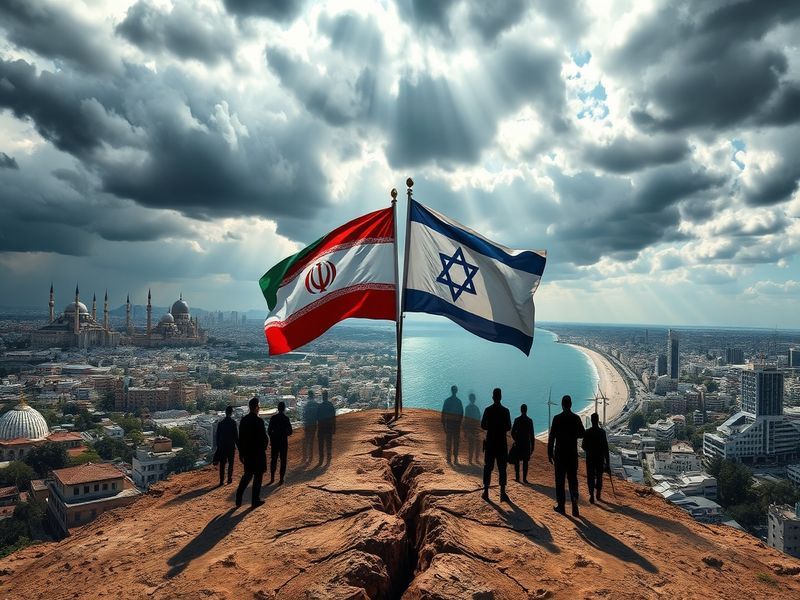
Understanding the Tensions: Iran and Israel
The relationship between Iran and Israel has been fraught with tension for decades, marked by ideological, political, and military confrontations. The historical backdrop of this animosity is essential to grasping the current state of affairs. Both nations have opposing visions for the Middle East, which often leads to hostile exchanges and military posturing.
In recent years, the rhetoric has escalated, with Iran’s nuclear ambitions being a focal point of concern for Israel. The Israeli government perceives Iran’s nuclear program as a significant threat, leading to a series of strategic responses aimed at curbing Iran’s influence in the region.
Recent Developments in the Conflict
The conflict has seen several notable incidents that have further strained relations. Iranian attacks on Israeli targets, both directly and through proxy groups in the region, have escalated tensions. These attacks often manifest in the form of cyber warfare, missile strikes, and support for militant groups such as Hezbollah.
Moreover, Israel has conducted airstrikes against Iranian positions in Syria, aiming to prevent the entrenchment of Iranian forces near its borders. This ongoing military engagement underscores the precarious balance of power in the region.
The Role of Proxy Forces
One of the critical components of the Iran-Israel conflict is the use of proxy forces. Iran has supported various militant groups that operate against Israeli interests. This strategy allows Iran to exert influence in the region while maintaining plausible deniability regarding direct involvement in attacks.
- Hezbollah: This Lebanese militant group has been a significant ally of Iran, engaging in multiple conflicts with Israel over the years.
- Hamas: Operating from Gaza, Hamas receives support from Iran and has launched numerous attacks on Israeli territory.
- Islamic Jihad: Another militant group backed by Iran, Islamic Jihad has been involved in various confrontations with Israeli forces.
These groups not only serve as a means for Iran to challenge Israel but also complicate any potential peace negotiations in the region.
International Reactions and Implications
The international community closely monitors the Iran-Israel conflict, given its implications for global stability. The United States has historically supported Israel, providing military aid and political backing. Conversely, Iran has sought alliances with countries like Russia and China to counterbalance U.S. influence in the region.
Recent developments have prompted discussions at international forums, with various nations expressing concern over the potential for escalation into a broader conflict. Diplomatic efforts have been made, but the deeply entrenched positions of both Iran and Israel make resolution challenging.
Potential Outcomes and Future Scenarios
As tensions continue to rise, several scenarios could unfold. The following are potential outcomes that analysts are considering:
- Increased Military Engagement: A further escalation of military actions could lead to a direct conflict between Iran and Israel, with significant regional implications.
- Diplomatic Resolutions: Although challenging, renewed diplomatic efforts could lead to agreements aimed at de-escalating tensions.
- Continued Proxy Warfare: Both nations may continue to engage in indirect confrontations through proxy forces, prolonging the conflict without direct military engagement.
The future of the Iran-Israel conflict remains uncertain, with numerous factors influencing the dynamics at play. The stakes are high, not just for the two nations involved but for the broader Middle Eastern landscape.
Conclusion
The ongoing tensions between Iran and Israel illustrate a complex web of historical grievances, ideological differences, and geopolitical maneuvering. As both nations continue to assert their positions, the potential for conflict remains ever-present. Understanding the nuances of this relationship is crucial for predicting future developments and their implications for the region and beyond.
For more insights on Middle Eastern politics and international relations, visit our Politics and News sections.