ben gvir
“`html
Who Is Itamar Ben-Gvir?
Itamar Ben-Gvir is an Israeli politician and lawyer whose influence in the country’s political landscape has grown significantly in recent years. Born in 1976 in Mevaseret Zion, near Jerusalem, Ben-Gvir became active in right-wing politics during his teenage years. His early involvement with the Kach movement, a far-right party later banned for racism, has drawn scrutiny over his political evolution and the positions he holds today.
Ben-Gvir’s legal career has been marked by controversial cases, particularly his defense of Jewish extremists accused of violence against Palestinians. This background has cemented his reputation as a hardline figure willing to challenge the status quo, even when it conflicts with mainstream institutions. His political journey culminated in 2022 when he was elected to the Knesset as a member of the Otzma Yehudit party, a far-right political group that has reshaped coalition politics in Israel.
His alignment with figures like Bezalel Smotrich has allowed him to enter government, where he now serves as Minister of National Security—a role that has expanded his authority over policing and security policies. Ben-Gvir’s ascent reflects broader shifts in Israeli politics toward nationalist and religiously conservative movements, raising questions about the direction of the country’s democratic institutions.
Political Rise and Ideological Roots
Ben-Gvir’s political career has been defined by his unapologetic support for Jewish nationalism and opposition to Palestinian statehood. His ideological roots trace back to the late 20th century, when he joined the Kach movement, founded by the late Rabbi Meir Kahane. Kach was known for its extremist rhetoric, including calls for the expulsion of Arabs from Israel and the West Bank. The movement was outlawed in Israel in 1994, but its influence persisted in fringe political circles.
After Kach’s ban, Ben-Gvir shifted his focus to legal activism, defending Jewish settlers and militants accused of crimes against Palestinians. His legal work brought him into the public eye, particularly after he hung a photograph of Baruch Goldstein, the perpetrator of the 1994 Hebron massacre, in his home. This act drew condemnation but also solidified his reputation among hardline supporters.
In 2022, Ben-Gvir’s party, Otzma Yehudit (Jewish Power), entered the Knesset with six seats. His political strategy relied on tapping into public frustration over security failures and rising crime in mixed Jewish-Arab cities. By positioning himself as a defender of Jewish interests, he positioned himself as a kingmaker in Israel’s fragmented political system. His ability to form alliances with more mainstream right-wing parties like Likud allowed him to secure a cabinet position despite his controversial background.
A Controversial Figure in Israeli Politics
Ben-Gvir’s political career is fraught with controversy. In 2007, he was convicted of incitement to racism and supporting a terrorist organization due to his involvement with Kach. Despite this, he has avoided further legal consequences, partly due to his shift from street activism to institutional politics. His election to the Knesset in 2022 marked a turning point, as he transitioned from a marginal figure to a central player in Israel’s government.
His policies as Minister of National Security have included expanding police powers, increasing surveillance in Palestinian communities, and promoting settlement expansion in the West Bank. Critics argue that these actions exacerbate tensions and undermine prospects for peace. Supporters, however, view him as a necessary bulwark against terrorism and a champion of Jewish sovereignty.
The U.S. and European Union have periodically raised concerns about Ben-Gvir’s influence, with some lawmakers calling for restrictions on his travel or diplomatic engagements. His rhetoric, which often includes inflammatory statements about Arabs and left-wing activists, has drawn international scrutiny and domestic backlash.
Policy Impact and Public Perception
Ben-Gvir’s tenure as Minister of National Security has had a tangible impact on Israel’s security apparatus. One of his first major initiatives was to reinstate the use of administrative detention—a controversial practice that allows authorities to hold suspects without trial—for cases involving national security. This move was criticized by human rights organizations, which argue it infringes on due process rights.
Another key policy has been the expansion of police presence in predominantly Arab towns and cities, ostensibly to combat crime but often perceived as collective punishment. Ben-Gvir has also pushed for greater integration of settler militias into official security roles, blurring the lines between civilian and state-led enforcement. These actions have fueled accusations that his policies disproportionately target Palestinian citizens of Israel and those living under occupation.
Public opinion on Ben-Gvir remains deeply divided. Polls indicate that his support is concentrated among religious Zionists and settlers, who view him as a strong leader in a time of perceived threats. Meanwhile, liberal and Arab-Israeli communities see him as a destabilizing force, exacerbating divisions within Israeli society. His approval ratings among the general public have fluctuated, reflecting broader anxieties about security and governance.
The Israeli media has played a crucial role in shaping perceptions of Ben-Gvir. Outlets aligned with the right often portray him as a defender of Jewish rights, while left-leaning and Arab media frequently highlight his extremist past and inflammatory rhetoric. This polarized coverage underscores the broader societal rifts that define contemporary Israeli politics.
What’s Next for Ben-Gvir?
As Israel navigates ongoing conflicts, political instability, and international isolation, Ben-Gvir’s role is likely to expand. His ability to mobilize grassroots support gives him leverage within the governing coalition, even as his policies draw criticism from domestic and international observers. Analysts suggest that his next steps may include further consolidation of power within the security establishment, potentially reshaping Israel’s approach to law enforcement and conflict resolution.
One area to watch is his potential influence on judicial reform. Ben-Gvir has been a vocal critic of Israel’s judiciary, aligning with other far-right figures who seek to reduce judicial oversight of government actions. If successful, such reforms could weaken checks on executive power, granting Ben-Gvir and his allies greater control over policy implementation.
Another factor is the evolving security landscape. With tensions in the West Bank and Gaza remaining high, Ben-Gvir’s hardline stance may continue to resonate with voters who prioritize security over peace negotiations. However, escalations in violence could also backfire, particularly if his policies are seen as provoking further unrest.
Ben-Gvir’s long-term political future remains uncertain. While he has successfully transitioned from the fringes to the center of power, his controversial background and polarizing rhetoric pose risks to his sustainability in high office. Whether he can maintain his influence—or whether his agenda will ultimately be reined in by political or legal constraints—remains an open question.
For those interested in the broader context of Israeli politics, the shifting dynamics within the News and Politics categories on Dave’s Locker provide additional insights into how figures like Ben-Gvir are reshaping the country’s trajectory.
Key Takeaways
- Itamar Ben-Gvir’s political career spans decades, from far-right activism to a central role in Israel’s government.
- His policies as Minister of National Security have expanded police powers and intensified surveillance, particularly in Palestinian communities.
- Controversial due to his past association with extremist groups, Ben-Gvir remains a polarizing figure domestically and internationally.
- His future influence may hinge on security dynamics, judicial reforms, and his ability to maintain coalition support.
As Israel continues to grapple with internal divisions and external pressures, the role of figures like Ben-Gvir will likely remain a defining feature of its political landscape. Understanding his background, policies, and impact is essential for anyone seeking to navigate the complexities of contemporary Israeli society.
—
METADATA
{
“title”: “Itamar Ben-Gvir: From Extremist Past to Israel’s Powerful Minister”,
“metaDescription”: “Explore the rise of Itamar Ben-Gvir, his controversial policies, and impact on Israel’s political landscape as Minister of National Security.”,
“categories”: [“Politics”, “News”],
“tags”: [“Itamar Ben-Gvir”, “Israeli politics”, “far-right politics”, “Minister of National Security”, “Otzma Yehudit”],
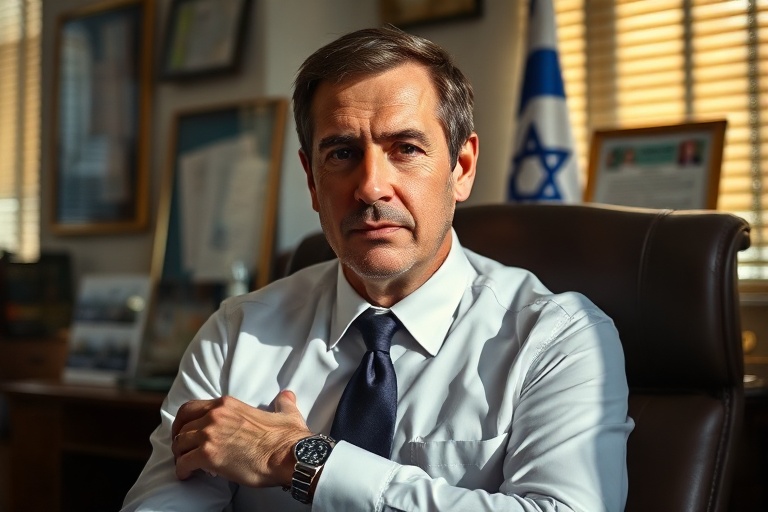
“imageDescription”: “A formal portrait of Itamar Ben-Gvir in a suit, standing in front of an Israeli flag with a serious expression. The background includes subtle elements of Jerusalem architecture, conveying authority and political weight.”
}
—END METADATA—
“`