Kentaro Miura’s Berserk stands as one of the most influential dark fantasy manga of all time. Since its debut in 1989, the series has captivated millions with its brutal themes, intricate artistry, and unflinching exploration of human suffering. More than just a story of swords and sorcery, Berserk delves into the depths of despair, ambition, and the fragile bonds that define us.
Its legacy extends beyond manga, inspiring video games, anime adaptations, and countless creators in the fantasy genre. Yet, for all its accolades, Berserk remains a challenging work—one that demands emotional endurance from its audience. This is the story of how a single manga reshaped expectations for dark fantasy storytelling.
The Genesis of a Dark Vision
Miura began his career with Futanabi, a one-shot that won him the prestigious Shogakukan New Artist Award in 1988. But it was Berserk, serialized in Monthly Animal House (later renamed Young Animal), that cemented his reputation as a master of the macabre. The series unfolded in a medieval-inspired world where humanity’s cruelty often outmatched its nobility.
Central to Berserk is Guts, a lone mercenary marked by a traumatic past and a relentless will to survive. His journey is punctuated by visceral battles, grotesque horrors, and moments of fleeting camaraderie. The world itself is a character—one of warring kingdoms, demonic forces, and the ever-present specter of fate. Miura’s art, known for its hyper-detailed linework and grotesque beauty, brought this world to life in ways few works have matched.
Miura’s influences were eclectic, drawing from European medieval history, classic literature like Faust, and even the works of Hieronymus Bosch. This fusion created a setting that felt both mythic and painfully real. The manga’s early arcs established its tone: gritty, uncompromising, and unafraid to confront the darker sides of human nature.
The Eclipse: A Turning Point in Storytelling
No discussion of Berserk is complete without addressing the Eclipse—a cataclysmic event that reshapes both Guts’ life and the narrative itself. Without spoiling its impact, the Eclipse represents a narrative gut-punch, one that redefined the series’ trajectory. Its aftermath strips away the last vestiges of hope, leaving Guts in a world where trust is a liability and survival is the only virtue.
This moment is a masterclass in storytelling. Miura doesn’t rely on cheap shock value; instead, he crafts a sequence of events that feel earned, even inevitable. The Eclipse isn’t just a plot device—it’s a thematic cornerstone, illustrating how trauma lingers and shapes identity. Guts’ subsequent journey is one of rebuilding, not just physically, but emotionally and spiritually.
The Eclipse also introduced Griffith, one of manga’s most complex villains. His ambition and charisma make him a foil to Guts’ raw determination, creating a dynamic that drives the series forward. Their relationship is a study in contrast: where Guts fights for personal agency, Griffith seeks transcendence at any cost. This duality elevates Berserk beyond typical hero-villain narratives.
The Art of Suffering: Guts’ Unyielding Struggle
Guts is often cited as one of fiction’s most compelling protagonists, and for good reason. His arc is a relentless march through suffering, yet it’s never gratuitous. Each trial Guts endures—whether physical, emotional, or psychological—serves a purpose. His growth isn’t linear; it’s a series of setbacks and small victories that redefine what it means to be resilient.
Miura’s portrayal of Guts is particularly noteworthy for its realism. The mercenary isn’t a superhero; he’s a man shaped by loss, betrayal, and an unshakable will to defy fate. His relationships, particularly with Casca and Puck, add emotional depth to his journey. These bonds are fragile, often tested by the world’s cruelty, but they provide the rare moments of light in an otherwise bleak narrative.
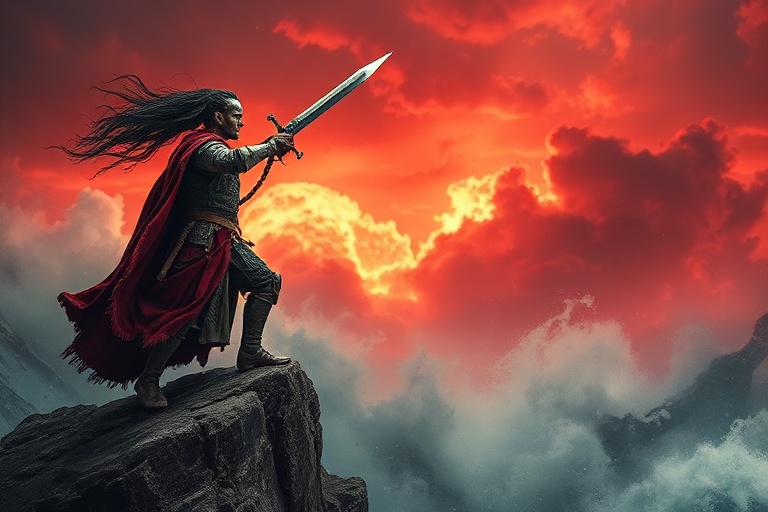
Guts’ physicality is another hallmark of the series. His massive sword, the Dragonslayer, isn’t just a weapon—it’s an extension of his identity. The meticulous detail in Miura’s fight scenes makes each battle feel visceral, a testament to the artist’s skill. Yet, it’s Guts’ emotional endurance that lingers longest in the reader’s mind.
Berserk’s Cultural Ripple Effect
Berserk’s influence extends far beyond its manga origins. The 1997 anime adaptation, directed by Naohito Takahashi, introduced the series to a global audience, though it famously ended prematurely. Its impact was undeniable, inspiring a generation of creators in gaming and animation. Titles like Dark Souls and Final Fantasy owe a debt to Berserk’s themes and aesthetics, from its gothic visuals to its themes of struggle and defiance.
The series’ legacy is also evident in modern dark fantasy works. Shows like Attack on Titan and games such as The Witcher 3 reflect Berserk’s influence, whether in their brutal storytelling or morally ambiguous characters. Even in fashion and art, its aesthetic—gothic, rugged, and unapologetically raw—has left a mark.
Yet, Miura’s death in 2021 left the story unfinished, a wound that still stings for fans. The final chapter, completed posthumously by Miura’s team, remains a poignant reminder of his vision. Despite its incomplete state, Berserk endures as a testament to the power of unflinching storytelling.
A Legacy Etched in Darkness
Berserk is more than a manga—it’s a cultural touchstone that challenges its audience to confront uncomfortable truths. Its themes of suffering, ambition, and the struggle for meaning resonate deeply in a world where escapism often trumps realism. Miura’s work reminds us that fantasy, at its best, doesn’t just entertain; it forces us to reflect.
The series’ enduring appeal lies in its refusal to sugarcoat the human experience. In a genre often dominated by idealized heroes and clear-cut morals, Berserk stands apart. It’s a story where hope is fragile, where victory is fleeting, and where the only constant is the will to endure.
For those who’ve yet to experience Berserk, the journey is demanding but rewarding. It’s a story that demands emotional investment, but in return, it offers something rare: a narrative that feels as real as it does mythic. In the pantheon of dark fantasy, there’s no work quite like it.
As the final pages of Berserk were laid to rest alongside Miura, the series left behind a legacy that will continue to inspire, challenge, and haunt readers for generations. It’s a testament to the power of storytelling—and the unyielding spirit of those who dare to create it.
For fans looking to explore more dark fantasy works, check out our Gaming section for titles inspired by Berserk, or visit our Entertainment category for more analysis on genre-defining series.