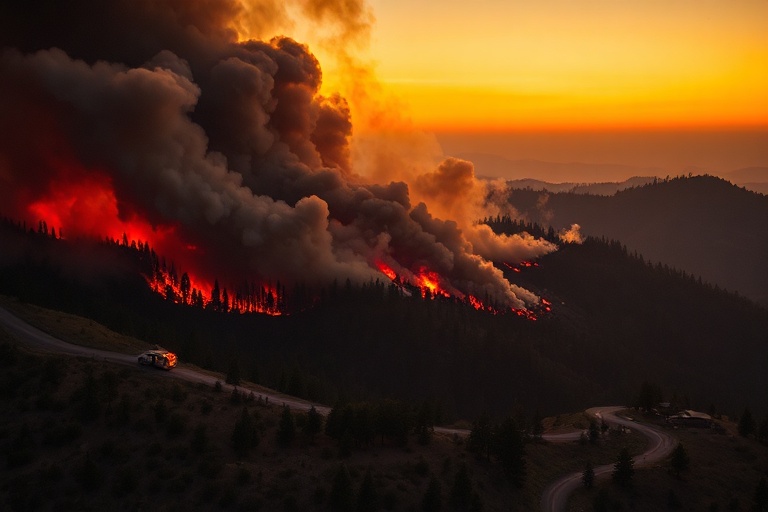
The Golden State has long been associated with sunshine, innovation, and natural beauty. Yet beneath this idyllic image lies a harsh reality: California is in the grip of a worsening wildfire crisis. Each year, thousands of fires scorch the landscape, leaving behind charred forests, displaced communities, and staggering economic losses. The intensity and frequency of these fires have forced residents, policymakers, and scientists to confront uncomfortable truths about climate change, land management, and urban planning.
The Human Toll: Lives Upended by Fire
Behind the statistics and satellite images are real people whose lives have been forever altered by wildfires. In recent years, entire towns have been reduced to ashes in a matter of hours. The 2018 Camp Fire, the deadliest in California’s history, claimed 85 lives and destroyed over 18,000 structures in Paradise and surrounding areas. Survivors often recount harrowing escapes through smoke-choked roads, leaving behind homes, pets, and cherished memories.
Recovery is a slow and painful process. Mental health professionals report a surge in trauma-related cases among displaced residents. Children who lost their homes during the fires often struggle with anxiety and grief. Local communities have rallied to provide support, but the emotional scars linger long after the flames have been extinguished.
Root Causes: Climate, Policy, and Human Interaction
The escalation of California’s wildfires cannot be attributed to a single factor. Instead, it is a convergence of environmental, policy, and human decisions that have created a perfect storm. Climate change is a major driver, with rising temperatures and prolonged droughts turning forests into tinderboxes. According to the U.S. Forest Service, the average annual temperature in California has increased by nearly 2 degrees Fahrenheit since 1900, contributing to drier conditions and longer fire seasons.
Decades of fire suppression policies have also played a role. Historically, wildfires were viewed as entirely destructive, leading to aggressive firefighting efforts that allowed fuel loads—dead trees, dry brush, and dense undergrowth—to accumulate. This unnatural buildup creates conditions ripe for catastrophic fires when ignition occurs. Some experts argue that controlled burns and forest thinning could mitigate future risks, but implementation remains inconsistent across the state.
Human activity remains a significant ignition source. Power lines, campfires, and even gender reveal parties have sparked devastating blazes. Pacific Gas & Electric (PG&E) faced widespread criticism after its outdated infrastructure was linked to multiple deadly fires, including the 2017 Tubbs Fire and the 2018 Camp Fire. The company filed for bankruptcy in 2019 as a result, and California regulators continue to debate the balance between utility reliability and fire safety.
Key Contributors to California’s Wildfire Crisis
- Climate Change: Rising temperatures and extended droughts create ideal conditions for wildfires.
- Fire Suppression Policies: Aggressive firefighting has led to overgrown forests with excessive fuel loads.
- Urban Expansion: More people living in fire-prone areas increases the risk of property damage and loss of life.
- Infrastructure Failures: Aging power lines and equipment have sparked multiple catastrophic fires.
- Human Activity: Accidental ignitions from campfires, fireworks, and vehicles remain common causes.
Economic Impact: The Cost of Living with Fire
The financial burden of California’s wildfires extends far beyond the immediate damage. In 2020 alone, wildfires cost the state an estimated $12 billion in direct and indirect costs, including emergency response, property damage, and lost tourism revenue. Insurance companies have responded by increasing premiums or withdrawing coverage entirely from high-risk areas, leaving homeowners in precarious financial positions.
Small businesses, particularly those in tourism-dependent regions like Lake Tahoe and wine country, have suffered prolonged closures and revenue losses. The wine industry, a cornerstone of California’s economy, has faced repeated setbacks due to smoke taint, which affects grape quality and harvest yields. Vineyard owners now invest in air filtration systems and insurance policies to protect their livelihoods.
State and federal governments allocate billions annually to fire suppression and recovery efforts. Yet critics argue that these funds are often reactive rather than preventive. Investing in forest management and community resilience could reduce long-term costs, but political and logistical challenges hinder progress.
Innovation and Adaptation: Can California Turn the Tide?
Despite the grim outlook, California has become a hub for innovation in wildfire prevention and response. Startups and research institutions are developing cutting-edge technologies to detect, predict, and combat fires. For example, companies like Zoey’s Wildfire Solutions use AI-powered drones equipped with thermal imaging to identify hotspots before they spiral out of control. These tools are being piloted in collaboration with CAL FIRE and local fire departments.
Community-based initiatives are also gaining traction. Firewise USA, a national program, encourages neighborhoods to create defensible spaces around homes by clearing vegetation and using fire-resistant building materials. Over 1,500 California communities have adopted these practices, reducing their vulnerability to encroaching flames.
Policy changes at the state level reflect a growing recognition of the need for systemic solutions. California’s Wildfire Prevention Grants Program, established in 2018, provides funding for fuel reduction projects and community education. Additionally, legislation passed in 2020 requires utilities to underground power lines in high-risk areas, a costly but potentially lifesaving measure.
Emerging Technologies in Wildfire Management
- AI and Drones: Thermal imaging and machine learning algorithms predict fire spread and identify ignition sources.
- Satellite Monitoring: NASA and NOAA satellites track fire activity in real-time, providing critical data to firefighters.
- Fire-Resistant Building Materials: Innovations in construction, such as non-combustible roofing and siding, reduce structural damage.
- Early Warning Systems: Apps and alert systems notify residents of imminent threats, enabling faster evacuations.
- Forest Management Tools: Prescribed burning and mechanical thinning are being optimized with data analytics to maximize effectiveness.
Looking Ahead: A Call for Collective Action
The wildfire crisis in California is not an isolated problem—it is a warning for other regions facing similar challenges. The solutions require collaboration between governments, scientists, businesses, and residents. While technological advancements and policy reforms offer hope, the most critical factor may be a cultural shift in how society views fire. Recognizing fire as a natural part of the ecosystem, rather than an unmitigated evil, could lead to more sustainable management practices.
For Californians, the road ahead is fraught with uncertainty. Yet the resilience demonstrated by communities in the face of adversity serves as a testament to human adaptability. By embracing innovation, prioritizing prevention, and supporting one another, there is a chance to rewrite the narrative—from one of loss to one of stewardship.
As the climate continues to change and urban development encroaches on wildland areas, the question is no longer whether California will face another devastating fire season, but how it will respond. The answers may well determine the future of not just the Golden State, but of fire-prone regions across the globe.