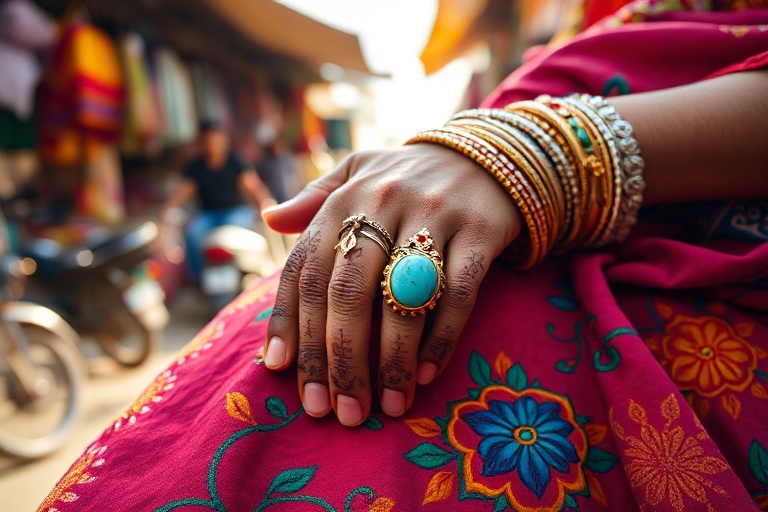
Desi Bling: How South Asian Heritage Is Shaping Global Luxury
From the opulent saris of Bollywood stars to the bold jewelry worn by South Asian brides, desi bling has evolved beyond cultural tradition into a global fashion statement. The term—derived from “desi,” meaning local or indigenous in Hindi and Urdu—now describes a fusion of South Asian aesthetics with contemporary luxury, creating a visual language that resonates from Mumbai to Manhattan. This isn’t just about adornment; it’s a cultural export that challenges Western-centric notions of beauty and value.
What began as regional craftsmanship has transformed into a multi-billion-dollar industry, with designers from Lahore to London reimagining traditional motifs like jhumkas, maang tikas, and naths for a global audience. The rise of desi bling reflects broader shifts in the fashion world, where heritage and innovation collide to redefine luxury. It’s a movement that celebrates identity while inviting the world to participate in its splendor.
The Roots of Desi Bling: Tradition Meets Modernity
South Asian jewelry has always been more than decorative; it carries centuries of symbolism. Pieces like the haar (a pearl necklace) or the jhoomar (a temple hair ornament) were historically reserved for weddings and royal ceremonies. Their intricate designs—often featuring gold, gemstones, and enamel work—were a status symbol, denoting wealth, marital bliss, or divine favor.
Today, these traditions are being recontextualized. Modern designers are stripping away the rigid rules of ethnicity while preserving the craftsmanship. For instance, the kundan technique, which involves setting gemstones in gold without a prong setting, has been adapted into minimalist rings and earrings that appeal to a non-South Asian clientele. Brands like Sabyasachi Mukherjee and Anita Dongre are at the forefront, blending heirloom techniques with contemporary silhouettes.
The global appeal of desi bling isn’t accidental. It’s the result of strategic collaborations and social media amplification. In 2023, Meghan Markle wore a delicate nath (nose ring) during her royal tour of India, sparking a surge in searches for traditional South Asian jewelry. Similarly, Bollywood’s red-carpet moments—think Deepika Padukone’s 2022 Cannes look adorned with a 22-karat gold maang tika—have cemented its place in high fashion.
From Bollywood to the Runway: The Globalization of Desi Adornments
The crossover from film to fashion has been pivotal. Bollywood’s love affair with bling dates back decades, but the 2010s saw a deliberate shift toward designer pieces that blurred the line between costume and couture. Stars like Priyanka Chopra Jonas and Alia Bhatt have become ambassadors for desi jewelry brands, wearing statement pieces that blend kitsch with high art.
This influence extends to the runway. In 2022, Chanel’s Métiers d’Art collection featured embroidered motifs inspired by South Asian gota patti work, a technique traditionally used in Rajasthani bridal wear. Meanwhile, Gucci’s 2020 pre-fall collection included turbans and jewelry reminiscent of Punjabi parandis. These aren’t mere homages; they’re evidence of how desi aesthetics are being absorbed—and sometimes appropriated—by Western luxury houses.
The democratization of desi bling is also tied to the rise of South Asian influencers and celebrities. Platforms like Instagram and TikTok have given rise to a new wave of tastemakers who curate content around jewelry, from DIY jhumka tutorials to hauls of vintage haars. Brands like India’s Ritu Kumar and the U.S.-based Sindoori have capitalized on this, offering accessible entry points into the world of desi adornments.
Here’s how desi bling is making its mark globally:
- Bridal Couture: South Asian weddings remain the largest market for high-end jewelry, but designers are now creating pieces that transition seamlessly into everyday wear.
- Streetwear Collaborations: Brands like Nike and Adidas have partnered with South Asian designers to infuse traditional patterns into sneakers and apparel.
- Fine Jewelry Redefined: Luxury houses like Cartier and Tiffany & Co. have launched collections featuring South Asian-inspired motifs, often reimagined with modern materials like lab-grown diamonds.
- Digital Marketplaces: Etsy and Amazon now host thousands of sellers offering handmade desi jewelry, catering to a diaspora eager for authenticity.
The Cultural and Economic Impact of Desi Bling
The rise of desi bling isn’t just a fashion trend; it’s an economic force. The global ethnic jewelry market is projected to reach $20 billion by 2027, with South Asian designs leading the charge. This growth has created opportunities for artisans, many of whom are women, in countries like India, Pakistan, and Bangladesh. Organizations like the Self-Employed Women’s Association (SEWA) in India have helped rural craftsmen access global markets, ensuring that traditional techniques aren’t lost to mass production.
Yet, the commercialization of desi bling also raises questions about authenticity and exploitation. Western brands often dilute the cultural significance of these pieces, rebranding them as “boho” or “global” without credit to their origins. This tension mirrors broader debates in the fashion industry, where cultural appropriation clashes with appreciation. For example, when a fast-fashion retailer replicates a $5,000 jhumka for $50, it undermines the craftsmanship and heritage behind the design.
Desi bling also serves as a form of soft power. As South Asian diaspora communities grow—particularly in the U.S., U.K., and Canada—their cultural expressions are gaining visibility. Events like the Toronto Desi Fashion Week celebrate this fusion, blending music, dance, and fashion into a cohesive cultural narrative. For many, wearing desi jewelry is an act of reclaiming identity, especially in spaces where they’ve historically been marginalized.
The Future of Desi Bling: Sustainability and Innovation
As the world becomes more conscious of sustainability, desi bling is evolving to meet new demands. Traditional jewelry often relies on ethically sourced materials like gold and gemstones, but modern consumers are pushing for transparency. Brands like D’Damas and Rajesh Pratap Singh are leading the charge, using recycled metals and lab-grown diamonds to appeal to eco-conscious buyers.
Innovation is also driving change. 3D printing is revolutionizing the production of intricate designs, making custom desi jewelry more accessible. Meanwhile, augmented reality (AR) is allowing customers to “try on” pieces virtually before purchasing, a game-changer for the industry. The pandemic accelerated these trends, forcing brands to rethink their supply chains and customer engagement strategies.
Looking ahead, desi bling is poised to become even more mainstream. With South Asian representation on the rise in Hollywood, music, and sports—from Mindy Kaling’s red-carpet looks to Virat Kohli’s gold-accented cricket gear—the aesthetic will continue to permeate global culture. The challenge lies in ensuring that this growth benefits the artisans and communities who have preserved these traditions for centuries.
A Lasting Legacy
Desi bling is more than a trend; it’s a testament to the enduring power of cultural heritage. It challenges the fashion industry to move beyond monolithic definitions of luxury and embrace diversity. For the South Asian diaspora, it’s a way to honor their roots while navigating a globalized world. And for the rest of the world, it’s an invitation to appreciate the beauty of a culture that has long been overlooked.
As designers continue to push boundaries and consumers demand authenticity, desi bling will remain at the intersection of tradition and innovation. Its story is still being written—one glittering piece at a time.