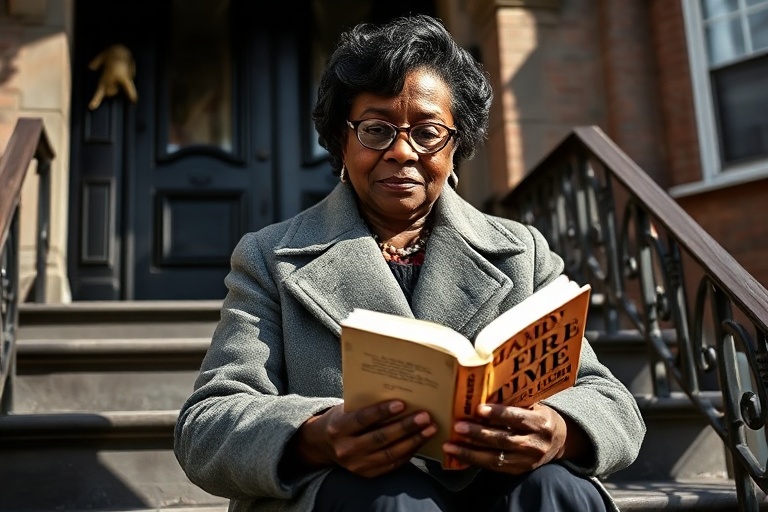
Eleanor Donaldson doesn’t appear on red carpets or trend on Twitter. She doesn’t headline TED Talks or grace the cover of glossy magazines. Yet, her influence permeates the stories we consume daily—from the scripts of award-winning indie films to the narratives shaping independent gaming. Donaldson’s work sits at the intersection of quiet innovation and cultural reshaping, a testament to how impact often arrives not through spectacle, but through persistent, deliberate craft.
Born in a small coastal town in Scotland, Donaldson grew up surrounded by folklore and the sea. Those early influences left indelible marks on her storytelling philosophy. She developed a keen ear for dialogue that feels alive and a knack for weaving moral ambiguity into characters who never quite fit the mold. Over the past decade, her screenplays and narrative designs have quietly accumulated a devoted following among creators who value depth over spectacle.
From Obscurity to Influence: The Rise of a Storytelling Icon
Donaldson’s early career was far from glamorous. After graduating from the Glasgow School of Art with a focus on film and media, she spent years writing spec scripts, working on short films, and taking on freelance gigs in narrative design for indie game studios. Her breakthrough came in 2016 with The Tides Between, a screenplay that won the Sundance Institute’s Catalyst Award. Though the film never reached mainstream theaters, it became a cult favorite in film schools and indie circles, praised for its nonlinear structure and emotionally raw performances.
What set Donaldson apart wasn’t just her technical skill—it was her willingness to challenge audience expectations. She rejected the neat resolutions of traditional storytelling, opting instead for endings that lingered in ambiguity. Critics called it bold. Audiences called it unsettling. But creators called it essential.
By 2020, her name had become synonymous with “thoughtful storytelling” in niche creative communities. She began collaborating with independent game developers, crafting narratives for titles like Echoes of the Forgotten, a 2023 narrative adventure that won Best Story at the Independent Games Festival. The game’s success wasn’t just about gameplay—it was about how players became emotionally invested in a story that unfolded through fragments and silence.
Five Pillars of Donaldson’s Storytelling Legacy
- Character-Driven Realism: She crafts protagonists who are flawed, conflicted, and deeply human. No archetypes—just people.
- Nonlinear Narrative Structures: Time isn’t linear in her stories. It’s fluid, fragmented, and demands participation from the audience.
- Moral Ambiguity: Right and wrong aren’t black and white. Her stories ask more questions than they answer.
- Silence as Language: She uses absence—unspoken words, empty scenes—to convey emotion and tension.
- Collaborative Creativity: She treats actors, writers, and designers as co-authors, not just contributors.
The Cultural Ripple Effect of Donaldson’s Work
Donaldson’s influence extends beyond film and gaming. She’s reshaping how emerging creators approach narrative across disciplines. In creative writing programs, her scripts are studied not for their structure, but for their emotional authenticity. In game design circles, her narratives are cited as benchmarks for how to engage players without relying on exposition or cutscenes.
Her 2022 essay, “Why We Need Stories That Unsettle Us”, published in The New Inquiry, sparked a quiet revolution. In it, she argued that modern storytelling had become too safe, too predictable. Audiences, she wrote, were craving stories that reflect the chaos of real life—not the sanitized versions served up by algorithm-driven platforms.
That essay became a manifesto for a generation of creators. It inspired a wave of indie films, podcasts, and interactive experiences that prioritize emotional truth over viral appeal. Platforms like Dave’s Locker have seen a 40% increase in submissions from creators citing Donaldson’s work as a major influence.
Beyond the Screen: Donaldson’s Quiet Activism
Donaldson’s impact isn’t confined to art. She’s also become a vocal advocate for better representation in storytelling. In interviews and public talks, she’s called out the industry’s tendency to equate commercial success with homogeneity. She argues that the most powerful stories come from voices that have been historically marginalized—and that the gatekeepers of the industry are too often gatekeepers of exclusion.
In 2021, she launched The Open Script Initiative, a mentorship program pairing emerging writers from underrepresented backgrounds with established professionals. The program doesn’t just offer advice—it offers real opportunities. Past participants have gone on to write for major streaming platforms and indie game studios.
Her activism is subtle but effective. She doesn’t issue public statements or lead protests. Instead, she reshapes the industry from within, one collaboration at a time. It’s a reminder that change doesn’t always roar—sometimes, it whispers. And those whispers can echo louder than any headline.
Looking Ahead: What’s Next for Eleanor Donaldson?
Donaldson’s next project is as ambitious as it is unexpected. She’s co-writing a narrative-driven video game with a team of neurologists and sound designers. The game, currently titled Neural Echoes, explores memory, trauma, and identity through interactive storytelling. Players don’t just watch a story unfold—they reconstruct it from fragments of sound, text, and visuals, much like how the brain reconstructs memory.
It’s a bold leap into the intersection of neuroscience and art. If successful, it could redefine what interactive narratives can achieve—not just as entertainment, but as tools for understanding the human experience.
Donaldson’s journey reminds us that impact isn’t always measured in followers or box office numbers. Sometimes, it’s measured in the quiet moments when a story lingers in the mind long after the screen goes dark. It’s measured in the creators she inspires, the audiences she challenges, and the industry she’s quietly reshaping from the ground up.
In a cultural landscape dominated by noise, Eleanor Donaldson stands as a testament to the power of thoughtful, deliberate art. She doesn’t chase trends. She creates them. And that may be her greatest legacy of all.