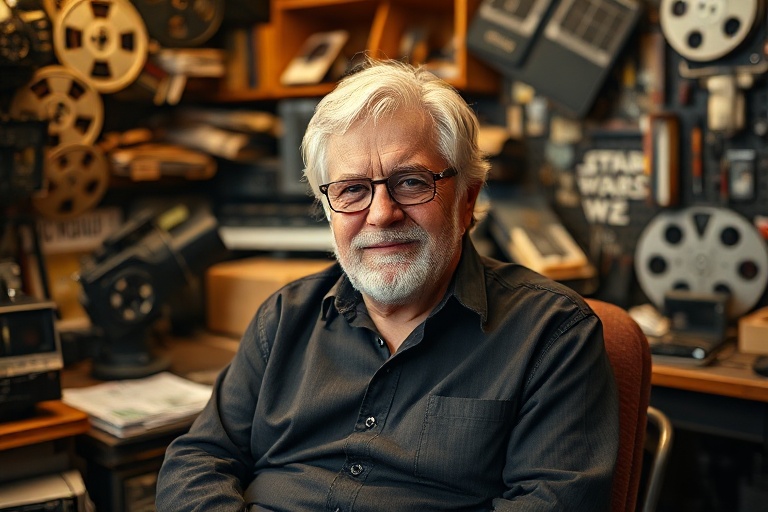
George Lucas: How One Filmmaker Changed Cinema Forever
“`html
George Lucas: The Man Who Rewrote Cinema History
Few names in modern entertainment carry the same weight as George Lucas. The filmmaker reshaped the film industry not once, but twice—first with the original Star Wars in 1977, and again with Indiana Jones in 1981. His work didn’t just entertain; it redefined how stories could be told on screen, influencing generations of creators and leaving an indelible mark on popular culture.
Beyond his directorial achievements, Lucas’s business acumen transformed how films were financed, marketed, and distributed. His innovations extended beyond storytelling into technology, corporate strategy, and even education. To understand modern cinema, one must first understand George Lucas—not just as a director, but as a visionary who built an empire from a single idea.
From Student Film to Hollywood Legend
Lucas’s journey began long before Star Wars or Indiana Jones. Born in 1944 in Modesto, California, he grew up fascinated by cars, comics, and the emerging world of television. After studying film at the University of Southern California (USC), he caught the attention of Francis Ford Coppola, who became both a mentor and lifelong collaborator.
His early works, like THX 1138 (1971), showcased his technical precision and thematic depth, though they struggled at the box office. Yet these films established his signature style: clean visuals, meticulous world-building, and a blend of sci-fi and mythic storytelling. When American Graffiti (1973) became a surprise hit, Lucas gained the creative freedom—and financial backing—to pursue his most ambitious project yet.
A New Hope and the Birth of a Franchise
In 1977, Star Wars premiered, and audiences encountered something entirely new. Lucas didn’t just create a movie; he built a universe. The film’s success wasn’t accidental. It was the result of meticulous planning, from the mythological structure borrowed from Joseph Campbell’s The Hero with a Thousand Faces to the practical effects that made alien worlds feel tangible.
The original Star Wars wasn’t just a hit—it was a cultural earthquake. It introduced merchandising as a major revenue stream for films, proving that a movie could sustain a brand long after its theatrical run. The franchise’s expansion into toys, games, and later, sequels and spin-offs, set the template for modern entertainment empires.
The Business of Storytelling: Lucasfilm and Industrial Light & Magic
Lucas didn’t stop at directing. He understood early on that control over his creative work required control over its production and distribution. In 1975, he founded Lucasfilm, which became one of the most influential studios in Hollywood. Under its umbrella, he launched Industrial Light & Magic (ILM), a visual effects company that revolutionized how films were made.
ILM pioneered digital effects, computer-generated imagery (CGI), and motion capture—technologies that now define blockbuster filmmaking. Without Lucas’s investments, films like Jurassic Park, The Lord of the Rings, and the Marvel Cinematic Universe might not exist in their current forms.
In 2012, Lucas sold Lucasfilm to Disney for $4.05 billion, a deal that included the rights to Star Wars. The acquisition cemented his legacy as both an artist and a businessman, proving that a single creator could shape an entire industry.
The Controversial Legacy: What Lucas Leaves Behind
Lucas’s career hasn’t been without criticism. His later Star Wars prequels (1999–2005) divided fans, with some praising their ambition and others dismissing them as emotionally hollow. The films’ digital aesthetics, while groundbreaking, often overshadowed the storytelling, leaving a mixed legacy in the franchise’s history.
Yet even his detractors acknowledge his impact. Lucas didn’t just make movies; he changed how audiences engage with stories. He proved that genre films could be art, that merchandising could fund creativity, and that a single creator could build an empire that outlasts generations.
Beyond the Screen: Education and Philanthropy
Lucas’s influence extends beyond cinema. In 2005, he founded the George Lucas Educational Foundation, which promotes innovative teaching methods through documentaries and resources. His work in education reflects a belief that storytelling isn’t just entertainment—it’s a tool for learning and empowerment.
He has also donated hundreds of millions to museums, universities, and arts organizations, ensuring that his wealth benefits future creators. Unlike many industry titans, Lucas has consistently used his platform to give back, reinforcing his image as more than just a filmmaker—he’s a cultural steward.
The Enduring Influence of a Cinematic Pioneer
George Lucas’s career is a study in contradictions: the introverted artist who built a corporate empire, the technologist who valued human stories, the businessman who funded dreams. His work challenges the notion that art and commerce are mutually exclusive. Instead, he proved they could reinforce each other, creating a blueprint for modern entertainment.
For aspiring filmmakers, Lucas’s journey offers a lesson in persistence. His early failures didn’t deter him; they refined his vision. For industry professionals, his innovations in technology and business remain case studies in disruption. And for audiences, his stories continue to inspire, proving that great myths are timeless, regardless of their medium.
What Comes Next? The Future of Lucas’s Legacy
With Disney’s continued expansion of the Star Wars universe, Lucas’s influence will persist for decades. New films, TV shows, and games will carry his original ideas forward, even as they evolve under new leadership. Meanwhile, his educational initiatives and philanthropic efforts ensure that his impact will be felt beyond the screen.
Love him or criticize him, George Lucas remains one of the most consequential figures in modern storytelling. He didn’t just make films; he redefined what films could be—and in doing so, he changed the world.
Key Takeaways: George Lucas’s Lasting Impact
- Mythic Storytelling: Lucas borrowed from Joseph Campbell’s monomyth to create universally resonant narratives, making Star Wars a modern myth.
- Technological Innovation: ILM’s advancements in CGI and digital effects paved the way for nearly every blockbuster since the 1980s.
- Merchandising as Art: He proved that a film could sustain a brand through toys, games, and spin-offs, a model now standard in Hollywood.
- Creative Entrepreneurship: Lucasfilm’s structure allowed him to retain creative control while building a sustainable business.
- Philanthropy and Education: His charitable efforts focus on innovative teaching, ensuring his legacy extends beyond entertainment.
For those interested in exploring Lucas’s influence further, dive into the Entertainment and Culture sections of Dave’s Locker, where his work continues to inspire analysis and discussion.
Conclusion: The Force of a Visionary
George Lucas’s career is a testament to the power of vision. He didn’t just predict the future of cinema; he built it. From the deserts of Tatooine to the classrooms of today, his work reminds us that great stories—and the people who tell them—shape the world in ways both seen and unseen.
As Star Wars approaches its 50th anniversary, Lucas’s legacy is secure. But more than that, his story serves as a challenge to creators everywhere: dare to dream big, and build the tools to make those dreams real.