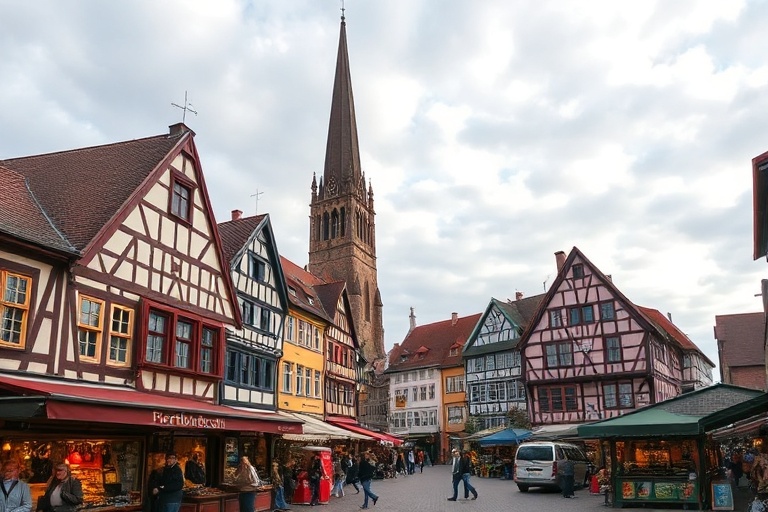
How Freiburg Became Germany’s Green Urban Success Story
“`html
Freiburg: Germany’s Green City of the Future
Nestled in the southwest corner of Germany, Freiburg im Breisgau has quietly emerged as a model of sustainable urban living. With its pedestrian-friendly streets, abundant solar energy production, and commitment to zero-carbon goals, this city of 230,000 residents offers lessons for communities worldwide. What began as a medieval university town has transformed into a living laboratory for environmental innovation.
The city’s transformation didn’t happen overnight. Freiburg’s journey toward sustainability began in earnest after the 1970s, when citizens successfully blocked a proposed nuclear power plant. This early environmental victory planted the seeds for today’s green infrastructure. Decades of consistent policy implementation have since turned Freiburg into a case study for urban planners and environmentalists alike.
The Urban Design Principles Behind Freiburg’s Success
Freiburg’s city planning revolves around several core principles that prioritize human-scale development and ecological balance. The Travel section often highlights destinations where architecture and nature coexist harmoniously, making Freiburg a prime example to examine.
At the heart of Freiburg’s approach is the Fahrradstadt concept—literally “bicycle city.” The network of bike lanes spans over 500 kilometers, with protected paths making cycling safer than driving in many areas. This infrastructure investment has paid dividends: nearly 30% of all trips within the city are made by bicycle, one of the highest rates in Europe.
Freiburg also pioneered the Vauban district, a former French military base turned sustainable neighborhood. Built in the 1990s, Vauban features:
- Energy-efficient buildings that produce more power than they consume
- Mandatory solar panel installations on all new constructions
- Car-free streets with parking limited to district edges
- Extensive green spaces and urban gardens
The district’s design demonstrates how urban density can coexist with environmental responsibility. Studies show Vauban residents produce 60% less CO2 than the German average, proving that sustainable living doesn’t require sacrificing quality of life.
Renewable Energy as a Municipal Priority
Freiburg generates more solar power per capita than any other German city. This achievement stems from a combination of progressive policies and citizen participation. The city’s energy utility, Badenova, offers residents the opportunity to invest in local solar projects, with over 3,000 households participating in renewable energy cooperatives.
The Schwarzwald mountains to the east provide consistent wind patterns, making Freiburg an ideal location for wind energy. While controversial wind turbines dot the horizon, the city has balanced renewable development with landscape preservation through careful siting and community engagement.
In 2019, Freiburg became one of Germany’s first Zero Carbon Cities, with a goal of climate neutrality by 2030. This ambitious target requires reducing emissions by 95% across all sectors. The city has already achieved:
- 50% reduction in CO2 emissions since 1992
- 100% renewable electricity supply since 2018
- 40% decrease in household energy consumption through efficiency programs
These numbers demonstrate what’s possible when municipal governments treat climate action as an economic development strategy rather than a cost center. Freiburg’s model has attracted international attention, with delegations from over 30 countries visiting annually to study its policies.
The Social Dimensions of Freiburg’s Green Transition
Sustainability in Freiburg extends beyond physical infrastructure to encompass social equity. The city’s approach ensures that green initiatives benefit all residents, not just the affluent. Public housing programs incorporate energy-efficient design, while solar cooperatives allow low-income households to share in renewable energy profits.
The Culture section often explores how communities adapt to technological and environmental changes. Freiburg’s experience offers valuable insights into the cultural shifts accompanying sustainable transitions.
Freiburg’s universities play a crucial role in maintaining this balance. The Albert-Ludwigs-Universität and University of Education Freiburg conduct extensive research on renewable energy and sustainable urbanism, while providing a steady stream of skilled graduates to fuel the green economy. The city’s thriving startup scene includes companies focused on solar technology, energy storage, and smart grid solutions.
However, the transition hasn’t been without challenges. Rising housing costs in Freiburg’s most desirable districts have priced out some long-term residents. The city has responded with policies like rent control and inclusionary zoning, though debates continue about balancing environmental goals with social justice.
Lessons for Other Cities
Freiburg’s success offers several key takeaways for urban areas worldwide:
- Long-term consistency matters more than dramatic gestures. Freiburg’s achievements result from 40+ years of incremental progress rather than sudden policy shifts.
- Citizen participation is essential. Over 80% of Freiburg residents support local renewable energy projects, demonstrating that environmental policies succeed when communities feel ownership.
- Economic benefits reinforce environmental goals. Freiburg’s green industry employs over 10,000 people and generates €1.2 billion annually, proving sustainability can be profitable.
- Integration across sectors is crucial. Freiburg’s model succeeds because energy, transportation, housing, and waste management policies work together rather than in isolation.
As climate change accelerates, Freiburg provides a roadmap for cities seeking to reduce emissions while improving quality of life. The city’s experience suggests that sustainability isn’t about deprivation—it’s about creating more livable, equitable, and resilient communities.
For travelers interested in experiencing Freiburg’s green innovations firsthand, the city offers guided tours of the Vauban district and solar installations. The Travel section provides additional resources for those planning visits to sustainable destinations.
Looking ahead, Freiburg faces new challenges as it pursues climate neutrality. The city must address the gentrification pressures accompanying its success while maintaining the innovative spirit that made it a global leader. If Freiburg can navigate these complexities, its story may inspire other cities to follow its path toward a more sustainable future.