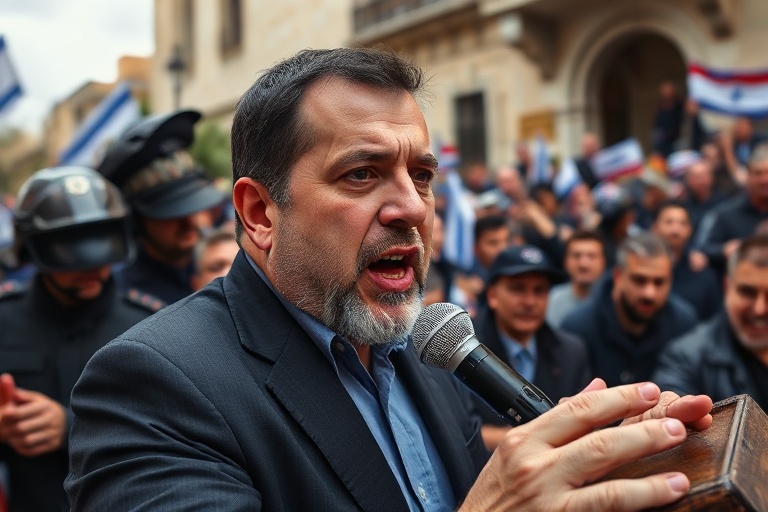
Itamar Ben-Gvir has emerged as one of the most polarizing figures in Israeli politics. His rapid ascent from fringe activist to a key government minister reflects broader shifts in the country’s political landscape. Understanding his background, ideology, and influence requires examining both his personal journey and the evolving dynamics of Israeli society.
From Activist to Minister: The Political Journey of Itamar Ben-Gvir
Itamar Ben-Gvir’s political career began in the late 1990s when he joined the far-right Kach party, which was later banned for incitement to racism. His early activism centered on Jewish settlement expansion in the West Bank and opposition to the Oslo Accords. Over the years, he distanced himself from the most extreme elements of Kach while maintaining hardline positions on Palestinian-Israeli relations.
Ben-Gvir gained national attention in 2007 when he was convicted of incitement to racism and supporting a terrorist organization. The charges stemmed from his involvement in distributing propaganda materials and his presence at events glorifying Baruch Goldstein, who massacred 29 Palestinians in Hebron in 1994. Despite these controversies, he continued to build his political base in the West Bank settlements and among nationalist Israelis.
His breakthrough came in 2019 when he co-founded the Otzma Yehudit (Jewish Power) party, which became a coalition partner in Benjamin Netanyahu’s government following the 2022 elections. This alliance marked a significant normalization of his political presence, granting him a platform to amplify his views on security, Palestinian citizens of Israel, and Jewish sovereignty in the West Bank.
Key Moments in Ben-Gvir’s Political Career
- 1990s: Joins the far-right Kach party as a teenager.
- 2007: Convicted of incitement to racism and supporting a terrorist organization.
- 2019: Co-founds Otzma Yehudit, positioning himself as a leader of the Israeli far-right.
- 2022: Otzma Yehudit becomes part of Netanyahu’s governing coalition.
- 2023: Appointed Minister of National Security, overseeing Israel’s police force.
Policy Positions and Controversial Stances
Ben-Gvir’s policy positions are rooted in a maximalist vision of Jewish nationalism. He advocates for the annexation of the entire West Bank, opposes Palestinian statehood, and supports expanded settlement construction. His rhetoric often frames Palestinians as a demographic and security threat, a perspective that has drawn criticism from human rights organizations and international observers.
As Minister of National Security, Ben-Gvir has sought to reshape Israel’s law enforcement apparatus to align with his ideological priorities. He has pushed for greater police presence in Arab communities, expanded powers for security forces in the West Bank, and promoted policies that critics argue undermine civil liberties. His tenure has been marked by clashes with Israel’s Supreme Court and ongoing tensions with Palestinian citizens of Israel.
One of his most contentious moves was the establishment of a national guard under his ministry’s control, a proposal that raised concerns about the militarization of civilian policing. Additionally, Ben-Gvir has repeatedly visited flashpoint locations in the West Bank and East Jerusalem, often accompanied by controversial figures, to assert Jewish claims to contested areas.
Controversial Statements and Actions
- 2021: Called for the expulsion of “disloyal” Arab citizens of Israel.
- 2022: Visited the Temple Mount/Haram al-Sharif, a site sacred to both Jews and Muslims, sparking regional tensions.
- 2023: Advocated for the demolition of Palestinian homes in East Jerusalem as a deterrent measure.
- 2023: Called for the release of Yigal Amir, the assassin of former Prime Minister Yitzhak Rabin.
Broader Implications for Israel and the Region
Ben-Gvir’s rise is emblematic of a broader shift in Israeli politics toward the right, particularly among younger voters who increasingly prioritize security and Jewish identity over liberal democratic values. His influence extends beyond domestic policy, affecting Israel’s relations with the international community, particularly in Europe and the United States, where his rhetoric and actions are often met with condemnation.
The normalization of figures like Ben-Gvir within Israel’s political mainstream has also emboldened other far-right movements, both within the country and abroad. His ability to translate fringe ideas into government policy demonstrates the erosion of traditional political boundaries in Israeli society. This trend poses challenges for Israel’s democratic institutions, including its judiciary and minority rights protections.
Internationally, Ben-Gvir’s presence complicates Israel’s efforts to present itself as a liberal democracy. His policies and statements often conflict with the values promoted by Western allies, particularly regarding human rights and the treatment of Palestinians. This tension has led to calls for greater scrutiny of Israel’s policies, including from within the U.S. government and European Union.
Moreover, Ben-Gvir’s approach to security and governance risks deepening divisions within Israeli society. His rhetoric and actions have fueled mistrust among Palestinian citizens of Israel, who already face systemic discrimination. The potential for further unrest in the West Bank and East Jerusalem remains high, particularly as settlement expansion accelerates under his watch.
“Ben-Gvir’s ascent reflects a troubling trend in Israeli politics, where the boundaries of acceptable discourse have shifted dramatically to the right. His policies not only marginalize Palestinian citizens but also undermine the fragile fabric of Israel’s democratic institutions.”
— Israeli political analyst Yossi Verter
What’s Next for Ben-Gvir and Israeli Politics?
The future of Itamar Ben-Gvir’s political career remains uncertain, but his influence is likely to endure as long as the right-wing coalition maintains power. His ability to mobilize support among nationalist voters ensures that his ideas will remain a fixture in Israeli politics, even if he faces legal or political setbacks. However, his continued prominence could further strain Israel’s relations with the international community and deepen societal divisions.
Domestically, Ben-Gvir’s agenda faces resistance from Israel’s Supreme Court, which has repeatedly blocked policies deemed discriminatory or unconstitutional. His ongoing clashes with the judiciary highlight the broader struggle between Israel’s right-wing government and its legal institutions, a conflict that could define the country’s political trajectory in the coming years.
For observers of Israeli politics, Ben-Gvir’s career offers a case study in the normalization of extremist ideas within mainstream politics. His story underscores the importance of vigilance in protecting democratic values and minority rights, particularly in an era where populist and nationalist movements are gaining ground worldwide.
As Israel navigates these challenges, the international community will continue to monitor Ben-Gvir’s actions closely. His policies and rhetoric have the potential to reshape the region’s geopolitical landscape, making his role in government a critical factor in any future peace negotiations or security arrangements.
For further analysis of Israel’s political landscape, explore our Politics and International category pages on Dave’s Locker.
Itamar Ben-Gvir’s political career is a stark reminder of how quickly extremist ideologies can gain traction in mainstream politics. His rise reflects broader societal shifts in Israel and beyond, where nationalist and populist movements are reshaping traditional political boundaries. As his influence grows, so too do the challenges to Israel’s democratic institutions and its commitment to equality for all citizens.