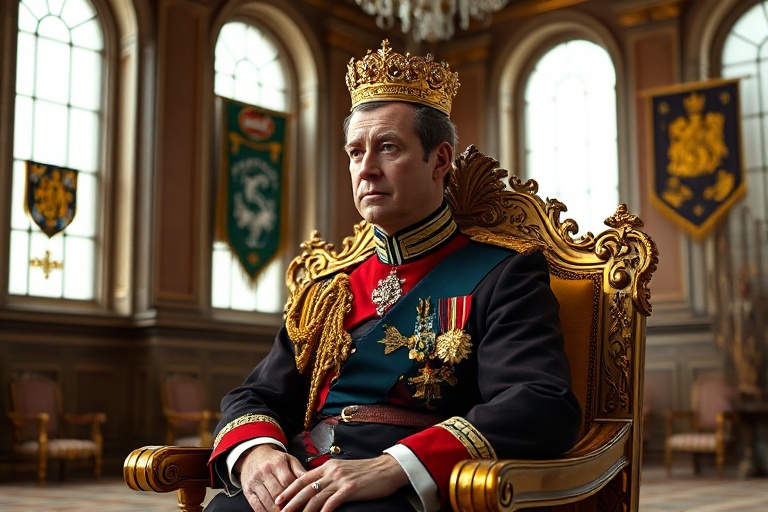
King Charles III: How the Monarchy is Evolving in the 21st Century
“`html
King Charles III: A New Era for the British Monarchy
When Queen Elizabeth II passed away on September 8, 2022, after a 70-year reign, the British monarchy entered an unprecedented chapter. Her son, Charles Philip Arthur George, ascended to the throne as King Charles III, becoming the oldest monarch to begin his rule at age 73. His coronation on May 6, 2023, marked not just a generational shift but a transformation in how the monarchy engages with the modern world.
The transition from Elizabeth II to Charles III was more than ceremonial. It represented a generational evolution in leadership, public perception, and institutional priorities. Unlike his mother, who ruled during a period of relative stability, Charles inherited a monarchy navigating political turbulence, public scrutiny, and calls for modernization. His reign began under the weight of historical expectations while facing the challenges of a rapidly changing society.
The Life and Legacy of Charles III Before the Crown
Born on November 14, 1948, Charles III spent over seven decades preparing for a role he never expected to assume so late in life. As the eldest son of Queen Elizabeth II and Prince Philip, he was groomed from childhood for royal duties. His education included rigorous academic training at Gordonstoun School, followed by studies at Trinity College, Cambridge, where he earned a Bachelor of Arts degree in 1970—the first heir apparent to do so.
Yet, Charles’s early life was also marked by personal struggles. His turbulent marriage to Diana Spencer, which ended in divorce in 1996, became a global spectacle, drawing intense media attention. Diana’s tragic death in 1997 further exposed the royal family to public criticism, with Charles often bearing the brunt of scrutiny. Despite these challenges, he remained dedicated to his duties, serving as Prince of Wales for over six decades—the longest-serving holder of that title.
Charles’s reputation as a thoughtful, sometimes controversial figure emerged through his advocacy for environmental causes, architectural preservation, and social issues. His 1970 book, A Vision of Britain, outlined his vision for the monarchy’s role in contemporary society. These interests reflected his broader philosophy: that the crown should evolve while preserving tradition.
Key Contributions Before Becoming King
- Environmental Advocacy: Founded The Prince’s Trust in 1976 and The Prince’s Foundation, focusing on sustainability and youth development.
- Architectural Preservation: Campaigned for traditional craftsmanship and historic building conservation through The Prince’s Regeneration Trust.
- Philanthropic Work: Established over 20 charities under his patronage, including The Prince’s Trust and The King’s Fund.
- Diplomatic Role: Served as a unifying figure in Commonwealth relations, often representing the UK in international visits.
Charles III’s Reign: Challenges and Adaptations
King Charles III assumed the throne amid a monarchy under pressure. Public trust in the institution had eroded due to scandals involving other senior royals, including Prince Andrew’s legal troubles and Prince Harry and Meghan Markle’s decision to step back from royal duties. The cost-of-living crisis in the UK also intensified debates about the monarchy’s relevance and public funding.
Unlike his mother, who maintained a carefully neutral public stance, Charles has been more outspoken on social and political issues. His comments on climate change, colonialism, and social justice have sparked both praise and criticism. In his first Christmas broadcast as king, he acknowledged the monarchy’s colonial past, stating, “It is a duty to acknowledge that there were times when the actions of the British Empire caused profound suffering.” This rare admission reflected his commitment to addressing historical injustices.
His coronation itself was a scaled-down affair compared to previous ceremonies, reflecting modern expectations and financial prudence. The event was broadcast globally, reaching millions, but also faced backlash from some who viewed it as an outdated tradition. Yet, the coronation also demonstrated Charles’s ability to balance tradition with innovation, incorporating elements of inclusivity and sustainability.
The Future of the British Monarchy Under Charles III
The long-term viability of the monarchy under Charles III will depend on several factors. Public perception remains divided: some view him as a stabilizing force, while others question whether he can modernize the institution sufficiently to survive in an increasingly republican-minded era. Polls suggest that support for the monarchy in the UK is softening, particularly among younger generations, who are less sentimental about tradition.
One of Charles’s greatest challenges will be navigating the role of his wife, Camilla, now styled as Queen Consort. Her controversial past as the former wife of Charles’s former mistress, as well as her own perceived unpopularity, adds another layer of complexity. Yet, her steady presence during public engagements has helped stabilize the monarchy’s image in recent years.
Another critical factor is the monarchy’s relationship with the Commonwealth. Charles has long emphasized the importance of the Commonwealth as a “family of nations,” but some member countries, including Barbados, have transitioned to republics. His ability to maintain these ties without appearing anachronistic will be crucial.
Charles’s health also presents concerns. At 75, he is older than any previous monarch at the start of their reign. While he has remained active, any significant health issues could accelerate discussions about the future of the monarchy, particularly regarding the role of his eldest son, Prince William.
What Lies Ahead for Charles III and the Monarchy
- Modernization vs. Tradition: Balancing public expectations for transparency with the ceremonial expectations of the monarchy.
- Succession Planning: Preparing Prince William and Princess Catherine for their future roles while managing public expectations.
- Commonwealth Relations: Strengthening ties with member nations, some of which are increasingly questioning the monarchy’s relevance.
- Financial Sustainability: Addressing public concerns about royal funding amid economic challenges in the UK.
- Cultural Relevance: Ensuring the monarchy remains a unifying symbol in an era of political and social division.
Broader Implications: The Monarchy in a Changing World
The reign of Charles III is unfolding at a time when monarchies worldwide are facing existential questions. The Netherlands, Sweden, and Spain have all seen their royal families adapt to modern expectations through transparency and public engagement. Yet, the British monarchy remains unique due to its deep historical roots and global influence.
Charles’s approach—emphasizing duty, environmental stewardship, and social responsibility—aligns with the values of younger generations. However, his personal history and the monarchy’s colonial legacy continue to pose challenges. His willingness to acknowledge past wrongs, such as slavery and imperialism, represents a departure from his predecessors and may help the institution regain trust.
The monarchy’s survival will depend not just on Charles’s leadership but on the monarchy’s ability to remain relevant. That may mean further reducing its ceremonial extravagance, increasing transparency about finances, and redefining its role in a multicultural Britain. Whether Charles can achieve this without fracturing the institution remains an open question.
One thing is certain: his reign marks the beginning of a new chapter, not just for the British monarchy but for the idea of monarchy itself in the 21st century. As Charles navigates these uncharted waters, the world watches to see if tradition and modernity can coexist—or if the crown will become a relic of a fading era.
For now, Charles III stands at the helm of an institution that has survived for over a thousand years. His challenge is to ensure it endures for a thousand more.
To explore more on royal transitions and historical shifts, visit our Trending and Analysis sections.