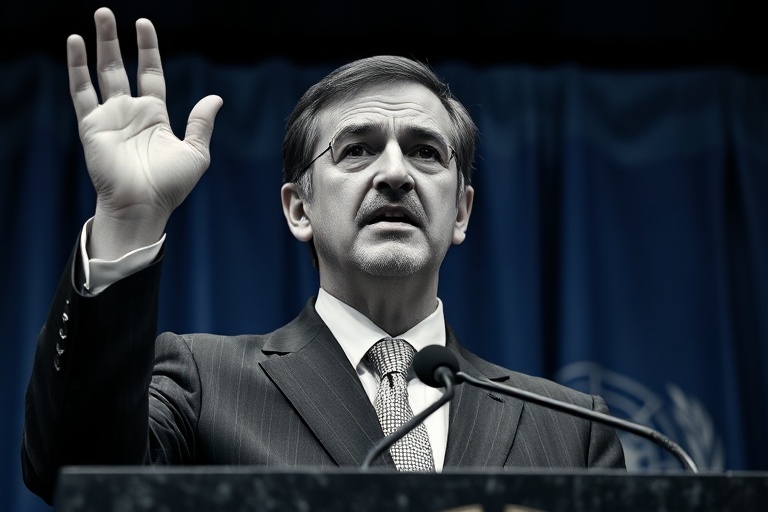
Mahmoud Ahmadinejad served as Iran’s sixth president from 2005 to 2013, leaving behind a legacy defined by political confrontation, economic challenges, and international isolation. His presidency marked a period of heightened tensions with Western nations, particularly the United States, while domestically he implemented policies that reshaped Iran’s economic and social landscape. Born in 1956 in the village of Aradan, Ahmadinejad rose through the ranks of Iran’s political and military establishment before becoming a polarizing figure on the global stage.
Political Rise and Early Career
Ahmadinejad’s political career began in the 1980s during the Iran-Iraq War, where he served as an engineer in the Islamic Revolutionary Guard Corps (IRGC). His military background and loyalty to Iran’s conservative establishment helped him gain influence within the political system. In 2003, he was elected mayor of Tehran, where he implemented conservative policies that aligned with Iran’s religious leadership. His tenure as mayor was marked by efforts to enforce Islamic moral codes and reduce what he saw as Western cultural influences in public spaces.
In 2005, Ahmadinejad ran for president in a tightly contested election. His campaign emphasized economic justice, anti-corruption, and resistance to foreign interference. He positioned himself as a champion of the poor and a defender of Iran’s sovereignty against Western pressures. Despite initial skepticism from Iran’s political elite, he won the presidency in a runoff against former president Akbar Hashemi Rafsanjani, a testament to his growing popularity among conservative and working-class voters.
Domestic Policies and Economic Challenges
Ahmadinejad’s domestic policies were characterized by a mix of populist measures and conservative social reforms. One of his most ambitious initiatives was the redistribution of oil revenues through monthly cash payments to citizens, a program designed to reduce poverty and improve living standards. While the policy initially boosted his popularity, it also contributed to inflation and economic instability as government spending outpaced revenue.
His administration faced significant economic challenges, including international sanctions that intensified during his presidency. The United Nations Security Council imposed sanctions in response to Iran’s nuclear program, which Ahmadinejad framed as an attempt to deny Iran its right to peaceful nuclear technology. These sanctions crippled Iran’s economy, leading to currency devaluation, rising unemployment, and shortages of essential goods. Despite these difficulties, Ahmadinejad maintained that Iran’s nuclear program was non-negotiable, a stance that further strained relations with Western powers.
Socially, Ahmadinejad’s presidency was marked by a crackdown on dissent and a push for stricter enforcement of Islamic laws. His government restricted press freedoms, cracked down on student protests, and increased surveillance of political opponents. These measures drew criticism from human rights organizations and further isolated Iran internationally.
Key Domestic Policies Under Ahmadinejad
- Economic Justice Initiatives: Monthly cash payments to citizens funded by oil revenues.
- Nuclear Program Expansion: Continued development of Iran’s nuclear capabilities despite international sanctions.
- Conservative Social Reforms: Enforcement of Islamic moral codes and restrictions on public behavior.
- Anti-Western Rhetoric: Frequent condemnation of U.S. and European policies in speeches and international forums.
Foreign Policy and International Relations
Ahmadinejad’s foreign policy was defined by confrontation and defiance. He frequently criticized the United States and Israel, often using inflammatory rhetoric that drew global attention. His 2005 speech at the United Nations, where he questioned the Holocaust and called for Israel’s elimination, sparked widespread outrage and further isolated Iran diplomatically. Relations with the West deteriorated as Ahmadinejad’s government accelerated its nuclear program, leading to increased sanctions and diplomatic isolation.
Despite these challenges, Ahmadinejad maintained strong ties with countries like Russia and China, which provided economic and political support. His government also strengthened relationships with regional allies, including Syria and Venezuela, as part of an effort to counterbalance Western influence in the Middle East.
Ahmadinejad’s foreign policy was not without controversy even among Iran’s allies. His unpredictable rhetoric and confrontational approach often overshadowed Iran’s strategic interests, leading to criticism from within the country’s political establishment. By the end of his presidency, Iran faced unprecedented levels of international isolation, a situation that would continue to shape its foreign policy in the years that followed.
Legacy and Post-Presidency Influence
Ahmadinejad’s presidency left a complex and divisive legacy. Domestically, his populist policies initially won him support among the poor, but economic mismanagement and international isolation eroded his popularity. His confrontational foreign policy further strained Iran’s relations with the global community, contributing to a decade of economic hardship for ordinary Iranians.
After leaving office in 2013, Ahmadinejad remained a vocal figure in Iranian politics, often criticizing his successors for what he saw as concessions to the West. He has continued to advocate for his vision of an independent and resistant Iran, though his influence has waned in recent years. Despite his declining political relevance, Ahmadinejad remains a polarizing figure, admired by some for his defiance and criticized by others for his policies.
His presidency serves as a reminder of the challenges Iran faces in balancing its revolutionary ideals with the realities of global politics. While his rhetoric and policies often drew international condemnation, they also reflected the deep-seated distrust of foreign powers that has shaped Iran’s political culture for decades.
For those interested in exploring more about Iran’s political landscape, Dave’s Locker’s Politics section offers in-depth analysis and commentary on global affairs. Additionally, Dave’s Locker’s News section provides updates on current events shaping the Middle East and beyond.
Conclusion
Mahmoud Ahmadinejad’s presidency was a defining chapter in Iran’s modern history. His policies and rhetoric reshaped Iran’s domestic and foreign policy, leaving a legacy that continues to influence the country’s trajectory. While his confrontational approach often led to international isolation, it also reflected a steadfast commitment to Iran’s revolutionary principles. Love him or loathe him, Ahmadinejad’s impact on Iran and the world cannot be ignored. His presidency serves as a case study in the complexities of balancing nationalism, sovereignty, and global diplomacy.