MQ-4C Triton Near Cuba: What It Means for U.S. Surveillance
“`html
MQ-4C Triton’s Presence Near Cuba Raises Strategic Questions
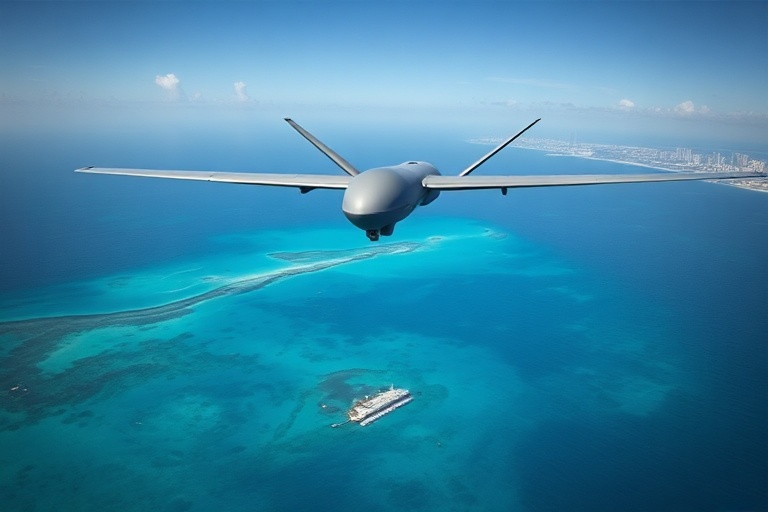
The MQ-4C Triton, a high-altitude long-endurance unmanned aerial vehicle (UAV) operated by the U.S. Navy, has recently been spotted conducting surveillance operations in close proximity to Cuban airspace. This development comes at a time of heightened geopolitical tensions and follows a series of incidents involving U.S. and Cuban military assets. While the Triton’s deployment is framed as routine maritime domain awareness, its presence underscores broader strategic shifts in the Caribbean.
The Triton’s capabilities—including its ability to conduct persistent surveillance over thousands of miles—make it a critical asset for monitoring maritime activity. Equipped with advanced radar, electro-optical/infrared sensors, and automatic identification system (AIS) tracking, the aircraft provides real-time intelligence that would be difficult to replicate with traditional manned platforms. Its deployment near Cuba suggests a focus on tracking vessel movements, submarine activity, and potential illicit trafficking routes.
This is not the first time U.S. military assets have operated in the region. The U.S. Southern Command (SOUTHCOM) maintains a robust presence in the Caribbean, conducting counter-narcotics and humanitarian missions. However, the Triton’s involvement signals an escalation in surveillance capabilities, particularly as it relates to monitoring Cuban military and civilian maritime traffic.
Why the MQ-4C Triton’s Deployment Matters
The MQ-4C Triton’s deployment near Cuba is significant for several reasons. First, it represents a shift in how the U.S. monitors the region. Unlike traditional manned reconnaissance aircraft, the Triton can loiter over an area for up to 24 hours without refueling, providing continuous coverage. This endurance is crucial for tracking slow-moving vessels or monitoring large maritime zones.
Second, the Triton’s sensors are highly advanced. The aircraft’s AN/ZPY-3 Multi-Function Active Electronically Scanned Array (MFAS) radar can detect and classify surface vessels, even in adverse weather conditions. Additionally, its optical sensors can identify specific ship features, such as weapon systems or cargo holds. This level of detail is valuable for distinguishing between commercial shipping and potential military or illicit activity.
Third, the deployment aligns with broader U.S. strategic priorities. The Caribbean remains a critical corridor for drug trafficking, human smuggling, and irregular migration. The Triton’s presence supports SOUTHCOM’s mission to disrupt these activities while also monitoring state actors. Cuba, in particular, has been a focal point due to its historical ties with Venezuela and other U.S.-designated adversaries.
The Triton’s operations are not conducted in isolation. They are part of a larger ecosystem of intelligence, surveillance, and reconnaissance (ISR) assets, including satellites, patrol aircraft, and surface vessels. The integration of these platforms allows for a layered approach to monitoring the region, reducing the likelihood of gaps in coverage.
Geopolitical Implications of U.S. Surveillance Near Cuba
The presence of the MQ-4C Triton near Cuba carries clear geopolitical implications. Cuba and the United States have a long and complex history, marked by periods of hostility and recent attempts at normalization. The Triton’s deployment could be interpreted as a signal of U.S. vigilance, particularly as it relates to Cuban military modernization and potential collaboration with other state actors.
Cuba has historically viewed U.S. surveillance as a provocation. In 2022, Cuban officials protested the presence of U.S. military aircraft near its airspace, describing such operations as violations of national sovereignty. The Triton, operating in international airspace but within close proximity to Cuba, could similarly draw criticism from Havana.
Beyond Cuba, the Triton’s deployment may also serve as a message to other regional actors. Venezuela, which has deepened its ties with Russia and Iran, has been a particular concern for U.S. policymakers. The Triton’s ability to monitor maritime traffic between Cuba and Venezuela could provide valuable intelligence on illicit shipments, including oil, weapons, or other contraband.
It is also worth noting that the Triton’s operations are not limited to Cuba. The U.S. Navy has deployed these aircraft in the Pacific and Indian Oceans, often in response to Chinese and Russian military activities. The Caribbean, however, presents a unique set of challenges, including the proximity of U.S. territorial waters and the need to balance surveillance with diplomatic sensitivities.
Technical and Operational Considerations
The MQ-4C Triton is one of the most advanced UAVs in the U.S. military’s arsenal. Developed by Northrop Grumman, the aircraft is based on the RQ-4 Global Hawk but includes modifications for maritime surveillance. These include enhanced radar capabilities, improved communications links, and a redesigned wing structure for better endurance in harsh weather conditions.
Operationally, the Triton is controlled by a ground-based crew, which includes pilots, sensor operators, and mission commanders. The aircraft can be operated from a distance, reducing the risk to personnel while maintaining high levels of situational awareness. Its ability to relay data in real-time allows for immediate analysis and response by U.S. forces.
The Triton’s deployment near Cuba likely involves coordination with other assets, including:
- P-8 Poseidon aircraft: The P-8, a manned maritime patrol aircraft, can conduct closer inspections of vessels while the Triton provides broader surveillance.
- E-2D Hawkeye aircraft: These airborne early warning aircraft can assist in tracking airborne threats and coordinating with other platforms.
- Satellite imagery: Commercial and military satellites provide additional context, filling in gaps where the Triton’s sensors may be limited.
- Surface vessels: U.S. Coast Guard and Navy ships can intercept vessels of interest identified by the Triton.
The Triton’s operations are governed by strict rules of engagement. While the aircraft operates in international airspace, its sensors are capable of collecting data that could be used to justify further action. This includes identifying vessels suspected of transporting illicit cargo or engaging in prohibited activities.
However, the Triton’s presence also raises questions about the legal and ethical considerations of surveillance. International law permits military aircraft to operate in international airspace, but the use of advanced sensors near sovereign territory can be contentious. The U.S. must balance its need for intelligence with the potential for diplomatic friction.
What Comes Next?
The MQ-4C Triton’s deployment near Cuba is likely to continue as part of the U.S. Navy’s broader maritime surveillance strategy. However, several factors will influence how this operation unfolds in the coming months.
First, diplomatic reactions from Cuba and other regional actors will be critical. If Havana perceives the Triton’s presence as a provocation, it may escalate rhetoric or take countermeasures, such as increasing its own air defense posture. The U.S. will need to carefully manage these interactions to avoid unintended escalation.
Second, the Triton’s operations could provide valuable intelligence on illicit trafficking networks. If successful, this could lead to increased interdiction efforts, particularly in the Florida Straits and the Yucatán Channel. These regions are key transit points for drug smugglers and migrants, and the Triton’s coverage could enhance existing counter-narcotics operations.
Third, the deployment may serve as a test case for broader ISR strategies in the Caribbean. If the Triton proves effective in monitoring maritime activity, the U.S. may consider expanding its use of high-endurance UAVs in the region. This could include additional Tritons or other platforms, such as the MQ-9B SeaGuardian, which is also capable of maritime surveillance.
Finally, the Triton’s presence underscores the evolving nature of modern warfare. The use of unmanned systems for persistent surveillance is becoming increasingly common, reducing the risk to personnel while enhancing operational flexibility. As adversaries develop their own unmanned capabilities, the U.S. will need to stay ahead of the curve to maintain its strategic advantage.
For now, the MQ-4C Triton remains a silent but powerful presence in the skies over the Caribbean. Its ability to monitor vast areas with precision makes it a critical asset for the U.S. Navy, but its deployment also serves as a reminder of the complex interplay between surveillance, sovereignty, and security in the region. As geopolitical tensions continue to evolve, the Triton’s role in the Caribbean is likely to grow in importance.
To learn more about U.S. military operations and surveillance technologies, visit our Technology and News sections for in-depth analysis and updates.