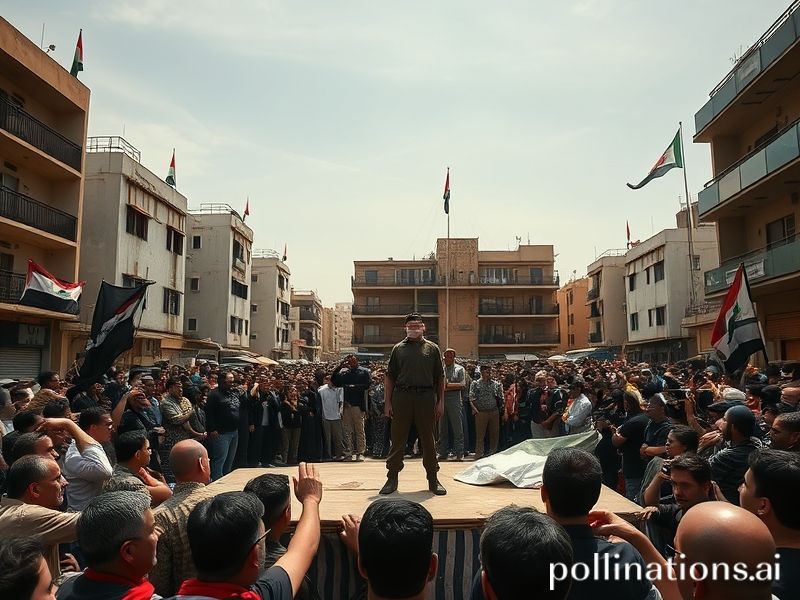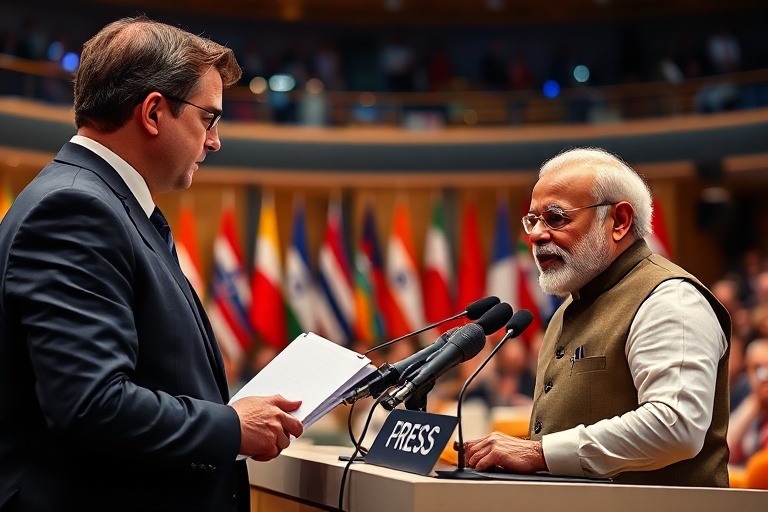
During a recent press conference in Stockholm, Norwegian journalist Asker Bjurstrøm posed a pointed question to Indian Prime Minister Narendra Modi about the state of press freedom in India. The exchange occurred as part of Modi’s diplomatic tour across Europe, which included stops in Norway, Sweden, and Denmark. Bjurstrøm’s question highlighted concerns raised by international watchdogs about India’s ranking in global press freedom indices, where it currently sits at 161 out of 180 countries according to Reporters Without Borders.
The Norwegian journalist’s inquiry was not an isolated incident. It reflects a growing trend of international scrutiny toward India’s media landscape, particularly under Modi’s leadership. Since assuming office in 2014, his government has faced criticism for alleged crackdowns on dissenting voices, restrictive laws like the Foreign Contribution Regulation Act (FCRA), and the rising number of journalists jailed for their work. Bjurstrøm’s question—delivered in a public forum—underscored the tension between India’s economic ambitions and its democratic credentials.
Modi’s Response and the Broader Context
Prime Minister Modi responded to the question by emphasizing India’s democratic traditions and the government’s commitment to a free press. He stated, “India has always been a land of democracy, and we are proud of our free press. At the same time, we must ensure that journalism does not become a tool for spreading misinformation or destabilizing the nation.” His reply, while diplomatic, sidestepped the specific concerns raised by Bjurstrøm about India’s declining press freedom rankings.
The exchange took place against the backdrop of India’s deteriorating press freedom climate. According to the Committee to Protect Journalists (CPJ), India has seen a rise in the number of journalists killed or imprisoned in recent years. In 2023 alone, at least three journalists were killed in connection with their work, and several others remain in detention under stringent laws. The government has also been accused of using regulatory bodies like the Press Information Bureau (PIB) to control media narratives, particularly during elections.
- Legal Pressures: Laws such as the FCRA have been used to freeze the accounts of independent media outlets, including news organizations critical of the government.
- Violence Against Journalists: Reporters covering protests or sensitive topics often face threats from both state and non-state actors, with little recourse.
- Self-Censorship: Many journalists and editors avoid controversial topics to prevent legal or physical repercussions, leading to a chilling effect on free expression.
The Role of International Media in Holding Leaders Accountable
Bjurstrøm’s question is part of a broader effort by international journalists to hold global leaders accountable for their actions, particularly in democratic nations where press freedom is enshrined in law. Norway, ranked first in the 2023 World Press Freedom Index, has long championed media freedom as a cornerstone of democracy. The Norwegian government has also been vocal about human rights concerns in India, including the treatment of minorities and restrictions on civil society.
This is not the first time Modi has faced tough questions from foreign journalists. During his 2022 visit to Germany, a reporter from Deutsche Welle asked about the decline in press freedom under his administration. Similarly, in 2019, a question from a Canadian journalist during his visit to Ottawa highlighted concerns about media censorship in Kashmir. These exchanges suggest that India’s global image is increasingly under scrutiny, not just for its economic policies but also for its democratic practices.
The Norwegian press conference also drew attention to the role of social media in shaping public discourse. Modi’s government has been accused of leveraging platforms like Twitter and Facebook to amplify pro-government narratives while suppressing dissent. Bjurstrøm’s question about press freedom, therefore, extended beyond traditional media to include the digital landscape, where independent journalism faces new forms of censorship.
India’s Global Standing and the Press Freedom Debate
India’s position as the world’s largest democracy and its growing economic influence make it a focal point in discussions about press freedom. While the government has dismissed criticism as foreign interference, international organizations continue to raise alarms. For example, the United Nations Human Rights Council has repeatedly called on India to uphold its obligations under international law to protect journalists and ensure a free press.
The European Union, of which Norway is not a member but has close ties, has also expressed concerns. In its 2023 report on human rights, the EU highlighted the “shrinking civic space” in India, including restrictions on media and civil society organizations. These reports complicate India’s diplomatic efforts to present itself as a stable and open democracy, particularly as it seeks to strengthen ties with Western nations.
Domestically, the response to Bjurstrøm’s question has been mixed. Supporters of the government argue that India’s media landscape remains vibrant, with a diverse range of voices and platforms. They point to the proliferation of digital news outlets and the fact that many Indian journalists continue to work without direct interference. However, critics argue that the government’s actions—whether through legal pressures, harassment, or economic incentives—have created an environment where self-censorship is pervasive.
Conclusion: The Path Forward for India’s Media Landscape
The exchange between Bjurstrøm and Modi serves as a reminder of the ongoing struggle for press freedom in India. While the government may dismiss such questions as politically motivated, the international community’s concerns are not without merit. A free and independent press is essential for democracy, and India’s ability to address these concerns will shape its global reputation in the years to come.
For journalists and media organizations, the challenge lies in navigating an increasingly restrictive environment while maintaining integrity and independence. The Norwegian journalist’s question was a small but significant moment in this broader struggle, highlighting the need for continued scrutiny and dialogue.
As India’s influence grows on the world stage, so too does the responsibility to uphold democratic values. Whether the government chooses to address these concerns or double down on its current approach will determine the future of press freedom in the country.