royal norwegian navy
“`html
The Royal Norwegian Navy: A Legacy of Maritime Excellence and Global Cooperation
The Royal Norwegian Navy stands as a testament to Norway’s deep-rooted maritime heritage and its commitment to defending one of the world’s most strategically vital coastlines. With a history stretching back over 500 years, the service has evolved from a collection of coastal defense units to a modern, high-tech naval force that plays a key role in NATO operations and Arctic security. Norway’s navy is not just a military institution; it is a symbol of national resilience, technological innovation, and international partnership in an era of shifting geopolitical realities.
Norway’s strategic location at the northern edge of Europe—bordering the North Atlantic, the Barents Sea, and the Arctic Ocean—has shaped its naval doctrine and operational priorities. As climate change opens new shipping routes and resource opportunities in the Arctic, the Royal Norwegian Navy’s role has expanded beyond traditional defense to include environmental monitoring, search and rescue, and sovereignty enforcement in increasingly accessible waters. This dual mission of security and sustainability reflects Norway’s broader approach to maritime governance, blending hard power with diplomatic engagement.
A Brief History: From Viking Longships to Modern Frigates
The origins of the Royal Norwegian Navy can be traced to the late medieval period, when coastal defense was vital for protecting trade and sovereignty. Norway, then in a union with Denmark, established its first naval units in the 16th century, primarily to counter pirate raids and support national trade fleets. However, it was not until 1814—after Norway gained independence from Denmark and entered a union with Sweden—that the modern navy began to take shape. The young nation quickly recognized the need to defend its extensive coastline and fishing grounds, leading to the creation of a dedicated naval service.
By the late 19th and early 20th centuries, Norway had developed a reputation for maritime innovation. The navy introduced torpedo boats and submarines, becoming one of the first nations to adopt these technologies for coastal defense. World War II marked a turning point. Despite being overrun by Nazi Germany in 1940, the Norwegian navy conducted daring operations from exile, including the famous attack on the German battleship Tirpitz and the defense of the North Sea convoys. These acts of resistance cemented the navy’s legacy as a symbol of national defiance and endurance.
In the postwar era, Norway aligned its naval strategy with NATO, focusing on anti-submarine warfare and mine countermeasures to protect its fjords and coastal waters. The Cold War era saw the introduction of advanced frigates and submarines, including the Oslo-class frigates and the Ula-class submarines, which remain operational today. This modernization reflected Norway’s commitment to collective defense and its role as a frontline NATO state during a period of intense geopolitical tension.
Modern Capabilities: Technology and Strategic Vision
The Royal Norwegian Navy today operates a fleet that balances cutting-edge technology with operational versatility. At its core are five advanced Fridtjof Nansen-class frigates, designed for anti-submarine and anti-air warfare. Built in collaboration with Spain, these stealth frigates are equipped with the Aegis combat system, making them among the most capable surface combatants in the region. Their primary mission is to protect Norway’s maritime approaches, monitor submarine activity, and support NATO’s standing naval forces.
Complementing the frigates are six modern Skjold-class corvettes, the world’s first operational combatant vessels to use a catamaran hull and gas turbine propulsion for speeds exceeding 60 knots. These stealthy, fast-attack craft are optimized for littoral and coastal operations, capable of rapid deployment in the confined waters of Norway’s archipelagos and fjords. Their speed and agility make them ideal for intercepting threats before they reach critical infrastructure or civilian targets.
The submarine arm remains a cornerstone of Norwegian naval power. The Ula-class submarines, though aging, have been extensively modernized and continue to provide a critical undersea deterrent. Norway is also in the process of replacing them with new vessels, including the upcoming Type 212CD submarines, developed in partnership with Germany. These next-generation submarines will feature air-independent propulsion and advanced sensor suites, enabling them to operate stealthily in the challenging acoustic environment of the Arctic.
Norway’s navy is also investing in unmanned systems, cyber defense, and networked operations. The integration of drones for mine countermeasures, surveillance, and environmental monitoring reflects a broader shift toward a distributed and resilient naval architecture. This technological evolution is not just about firepower—it’s about maintaining situational awareness in a region where visibility is often limited by weather and geography.
Arctic Security: The Navy’s Role in a Changing Region
The Arctic has become one of the most contested and strategically significant regions in the world. As melting ice opens new shipping lanes and exposes vast natural resources, nations with Arctic claims—including Russia, the United States, Canada, Denmark, and Norway—are increasing their military presence. For Norway, the Arctic is not a distant frontier; it is a backyard. Over 80% of Norway’s territory lies north of the Arctic Circle, and its coastline stretches for more than 25,000 kilometers, much of it ice-free year-round due to the Gulf Stream.
The Royal Norwegian Navy’s Arctic strategy is built on three pillars: presence, surveillance, and cooperation. Through regular deployments of frigates, submarines, and maritime patrol aircraft, the navy maintains a persistent presence in the High North. This presence is not only a deterrent but also a demonstration of sovereignty. Norway has also invested in improved port facilities, such as the new naval base in Northern Norway, to support year-round operations in extreme conditions.
Surveillance is another critical mission. Norway operates a network of coastal radars, underwater sensors, and satellite systems to monitor ship traffic and submarine movements. The navy works closely with civilian authorities and international partners to enforce fishing regulations, prevent illegal trafficking, and respond to environmental incidents. This dual-use approach reflects Norway’s philosophy of “total defense,” where military assets support civilian authorities in peacetime as well as wartime.
International cooperation is deeply embedded in Norway’s Arctic strategy. Through NATO, the navy participates in exercises such as Trident Juncture and Cold Response, which simulate high-intensity warfare in Arctic conditions. Norway also collaborates with its Nordic neighbors through the Nordic Defence Cooperation (NORDEFCO), sharing intelligence, conducting joint patrols, and developing interoperable systems. Even with Russia, Norway maintains a pragmatic dialogue, seeking to prevent incidents at sea while remaining vigilant against hybrid threats.
Challenges and the Path Forward
Despite its strengths, the Royal Norwegian Navy faces significant challenges. Aging platforms, budget constraints, and the rapid pace of technological change demand constant adaptation. The Ula-class submarines, for instance, are approaching the end of their service life, and their replacement must be accelerated to avoid a capability gap. Similarly, the Oslo-class frigates are being retired, and their replacements must be delivered on time and within budget.
Another challenge is the evolving threat landscape. Hybrid warfare—including cyber attacks, disinformation, and the use of civilian vessels for military purposes—poses a growing risk to maritime security. Norway has responded by strengthening its cyber defenses, improving port security, and investing in electronic warfare capabilities. The navy is also adapting to the rise of China as a polar power, monitoring its increasing presence in Arctic shipping and resource extraction.
Looking ahead, the Royal Norwegian Navy is poised to play an even larger role in European and transatlantic security. Norway’s recent decision to increase defense spending to 2% of GDP—part of a broader NATO commitment—will fund new frigates, submarines, and unmanned systems. The navy is also expanding its role in maritime domain awareness, working with partners to monitor illegal fishing, drug smuggling, and irregular migration in the North Atlantic and Arctic.
The navy’s future is not just about hardware; it’s about people. Norway faces a recruitment challenge, as younger generations show less interest in military careers. To counter this, the navy has launched outreach programs, emphasizing the unique opportunities for adventure, technology, and global engagement that naval service provides. Women now make up nearly 20% of the navy’s personnel, reflecting a broader trend toward gender integration in NATO forces.
Conclusion: A Navy for the 21st Century and Beyond
The Royal Norwegian Navy embodies Norway’s maritime soul—a blend of historical pride, technological ambition, and strategic foresight. In an era of great power competition and environmental change, the navy’s role has never been more vital. It is a guardian of the North, a partner in peace, and a force for stability in one of the world’s most unpredictable regions.
As Norway looks to the future, its navy will continue to evolve, embracing innovation while staying true to its core values of service, resilience, and cooperation. Whether patrolling the icy waters of the Arctic, training with NATO allies, or responding to a humanitarian crisis, the Royal Norwegian Navy remains a cornerstone of national security and a beacon of Norway’s global engagement. In a world where the maritime domain is increasingly contested, Norway’s naval tradition is not just a legacy—it is a foundation for the future.
—
METADATA
{
“title”: “Royal Norwegian Navy: Strength, Strategy, and Arctic Role Explained”,
“metaDescription”: “Discover how the Royal Norwegian Navy protects Arctic waters, deters threats, and leads NATO missions with cutting-edge tech and strategic vision.”,
“categories”: [“News”, “Analysis”],
“tags”: [“Norwegian Navy”, “Arctic security”, “NATO operations”, “maritime defense”, “cold war legacy”],
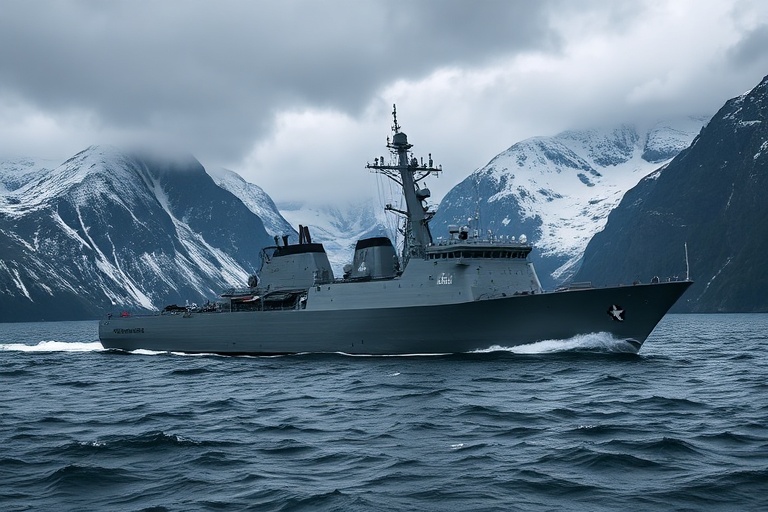
“imageDescription”: “A sleek modern frigate of the Royal Norwegian Navy sailing through a Norwegian fjord under a cloudy Arctic sky, with snow-capped mountains in the background and a maritime patrol aircraft visible in the distance.”
}
—END METADATA—
“`