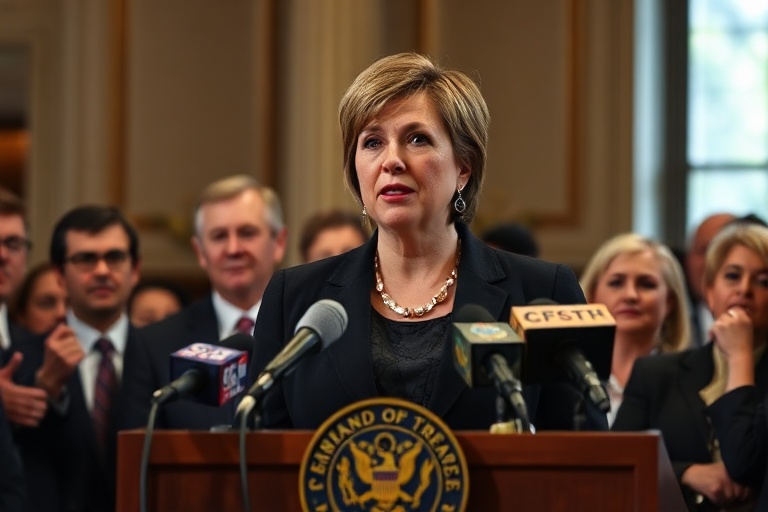
Stacy Garrity has emerged as one of Pennsylvania’s most influential public officials, reshaping the role of State Treasurer since taking office in 2021. Her leadership extends beyond traditional fiscal duties, as she champions financial literacy, veterans’ services, and economic opportunities for Pennsylvanians. With a background in business and finance, Garrity brings a pragmatic approach to government, emphasizing transparency and efficiency in managing the state’s finances.
Her tenure has coincided with significant economic challenges, from inflationary pressures to the lingering effects of the COVID-19 pandemic. Yet, Garrity has positioned herself as a steady voice in Harrisburg, advocating for policies that prioritize fiscal responsibility while addressing the needs of everyday citizens. This balancing act has earned her both praise and scrutiny, reflecting the complexities of modern governance.
Early Career and Political Ascent
Before entering politics, Stacy Garrity built a career in finance and consulting. She worked in investment banking and later co-founded a consulting firm, gaining expertise in economic development and corporate strategy. Her transition into public service began with an appointment to the Pennsylvania State Board of Finance and Revenue, where she advised on debt management and investment policies.
In 2020, Garrity ran for State Treasurer as a Republican, positioning herself as an outsider with a focus on fiscal conservatism. Her campaign emphasized accountability in government spending and a commitment to supporting Pennsylvania’s veterans—a key constituency she has championed throughout her career. The election victory marked a historic moment, as she became only the second woman elected to the position in Pennsylvania’s history.
Key Initiatives Under Her Leadership
Since assuming office, Garrity has launched several initiatives aimed at improving financial education and economic mobility. These efforts reflect a broader trend among state treasurers to use their platform for social impact. Below are some of her most notable programs:
- PA 529 Guaranteed Savings Plan Enhancements: Expanded access to college savings programs, making it easier for families to plan for higher education costs.
- Veterans’ Financial Empowerment: Partnered with veterans’ organizations to provide financial literacy workshops tailored to military families.
- Unclaimed Property Reforms: Streamlined the process for returning unclaimed funds to rightful owners, returning over $100 million to Pennsylvanians in her first term.
- ESG Investment Framework: Developed guidelines for environmental, social, and governance (ESG) investments, aligning state funds with sustainable practices.
These initiatives underscore Garrity’s belief that the State Treasurer’s office can serve as a catalyst for economic opportunity. By focusing on education and transparency, she has positioned herself as a steward of both fiscal and social responsibility.
The Broader Implications of Her Work
Garrity’s approach to the State Treasurer role reflects a growing trend among state officials to leverage their positions for systemic change. Her emphasis on veterans’ services, for example, aligns with national conversations about supporting military personnel transitioning to civilian life. Meanwhile, her reforms in unclaimed property highlight the importance of financial accountability in government.
Her ESG investment framework also places Pennsylvania at the forefront of a debate about the role of government in shaping economic priorities. Critics argue that such policies could politicize investment decisions, while supporters contend they align state funds with long-term sustainability goals. This tension mirrors broader discussions about the intersection of finance and social responsibility in public policy.
Moreover, Garrity’s leadership style contrasts with the partisan gridlock often seen in Harrisburg. By focusing on bipartisan issues like financial literacy, she has carved out a niche as an official who transcends traditional political divides. This strategy may serve as a model for other state treasurers seeking to maximize their influence.
Challenges and Criticisms
Despite her accomplishments, Garrity has faced challenges. Some fiscal conservatives have questioned her embrace of ESG investing, arguing that it sacrifices returns for ideological goals. Others have scrutinized her administration’s handling of unclaimed property, citing delays in processing claims as a point of frustration for constituents.
Political opponents, meanwhile, have accused her of using the treasurer’s office as a platform for future ambitions, particularly as she explores a potential run for higher office. While Garrity has not confirmed any such plans, her high-profile initiatives have fueled speculation about her political trajectory.
Yet, these challenges have not overshadowed her achievements. By maintaining a visible presence in Pennsylvania’s financial and veterans’ communities, Garrity has solidified her reputation as a dedicated public servant. Her ability to navigate criticism while advancing her agenda speaks to her resilience and adaptability.
A Lasting Legacy?
As Stacy Garrity’s first term nears its conclusion, the question of her legacy looms large. If re-elected, she will have the opportunity to further institutionalize her initiatives, particularly in financial education and veterans’ services. Her ESG framework, too, could set a precedent for how state funds are managed in an era of increasing focus on sustainability.
Regardless of her future political ambitions, Garrity’s impact on Pennsylvania’s fiscal landscape is undeniable. She has demonstrated that the State Treasurer’s role can extend beyond accounting to encompass broader societal goals. In doing so, she has redefined what it means to serve in this often-overlooked position.
For Pennsylvanians, her tenure offers a reminder that government can be a force for positive change—even in an era of division. Whether through veterans’ programs, financial literacy, or investment reforms, Garrity’s work underscores the potential of public service to create tangible benefits for citizens.
As the state continues to grapple with economic uncertainties, her leadership provides a case study in how fiscal stewardship can intersect with social responsibility. For those watching Pennsylvania’s political landscape, Stacy Garrity’s story is far from over.
For more insights on Pennsylvania’s political and economic developments, explore our News and Politics sections.