Strait of Hormuz Oil Supply: Why It’s the World’s Most Vital Chokepoint
“`html
The Strait of Hormuz: The World’s Most Critical Oil Chokepoint
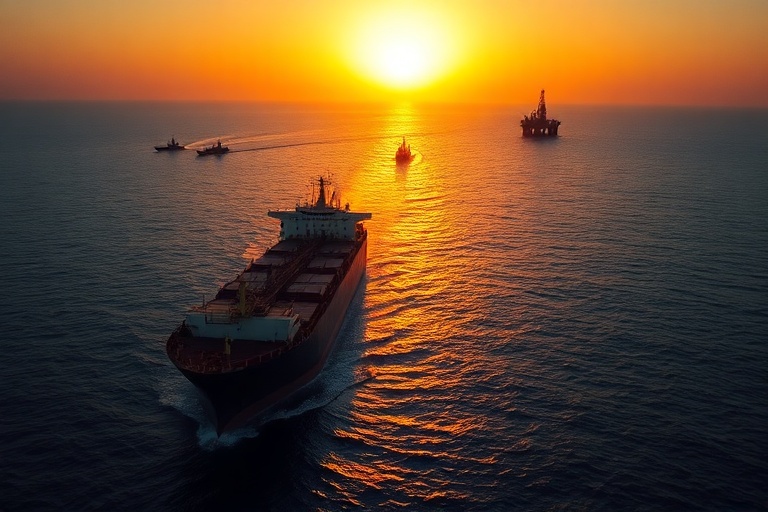
The Strait of Hormuz, a narrow waterway connecting the Persian Gulf to the Gulf of Oman, is the linchpin of global oil supply. Roughly 20% of the world’s petroleum liquids pass through this 21-mile-wide channel daily, making it the most strategically vital shipping lane for crude oil and natural gas. Disruptions here send shockwaves through energy markets, influencing everything from gasoline prices to geopolitical alliances.
Its importance cannot be overstated. The strait sees daily oil flows exceeding 17 million barrels, according to the U.S. Energy Information Administration. That volume exceeds the combined daily output of Saudi Arabia and Russia, the world’s top two oil exporters. Any prolonged closure or significant disruption would trigger immediate shortages, price spikes, and supply chain instability.
Why the Strait of Hormuz Matters to Global Energy Markets
More than 85% of the oil transported through the strait originates from Saudi Arabia, Iraq, the United Arab Emirates, Kuwait, and Iran. These nations rely almost entirely on this route to reach international buyers. Even minor disruptions can cause oil prices to surge within hours. In 2019, attacks on tankers near the strait led to a 4% jump in Brent crude prices in a single day.
The strait’s geography amplifies its risk profile. At its narrowest point, the channel is just 21 miles wide, with only two lanes for inbound and outbound traffic. This bottleneck creates a natural vulnerability. A single incident—whether a collision, sabotage, or military blockade—can paralyze shipping and halt oil flows almost instantly.
The geopolitical stakes are equally high. Iran, which borders the strait, has repeatedly threatened to close it in response to sanctions or military pressure. In 2018, Iranian officials warned they could block the strait if the U.S. continued its oil export restrictions. Such rhetoric underscores the strait’s role as both an economic and political flashpoint.
The Historical Context: Past Disruptions and Their Impact
The Strait of Hormuz has experienced multiple crises since the 1980s. During the Iran-Iraq War, both nations targeted each other’s oil tankers in the strait, disrupting nearly 1 million barrels per day. In 1987, the U.S. reflagged Kuwaiti tankers and deployed naval forces to protect shipping, marking one of the most direct military interventions in the region’s oil supply.
More recently, in 2019, drone and limpet mine attacks on four tankers near Fujairah and two Saudi Aramco facilities onshore caused significant damage. Investigations implicated Iran, though it denied involvement. The incidents led to a temporary rerouting of oil shipments and a spike in insurance premiums for vessels transiting the area.
In January 2020, the U.S. killed Iranian General Qasem Soleimani in a Baghdad airstrike, prompting Iran to threaten retaliation. While no direct attacks on shipping materialized, the episode highlighted how quickly tensions can escalate and threaten energy security.
These incidents reveal a pattern: even when disruptions are short-lived, their psychological impact lingers. Oil traders and governments alike remain on edge, aware that the strait’s stability is never guaranteed.
Alternative Routes: Can the World Bypass the Strait of Hormuz?
In response to the strait’s volatility, several nations have explored or expanded alternative routes to reduce reliance on the Hormuz route. These include pipelines, rail links, and longer sea detours, but each comes with trade-offs in cost, capacity, and reliability.
One of the most significant alternatives is the East-West Pipeline in Saudi Arabia. Completed in 2014, this 745-mile pipeline carries crude oil from the Persian Gulf to the Red Sea port of Yanbu, bypassing the strait entirely. It has a capacity of 5 million barrels per day, though it has rarely operated at full capacity due to technical and logistical challenges.
Other proposed routes include:
- Iraqi-Turkish Pipeline: Runs from Kirkuk to Ceyhan in Turkey, with a capacity of 1.6 million barrels per day. It has been intermittently operational due to political instability and disputes between Baghdad and the Kurdistan Regional Government.
- UAE’s Habshan-Fujairah Pipeline: A 236-mile onshore pipeline connecting Abu Dhabi’s oil fields to the port of Fujairah on the Gulf of Oman. It avoids the strait and has a capacity of 1.5 million barrels per day.
- Rerouting via the Cape of Good Hope: Some tankers now take the longer route around Africa, adding 3,000–4,000 nautical miles to the journey. While safer from regional conflicts, this option increases transit time and fuel costs by up to 30%.
Despite these alternatives, none can fully replace the Strait of Hormuz. The volume of oil that would need to be rerouted exceeds current pipeline capacities, and the cost of longer sea voyages would strain global supply chains. For now, the strait remains indispensable.
What’s Next? Risks, Responses, and the Future of Energy Security
The future of the Strait of Hormuz hinges on three key factors: geopolitical stability, technological adaptation, and energy diversification. None of these are guaranteed.
Geopolitically, the U.S.-Iran relationship remains volatile. While both sides have avoided direct military confrontation in recent years, proxy conflicts in Yemen, Syria, and Iraq continue to escalate tensions. Any miscalculation could lead to a blockade or armed conflict, with immediate consequences for oil markets.
Technologically, automation and alternative fuels may reduce dependence on Hormuz-bound oil. The rise of electric vehicles and renewable energy could gradually lower global oil demand. However, this transition will take decades, and oil will remain dominant in transportation and petrochemicals for the foreseeable future.
Energy diversification offers a more immediate hedge. Countries like China and India are investing in strategic petroleum reserves and expanding ties with Russia, Venezuela, and African producers to reduce reliance on Middle Eastern oil. In 2023, China imported over 1.7 million barrels per day from Russia, up from just 300,000 in 2016.
The Strait of Hormuz will likely remain the world’s most critical oil chokepoint for years to come. Its closure would send oil prices soaring past $200 per barrel, trigger global recessions, and reshape energy alliances overnight. While alternatives exist, none can fully compensate for the volume and efficiency of the Hormuz route.
For policymakers, energy traders, and consumers alike, the message is clear: the Strait of Hormuz is not just a shipping lane. It is a pressure point that could redefine the global economy at any moment.