JetBlue Airways: Innovation and Growth in U.S. Air Travel
“`html
JetBlue Airways: A Closer Look at America’s Innovative Airline
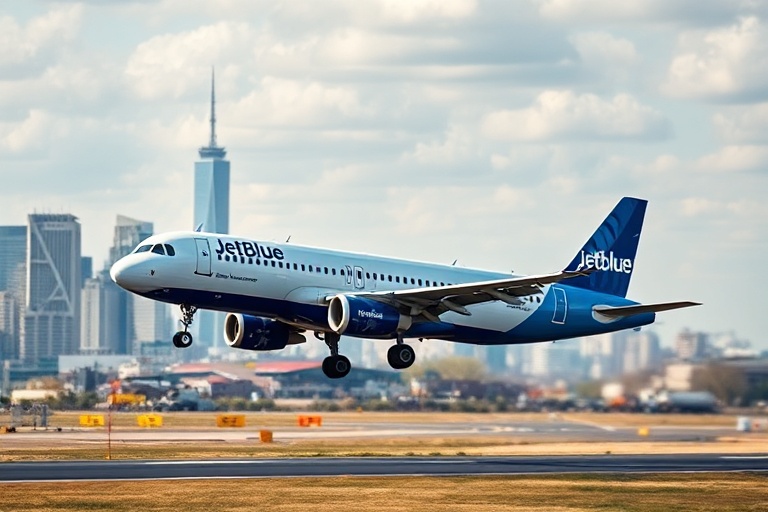
JetBlue Airways has carved a distinct niche in the U.S. airline industry since its founding in 1998. Founded by David Neeleman, the airline was designed to address gaps in customer service and comfort that Neeleman observed during his time at other carriers. From the beginning, JetBlue positioned itself as a disruptor, offering amenities like spacious leather seats, free satellite TV, and a customer-first approach that set it apart from legacy competitors.
Based in New York City, JetBlue operates a fleet of over 280 aircraft, primarily Airbus A320 family jets, and serves more than 100 destinations across the United States, the Caribbean, Mexico, Central America, and South America. Its focus on point-to-point routes rather than the traditional hub-and-spoke model has allowed it to optimize efficiency and reduce operational complexity. This strategy has proven particularly effective in connecting smaller cities to major metropolitan areas.
Innovation and Customer Experience: The JetBlue Difference
JetBlue has long been recognized for its commitment to innovation, particularly in customer experience. The airline was one of the first in the U.S. to introduce live in-flight entertainment systems, offering passengers free access to dozens of channels. While many competitors now charge for Wi-Fi, JetBlue continues to provide free high-speed internet on most of its flights, a feature that remains a key selling point for travelers.
In addition to in-flight entertainment, JetBlue has pioneered several industry-firsts, including:
- Mint Suite: A premium transcontinental service offering lie-flat seats, premium dining, and dedicated flight attendants. Available on select A321 aircraft, Mint has redefined business class travel for domestic routes.
- Fly-Fi: Free high-speed Wi-Fi on all Airbus aircraft, powered by Viasat’s satellite network. This allows passengers to stream content, work remotely, or stay connected without additional fees.
- JetBlue TrueBlue Loyalty Program: A flexible rewards system that allows members to earn and redeem points across JetBlue flights, vacation packages, and even with partners like Amazon and American Airlines.
JetBlue’s focus on customer satisfaction extends to its operational reliability. The airline has consistently ranked among the top U.S. carriers for on-time performance and baggage handling, according to the U.S. Department of Transportation. Its proactive approach to customer service, including proactive compensation for delays and proactive outreach during disruptions, has earned it a loyal customer base.
Expansion and Strategic Growth: Navigating Challenges and Opportunities
JetBlue’s growth strategy has been both ambitious and calculated. The airline has expanded aggressively into new markets, particularly in the Caribbean and Latin America, where it has become a dominant player. In recent years, JetBlue has also made significant inroads into the transcontinental and European markets, launching routes to London (Heathrow) and Paris in 2022.
However, JetBlue’s expansion has not been without challenges. The airline has faced stiff competition from low-cost carriers like Spirit and Frontier, as well as legacy airlines like Delta and American, which have aggressively defended their market share. Additionally, JetBlue’s acquisition of Spirit Airlines in 2022—a deal valued at $3.8 billion—has faced regulatory scrutiny, with concerns about reduced competition in certain markets. The U.S. Department of Justice has filed a lawsuit to block the merger, arguing that it would harm consumers by reducing price competition.
Despite these challenges, JetBlue has continued to invest in its fleet and infrastructure. The airline has placed orders for new Airbus A220 and A321neo aircraft, which promise improved fuel efficiency and reduced emissions. These upgrades are part of JetBlue’s commitment to sustainability, including its goal to achieve net-zero carbon emissions by 2040.
JetBlue’s Role in the Future of Air Travel
As the airline industry continues to evolve, JetBlue is positioning itself as a leader in innovation and customer-centric travel. The airline has been at the forefront of adopting sustainable aviation fuels (SAF) and exploring electric and hybrid-electric aircraft for short-haul routes. In 2023, JetBlue became the first U.S. airline to sign a long-term agreement to purchase SAF from biofuel producer Neste, a move that underscores its commitment to reducing its carbon footprint.
JetBlue’s focus on technology extends beyond in-flight entertainment. The airline has invested heavily in digital transformation, including a revamped mobile app that offers seamless booking, check-in, and real-time flight updates. Its partnership with Amazon to offer travel rewards through the Amazon Prime program has also expanded its reach to a younger, tech-savvy audience.
Looking ahead, JetBlue faces both opportunities and obstacles. The post-pandemic recovery has led to increased demand for air travel, but rising fuel costs and labor shortages have put pressure on profitability. The airline’s ability to balance growth with financial sustainability will be critical in the coming years. Additionally, the outcome of the Spirit Airlines merger will have significant implications for JetBlue’s long-term strategy.
Conclusion: Why JetBlue Stands Out
JetBlue Airways has established itself as a standout in the U.S. airline industry by prioritizing customer experience, innovation, and sustainability. While it operates in a highly competitive and often volatile industry, JetBlue’s commitment to differentiating itself through service, technology, and strategic growth has allowed it to thrive. Whether through its industry-leading in-flight amenities, its expansion into new markets, or its pioneering role in sustainable aviation, JetBlue continues to set the standard for what modern air travel can—and should—be.
For travelers seeking a more comfortable and reliable flying experience, JetBlue remains a compelling choice. As the airline navigates the complexities of the post-pandemic world and regulatory challenges, its ability to stay true to its customer-first values will determine its long-term success. One thing is certain: JetBlue’s journey is far from over, and the airline is poised to play a significant role in shaping the future of air travel.
For more insights into the airline industry and travel trends, visit our Travel and News sections on Dave’s Locker.