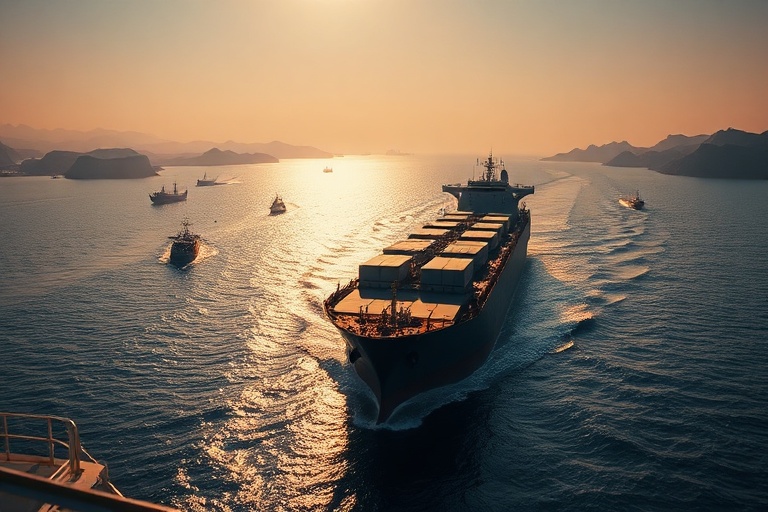
Strait of Hormuz: The World’s Most Volatile Oil Chokepoint
“`html
The Strait of Hormuz: Where Oil Flows and Tensions Collide
The Strait of Hormuz isn’t just a narrow strip of water between Iran and Oman—it’s the circulatory system of the global oil market. Roughly a third of the world’s seaborne oil passes through this 21-mile-wide channel, making it the most critical chokepoint in international energy trade. When tensions rise here, they ripple across financial markets, political alliances, and even dinner tables from Houston to Hong Kong.
This isn’t a new phenomenon. The strait has been a flashpoint for decades, but recent years have seen an escalation in incidents that threaten to disrupt supply chains and destabilize economies. The interplay of geopolitics, regional conflicts, and the sheer volume of oil flowing through its waters creates a volatile mix that demands global attention. Understanding the Strait of Hormuz means looking beyond the headlines to see how energy security shapes modern diplomacy and conflict.
The Strategic Importance of the Strait
Every day, tankers carrying millions of barrels of crude oil navigate the Strait of Hormuz, a bottleneck that funnels energy from the oil-rich nations of the Persian Gulf to markets across Asia, Europe, and beyond. The strait’s significance lies not just in its narrow width—it’s the only sea route connecting the Gulf of Oman to the Persian Gulf, leaving no alternative for tankers heading to or from major producers like Saudi Arabia, Iraq, and the UAE.
The numbers tell the story. In 2023 alone, an estimated 21 million barrels of oil per day passed through the strait, according to the U.S. Energy Information Administration. That’s about 20% of the world’s total oil supply. Disruptions here, whether due to military conflict, sabotage, or political maneuvering, send shockwaves through energy markets, causing prices to spike and forcing importers to scramble for alternatives.
For countries like China, India, and Japan—major importers of Middle Eastern oil—the strait is non-negotiable. Diversifying supply isn’t easy. While pipelines exist, they can’t match the volume or flexibility of seaborne transport. This dependency gives the strait an outsized influence on global energy security, making it a focal point for both economic and military strategies.
A History of Tensions and Incidents
The Strait of Hormuz has long been a theater for geopolitical maneuvering. The 1980s saw tankers caught in the crossfire of the Iran-Iraq War, with attacks on shipping becoming a regular occurrence. Fast forward to 2019, and the region faced one of its most dramatic escalations when drones and limpet mines targeted tankers near the strait, an incident widely attributed to Iran. The attacks, which damaged several vessels, sent oil prices climbing and underscored the fragility of the region’s stability.
More recently, the shadow war between Israel and Iran has spilled into these waters. In 2021, an Israeli-linked tanker was struck by a drone off the coast of Oman, an attack Iran denied but which highlighted the strait’s vulnerability to proxy conflicts. The incident was a stark reminder that the strait isn’t just a physical chokepoint—it’s a battleground where regional rivalries play out in real time.
These incidents aren’t isolated. They’re part of a broader pattern of escalation that includes cyberattacks, seizures of foreign vessels, and military posturing. The U.S. and its allies have responded with increased naval patrols and sanctions, while Iran has leveraged its geographic advantage to pressure opponents. The result is a delicate balance of deterrence, where any miscalculation could trigger a wider conflict.
The Human and Economic Cost of Disruption
When the flow of oil through the Strait of Hormuz slows or stops, the consequences are immediate and far-reaching. For importing nations, the impact is felt in higher fuel prices, inflation, and economic uncertainty. In 2022, when Russia’s invasion of Ukraine sent global oil prices soaring, the specter of a Strait of Hormuz blockade loomed large, prompting calls for emergency stockpiles and alternative supply routes.
The human cost is equally stark. Countries like Yemen, already grappling with famine and conflict, rely on food imports shipped through the strait. A prolonged disruption could trigger shortages and humanitarian crises. Meanwhile, the sailors and crews navigating these waters face risks that go beyond routine shipping hazards—geopolitical tensions add a layer of danger that’s impossible to ignore.
For the oil-producing nations of the Gulf, the strait is both a blessing and a curse. While oil wealth has transformed economies like Saudi Arabia and the UAE into global players, it has also made them targets. The reliance on a single chokepoint leaves them vulnerable to external pressures, forcing them to balance between asserting their interests and avoiding escalation.
Who Holds the Keys to the Strait?
The Strait of Hormuz isn’t just a natural feature—it’s a geopolitical prize. Control over its waters is a point of contention between regional powers, global players, and local actors. Iran, in particular, has positioned itself as the de facto guardian of the strait, using its naval capabilities to assert influence and deter adversaries.
But Iran isn’t alone in its ambitions. The U.S. has maintained a strong naval presence in the region for decades, conducting joint patrols with allies like the UK and Australia. These operations, like the U.S. Fifth Fleet based in Bahrain, are meant to ensure freedom of navigation and deter aggression. Yet, their presence is a constant reminder of the strait’s militarization, which only adds to the volatility.
Other players, including China and Russia, have also sought to expand their influence in the region. China’s growing energy ties with Iran and its investments in Gulf ports have raised eyebrows in Washington, while Russia’s military cooperation with Iran has further complicated the geopolitical landscape. The result is a multilateral tug-of-war where oil, security, and power intersect.
For smaller nations like Oman and the UAE, the strait is a double-edged sword. While they benefit from the trade passing through their waters, they also bear the brunt of any instability. Oman, in particular, has positioned itself as a mediator, hosting talks between regional rivals and advocating for diplomatic solutions. Its neutrality is a rare stabilizing force in an otherwise volatile environment.
What’s Next for the Strait of Hormuz?
The future of the Strait of Hormuz hinges on a fragile balance of power, diplomacy, and economic necessity. One possible scenario is a gradual de-escalation, where regional players find common ground to reduce tensions and ensure the free flow of oil. This could involve renewed negotiations, confidence-building measures, or even international guarantees for the strait’s security.
Another possibility is continued confrontation, with incidents like ship seizures or cyberattacks becoming more frequent. In this scenario, the risk of a wider conflict grows, pulling in global powers and disrupting energy markets for years to come. The 2020 attack on a Saudi oil facility, attributed to Iran-backed Houthi rebels, offered a glimpse of this potential nightmare.
For now, the world remains caught in between. Oil markets are resilient, but they’re not invincible. The International Energy Agency has warned that a severe disruption in the strait could remove up to 5 million barrels of oil per day from global supply—a scenario that would send prices skyrocketing and tip the global economy into recession. Governments and corporations are hedging their bets, stockpiling oil and exploring alternative routes like the East African coast or Arctic shipping lanes.
Yet, none of these alternatives can fully replace the Strait of Hormuz. The sheer volume of oil flowing through its waters makes it indispensable, and its strategic location ensures it will remain a focal point for geopolitics. The question isn’t whether the strait will continue to matter—it’s how the world will adapt to its volatility.
Preparing for the Unpredictable
In an era of shifting alliances and rising tensions, the Strait of Hormuz demands proactive measures. Countries must invest in diversifying their energy supplies, while also strengthening their naval capabilities to protect shipping lanes. For corporations, hedging against supply chain disruptions isn’t optional—it’s essential.
Diplomacy, too, must take center stage. Multilateral agreements that guarantee the strait’s security could provide a much-needed buffer against escalation. The Joint Comprehensive Plan of Action (JCPOA), despite its flaws, was one such effort to reduce tensions in the region. Reviving similar frameworks may be the only way to prevent the strait from becoming a flashpoint for global conflict.
The Strait of Hormuz is more than a geographic feature—it’s a symbol of the world’s interconnectedness and fragility. Its waters carry not just oil, but the weight of global stability. As long as this chokepoint remains vital to the world’s energy supply, its fate will continue to shape the course of history.
The lessons are clear: adaptability, diplomacy, and foresight are the keys to navigating the uncertainties of the Strait of Hormuz. Whether through innovation, negotiation, or deterrence, the world must find a way to keep the oil flowing—and the peace intact.