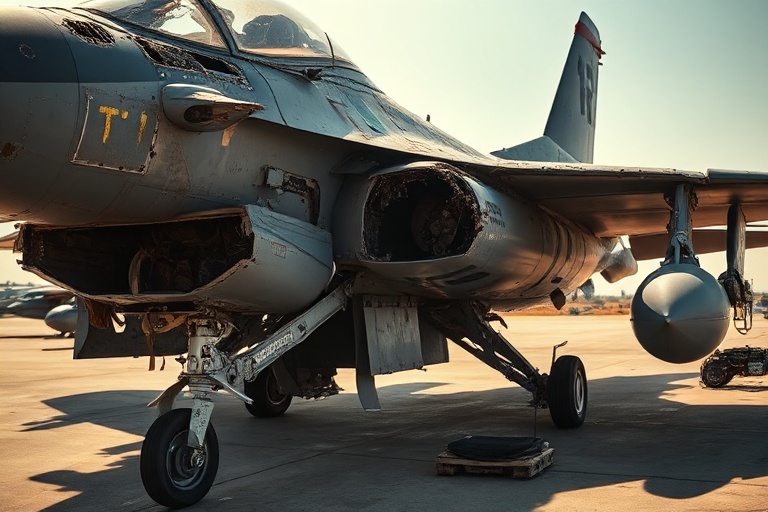
Understanding Operation Epic Fury and Its Military Context
Operation Epic Fury emerged as a pivotal military campaign in the early 21st century, characterized by its rapid deployment of advanced aerial assets and strategic precision strikes. Launched in response to escalating regional conflicts, the operation involved a coalition of allied forces deploying cutting-edge aircraft to neutralize high-value targets while minimizing collateral damage. The scope of the operation extended beyond traditional warfare, incorporating electronic warfare, cyber defense, and real-time intelligence integration.
The aircraft deployed during Operation Epic Fury represented some of the most sophisticated platforms in modern aviation. These included fifth-generation stealth fighters, long-range bombers, and unmanned aerial vehicles (UAVs) equipped with precision-guided munitions. The operational tempo demanded seamless coordination between air, land, and naval forces, with aircraft serving as the vanguard of the coalition’s firepower. Mission success hinged on maintaining air superiority while mitigating vulnerabilities to enemy countermeasures.
The Role of Technology in Shaping Aerial Combat
Technology played a defining role in Operation Epic Fury, particularly in how aircraft damage was assessed and addressed. Stealth technology, for instance, allowed coalition jets to penetrate heavily defended airspace with reduced radar signatures, but even these advanced platforms were not immune to damage. The integration of AI-driven diagnostics enabled ground crews to identify structural weaknesses, engine failures, and avionics malfunctions with unprecedented accuracy.
One of the most significant technological advancements was the use of augmented reality (AR) systems in maintenance operations. Technicians equipped with AR headsets could overlay schematics onto damaged aircraft, highlighting stress points and suggesting repair protocols in real time. This innovation drastically reduced turnaround times for aircraft repairs, ensuring a higher sortie rate and sustained operational readiness. However, the reliance on digital systems also introduced new vulnerabilities, as cyber attacks on maintenance networks could potentially compromise aircraft integrity.
Analyzing Aircraft Damage During Operation Epic Fury
Aircraft damage during Operation Epic Fury varied widely depending on mission profiles, enemy threats, and environmental conditions. The most common forms of damage included:
- Ballistic impacts: Caused by anti-aircraft artillery, surface-to-air missiles (SAMs), and small arms fire during low-altitude missions.
- Shrapnel damage: Resulting from proximity detonations of enemy munitions, often compromising fuselage integrity and flight control surfaces.
- Engine and turbine damage: High-temperature exhaust gases and foreign object debris (FOD) could degrade turbine blades, leading to power loss or total engine failure.
- Avionics failures: Electromagnetic interference, cyber attacks, or physical damage to sensors and communication systems could render aircraft combat ineffective.
- Structural fatigue: Repeated high-G maneuvers and sustained supersonic flight could induce metal fatigue, particularly in older airframes pressed into service.
The psychological toll on pilots and maintainers was equally significant. Pilots returning from missions with damaged aircraft often faced scrutiny over their decision-making, while ground crews endured grueling hours to restore aircraft to mission-capable status. The pressure to maintain a high operational tempo led to fatigue-related errors, further exacerbating damage rates.
Global Perspectives on Aircraft Damage and Repair
The challenges of aircraft damage assessment and repair during Operation Epic Fury were not confined to the conflict zone. Allied nations contributed resources, expertise, and personnel to sustain the operation, highlighting the interconnected nature of modern military logistics. For example, European allies provided specialized repair teams and spare parts, while Asian partners contributed advanced composite materials for fuselage repairs.
In the Middle East, local contractors played a crucial role in rapid damage assessment. These contractors, often former military technicians, possessed intimate knowledge of both coalition and enemy aircraft systems. Their expertise was invaluable in identifying damage patterns specific to regional threats, such as the use of improvised explosive devices (IEDs) and low-cost anti-aircraft systems.
Meanwhile, in the United States, the Defense Advanced Research Projects Agency (DARPA) accelerated research into self-healing materials and autonomous repair drones. These initiatives aimed to reduce the reliance on human intervention in high-risk repair scenarios, particularly in contested environments where ground crews could not safely operate.
The Human Cost of Aircraft Damage and Maintenance
Beyond the mechanical and technological aspects, Operation Epic Fury underscored the human cost of aircraft damage. Maintainers and pilots often worked in high-stress environments, where a single oversight could result in catastrophic failure. The loss of aircraft and lives became a sobering reminder of the stakes involved in modern aerial warfare.
For maintainers, the experience was physically and emotionally taxing. Long deployments, extreme weather conditions, and the constant threat of enemy attacks created a high-pressure environment. Many reported symptoms of burnout, including sleep deprivation, anxiety, and depression. The military’s response included mental health support programs, but the stigma surrounding psychological stress often prevented personnel from seeking help.
Pilots, too, faced immense pressure. The loss of an aircraft often meant the loss of a comrade, and the psychological burden of returning to base with a damaged jet weighed heavily on their minds. Debriefings after each mission became critical not only for tactical analysis but also for assessing the mental state of the crew.
Lessons Learned and the Future of Aerial Warfare
Operation Epic Fury provided valuable lessons for future military operations, particularly in how aircraft damage is managed and mitigated. One key takeaway was the importance of modular design in aircraft construction. Modular airframes allowed for quicker replacement of damaged sections, reducing downtime and improving operational flexibility. The F-35 Lightning II, for instance, was designed with this principle in mind, enabling rapid field repairs with minimal specialized tooling.
Another critical insight was the need for enhanced training programs for maintainers and pilots. Simulation-based training, incorporating real-world damage scenarios, became a standard component of military aviation curricula. These programs not only improved technical proficiency but also reinforced the importance of teamwork and communication under pressure.
Looking ahead, the future of aerial warfare will likely see even greater integration of automation and AI in damage assessment and repair. Autonomous drones equipped with advanced sensors could conduct inspections in high-risk environments, while AI-driven predictive maintenance systems could anticipate failures before they occur. However, the human element will remain irreplaceable, particularly in decision-making roles where judgment and intuition are paramount.
Conclusion: The Enduring Legacy of Operation Epic Fury
Operation Epic Fury stands as a testament to the complexities of modern aerial warfare, where technological innovation intersects with human resilience. The aircraft damage sustained during the operation highlighted the vulnerabilities of even the most advanced military platforms, while also showcasing the ingenuity of those tasked with repairing them. The lessons learned from this campaign continue to shape military doctrine, aircraft design, and personnel training, ensuring that future generations of aviators and maintainers are better prepared for the challenges ahead.
As global tensions evolve, the principles of rapid damage assessment, modular repair, and human-centered support will remain central to maintaining air superiority. Operation Epic Fury may have been a chapter in history, but its legacy endures in the ongoing quest to balance technological advancement with the unyielding spirit of those who keep the skies safe.
For further insights into military aviation and technological advancements, explore our News and Technology sections.