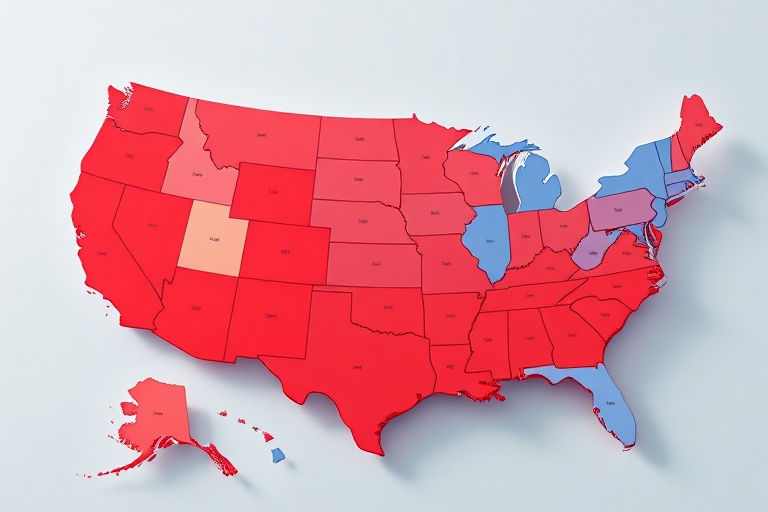
Donald Trump’s political influence remains one of the most closely tracked metrics in American politics, particularly his approval ratings across different states. These numbers not only reflect his base’s loyalty but also highlight regional divides that shape electoral outcomes. Understanding these variations provides insight into broader political trends, from the solid red states to the competitive battlegrounds.
Approval ratings by state offer more than just a snapshot of public opinion—they reveal cultural and economic fault lines. States like Wyoming and Idaho consistently show strong support, while others like California and New York remain overwhelmingly opposed. These patterns underscore how geography, demographics, and local issues influence political sentiment in ways that transcend national headlines.
How Trump’s Approval Ratings Vary Across the U.S.
Trump’s approval ratings fluctuate dramatically depending on the state. Some regions have remained steadfast in their support, while others have shifted over time due to changing political dynamics or local leadership changes. The following list highlights key trends observed in recent polling data:
- Solid Red States: Wyoming, North Dakota, and Alabama have maintained approval ratings above 50%, with some exceeding 60%. These states often align with Trump’s core base, valuing his economic policies and cultural messaging.
- Competitive Battlegrounds: States like Florida, Ohio, and Iowa show more volatility. Florida, for instance, has seen approval ratings swing between 45% and 52% in recent months, reflecting its status as a critical swing state.
- Blue Strongholds: California, New York, and Vermont consistently report approval ratings below 30%. These states are dominated by Democratic voters who oppose Trump’s policies on issues like healthcare and climate change.
- Rust Belt Shifts: Pennsylvania, Michigan, and Wisconsin—key to Trump’s 2016 victory—have seen approval ratings hover around 40-45%. These states remain critical to both parties, with economic concerns playing a major role in voter sentiment.
The Role of Local Issues in Shaping Approval Ratings
Approval ratings are not just about national politics; they are deeply influenced by local issues. For example, states with strong agricultural sectors may support Trump’s trade policies, even if they conflict with urban interests. Meanwhile, states with large immigrant populations might oppose his immigration stance, regardless of economic benefits.
Economic policies also play a significant role. States like Texas and Tennessee, which have seen job growth in recent years, often report higher approval ratings. Conversely, states struggling with unemployment or declining industries may show lower support, even if they traditionally lean conservative.
Cultural factors cannot be ignored either. In states with strong evangelical populations, Trump’s alignment with conservative social values often boosts his approval. In contrast, secular urban centers tend to reject his rhetoric, regardless of policy outcomes.
Comparing Trump’s Ratings to Other Presidents
Historically, Trump’s approval ratings have been among the most polarized in modern American history. While previous presidents saw approval ratings dip or rise gradually, Trump’s numbers have remained consistently divided along partisan lines. This polarization reflects deeper societal fractures that extend beyond politics.
For comparison, Barack Obama’s approval ratings were more fluid, with broader appeal across different regions. Even in red states, his approval rarely dropped below 30%. Trump, however, has maintained a core base of supporters who remain loyal despite controversies or policy shifts.
This steadfast support has allowed him to remain a dominant force in the Republican Party, even as other figures rise and fall. His ability to retain high approval ratings in key states has made him a formidable candidate in future elections.
What the Future Holds for Trump’s Approval Ratings
The trajectory of Trump’s approval ratings will depend on several factors, including economic performance, major policy decisions, and the actions of his opponents. If the economy continues to grow, particularly in states that benefited from his tax cuts, his approval could stabilize or even improve in key regions.
However, if economic conditions worsen or if he faces significant legal or political challenges, his ratings could decline further in competitive states. The rise of new political figures, both within and outside the Republican Party, may also shift the landscape, particularly if they appeal to disaffected voters in battleground regions.
One thing is clear: Trump’s approval ratings will remain a critical barometer of American political sentiment. For journalists, analysts, and voters alike, these numbers provide a window into the evolving priorities and divisions of the country.
For those interested in the broader implications of these trends, exploring how other political figures have shaped regional approval ratings—such as Politics on Dave’s Locker—can offer valuable context. Understanding these dynamics is essential for navigating the complexities of modern American politics.