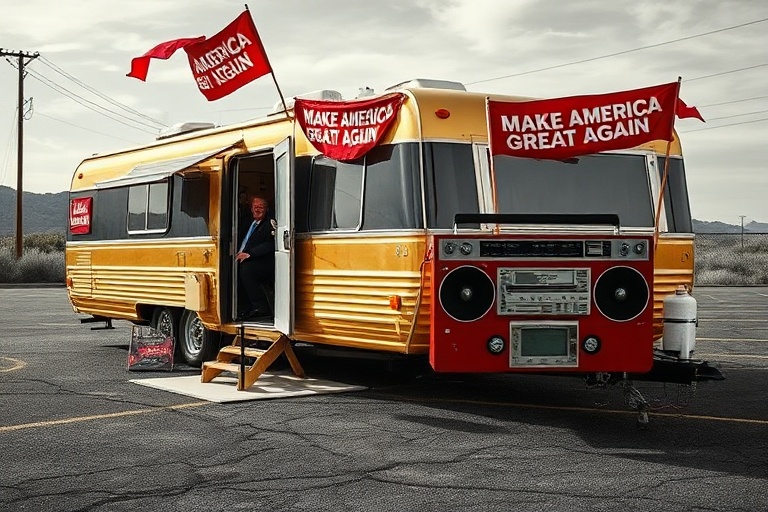
Trump Mobile: The Rise and Fall of a Political Smartphone Brand
“`html
What Is Trump Mobile?
Trump Mobile isn’t just another smartphone brand. It’s a political statement wrapped in a device, a merger of technology and ideology sold under the former U.S. president’s name. Launched in 2024, the brand positioned itself as a “patriotic alternative” to major tech giants, offering phones with pre-installed apps, custom wallpapers, and a user interface themed around red, white, and blue.
But beyond the marketing, Trump Mobile became a cultural flashpoint. Supporters saw it as a way to “own the libs” by rejecting Silicon Valley’s perceived liberal bias. Critics argued it was a gimmick that exploited political divisions for profit. Regardless of perspective, the brand forced a conversation about technology’s role in politics—and whether consumer products should carry ideological branding at all.
A Global Product With Local Reactions
While Trump Mobile was designed for the U.S. market, its ripple effects were felt worldwide. In Europe, where tech regulation is strict and political neutrality in branding is often expected, the product sparked debates about corporate responsibility. Some retailers refused to stock it, citing concerns over hate speech filters and data privacy policies that aligned with far-right rhetoric.
In Asia, where nationalism is strong but consumer tech is dominated by domestic brands like Huawei and Samsung, Trump Mobile struggled to gain traction. A few pro-Trump influencers tried to market it as a “freedom phone,” but most consumers saw it as a novelty rather than a serious competitor. Meanwhile, in Latin America, the brand found niche appeal among conservative groups, particularly in countries with rising populist movements.
Features and Flaws: What’s Inside the Device?
Trump Mobile devices ran on a modified version of Android, stripped of certain apps and loaded with patriotic wallpapers, ringtones featuring speeches, and a “Trump News” widget that aggregated conservative media outlets. The hardware itself was mid-range, outsourced to manufacturers in China and India—ironic, given the brand’s anti-China rhetoric.
Key Features
- Trump OS: A custom interface with a red, white, and blue theme, featuring quick access to Trump’s social media feeds and speeches.
- Pre-installed Apps: Exclusive apps like “Truth Social,” “Trump Polls,” and “America First News.”
- Limited Data Collection: Marketed as a “privacy-focused” alternative, though security experts questioned how user data was handled.
- Hardware Bundles: Some models included a “patriotic accessory pack” with a red MAGA hat clip and a wireless charger shaped like the Statue of Liberty.
Controversies and Criticisms
The device was criticized from day one. Privacy advocates warned that the pre-installed apps could serve as surveillance tools. Consumer groups pointed out that the phones were prone to overheating and had poor battery life—issues later linked to rushed manufacturing. Most damning, however, was the revelation that the “Trump News” widget was algorithmically biased, suppressing mainstream sources while amplifying fringe outlets.
Why Did It Fail—and What Does That Say About Political Tech?
Despite early hype from loyal supporters, Trump Mobile never achieved mass adoption. By 2025, the brand had quietly exited the market, its devices sold off at deep discounts. The collapse wasn’t just about poor quality or limited appeal—it reflected a broader truth: political tech brands struggle to sustain themselves when ideology clashes with practicality.
Companies like Apple and Samsung don’t market their phones with partisan slogans because neutrality sells globally. Even brands like Tesla, which aligns closely with Elon Musk’s personal brand, avoid overt political messaging in their products. Trump Mobile proved that while political identity can drive initial sales, long-term success requires more than just a logo.
Lessons for the Future of Political Tech
The failure of Trump Mobile offers several insights for future ventures blending politics and technology:
- Ideology ≠ Reliability: Consumers may buy into a brand’s message, but they won’t tolerate poor performance.
- Global Markets Demand Neutrality: A phone marketed in the U.S. as conservative may face backlash in Europe or Asia.
- Regulation Looms: Governments are increasingly scrutinizing tech platforms for bias, which could extend to hardware branding.
- Sustainability Matters: Political tech brands often rely on short-term hype rather than long-term innovation.
Trump Mobile may be gone, but its legacy lingers. It showed that in an era where every product is politicized—from sneakers to soda—tech is no exception. The question now is whether the next political tech brand will learn from its mistakes or double down on the same flawed model.
A Cultural Footnote
Trump Mobile’s brief existence became a meme before it became a phone. Late-night comedians mocked its aesthetic. Late-night infomercials parodied its claims. Even its logo—a red “T” inside a white circle—was co-opted by satirists who turned it into a symbol of absurdity.
Yet, for a moment, it represented something real: the intersection of consumerism and identity politics. In a world where personal beliefs are increasingly tied to purchasing power, Trump Mobile wasn’t just a phone. It was a statement. And like all statements, it was met with both applause and outrage.
“It’s not the device that defined Trump Mobile—it was the debate it started.” — Tech Analyst, The Verge
In the end, Trump Mobile’s greatest contribution may not be its hardware, but the questions it forced us to ask: Can technology truly be neutral? Should it be? And what happens when a phone isn’t just a phone, but a manifesto?