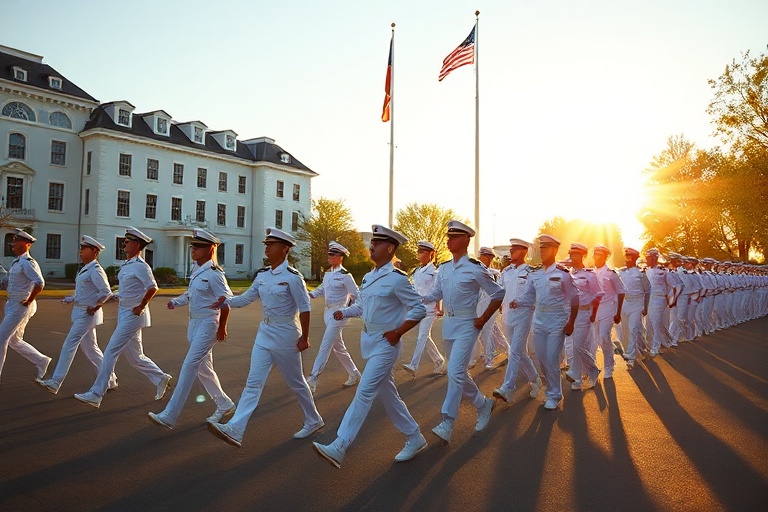
What Makes the U.S. Coast Guard Academy a Global Leader in Maritime Training
“`html
The United States Coast Guard Academy: A Global Model in Maritime Leadership
The United States Coast Guard Academy (USCGA) in New London, Connecticut, stands as a unique institution within the American education system. Unlike other federal service academies, it combines rigorous academic training with military discipline, preparing cadets for careers in maritime law enforcement, search and rescue, environmental protection, and national defense. With a global perspective that extends beyond U.S. borders, the Academy has become a benchmark for maritime education worldwide.
Established in 1876, the USCGA has evolved from a small training school for Revenue Cutter Service officers into a premier institution that upholds the traditions of service while embracing modern challenges. Its alumni include leaders in coast guard operations across the globe, from the icy waters of the Arctic to the tropical shores of the Pacific. The Academy’s influence is not confined to the United States; it serves as a case study for nations developing their own maritime academies.
A Curriculum Designed for the Open Ocean and Beyond
The USCGA’s academic program is structured to provide a well-rounded education that balances engineering, science, and leadership. Cadets pursue degrees in fields such as marine engineering, naval architecture, and marine science, all while completing military training that mirrors the demands of real-world operations. The curriculum is designed to be rigorous, ensuring graduates are prepared to handle the complexities of maritime governance in an era of climate change and geopolitical tension.
One of the Academy’s standout features is its emphasis on experiential learning. Cadets spend significant time at sea, operating vessels in conditions that test their technical skills and mental resilience. This hands-on approach is not just about navigation; it’s about understanding the human element of maritime operations—whether rescuing stranded sailors or enforcing fisheries laws in disputed waters. The Academy’s training fleet includes modern cutters and smaller boats, providing a diverse range of operational experiences.
Beyond technical training, the USCGA places a strong emphasis on global awareness. Cadets study international maritime law, piracy prevention, and environmental treaties, ensuring they are equipped to operate in a world where borders are increasingly fluid. This global mindset is reinforced through exchange programs with allied nations, allowing cadets to learn from counterparts in Europe, Asia, and South America. Such collaborations highlight the USCGA’s role as a bridge between American maritime traditions and international best practices.
The Academy’s Role in Shaping Global Maritime Security
The USCGA’s influence extends far beyond its campus in New London. Its graduates have played pivotal roles in shaping maritime security policies worldwide, from combating drug trafficking in the Caribbean to supporting humanitarian missions in Southeast Asia. The Academy’s approach to leadership—rooted in integrity, adaptability, and service—has made it a model for other nations seeking to professionalize their coast guard forces.
In regions like the South China Sea, where territorial disputes and illegal fishing are persistent issues, the principles taught at the USCGA are highly relevant. The Academy’s focus on rule-based maritime governance aligns with international efforts to maintain stability on the high seas. Cadets learn not just how to operate ships, but how to navigate the political and legal complexities that define modern maritime security.
One notable example of the USCGA’s global impact is its role in training officers from allied nations. Through programs like the International Cadet Training (ICT), the Academy hosts midshipmen from countries such as Japan, South Korea, and the Philippines. These exchanges foster mutual understanding and create networks of professionals who can collaborate effectively in times of crisis. The USCGA’s alumni network, spanning over 140 countries, serves as a testament to its far-reaching influence.
Challenges and Adaptations in a Changing World
Despite its long-standing reputation, the USCGA faces challenges that reflect broader trends in global maritime security. Climate change, for instance, is altering the operational landscape, with melting ice caps opening new shipping routes and rising sea levels threatening coastal communities. The Academy has responded by expanding its curriculum to include courses on Arctic operations, renewable energy, and disaster response. Cadets now train in ice navigation and learn about the environmental impacts of maritime activities, ensuring they are prepared for the realities of a warming planet.
Another challenge is the increasing sophistication of maritime threats, from cyberattacks on shipping infrastructure to the proliferation of sophisticated smuggling networks. The USCGA has adapted by integrating cybersecurity and intelligence training into its programs. Cadets now learn to analyze digital threats and develop strategies to protect critical maritime assets. This evolution reflects the Academy’s commitment to staying ahead of the curve in an ever-changing security environment.
The USCGA also grapples with the need to attract diverse talent. While the Academy has made strides in increasing gender and racial representation among its cadets, it continues to work toward creating an inclusive environment where all individuals can thrive. Initiatives such as mentorship programs and outreach to underserved communities aim to ensure that the next generation of maritime leaders reflects the diversity of the global population.
Why the Coast Guard Academy Matters in Today’s World
The USCGA is more than just a training ground for future coast guard officers; it is a symbol of America’s commitment to maritime excellence. In an era where the oceans are becoming increasingly contested, the Academy’s role in promoting safe, lawful, and sustainable use of the seas is more critical than ever. Its graduates serve not only as defenders of U.S. interests but as stewards of global maritime governance.
The Academy’s influence can be seen in the partnerships it fosters with organizations like the International Maritime Organization (IMO) and the United Nations Office on Drugs and Crime (UNODC). These collaborations underscore the USCGA’s role as a leader in international maritime security, working alongside allies to combat threats such as piracy, human trafficking, and environmental degradation.
For those considering a career in maritime service, the USCGA offers a path that is as challenging as it is rewarding. The Academy’s blend of academic excellence, military discipline, and global perspective prepares cadets for roles that extend far beyond the classroom. Whether patrolling the waters of the Arctic or supporting disaster relief efforts in the Pacific, graduates of the USCGA embody the values of service, integrity, and excellence that define the institution.
For more insights into maritime careers and training programs, explore our Education section for resources on specialized training and leadership development in the maritime sector.
—