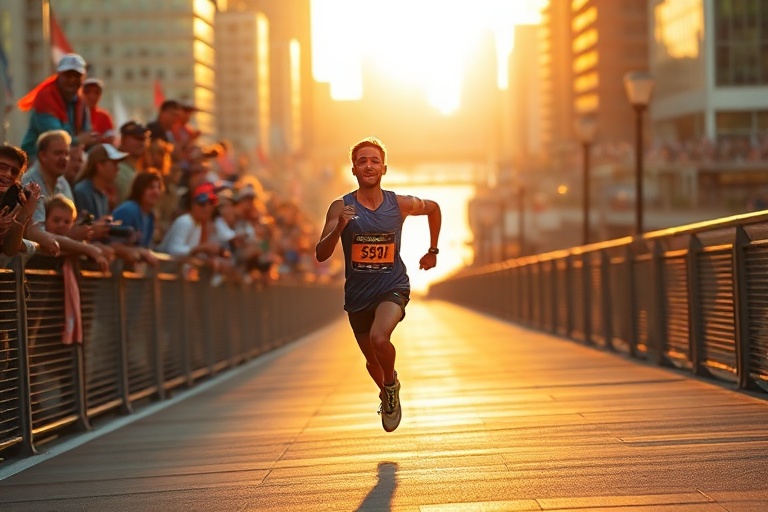
The 5K run remains one of the most accessible yet impactful forms of exercise worldwide. At 3.1 miles, it strikes a balance between challenge and achievability, making it a favorite among beginners and seasoned runners alike. Unlike longer distances that demand months of training, a 5K can be completed with minimal preparation—yet it still offers measurable health benefits and a sense of accomplishment.
What makes this distance so enduring? Its simplicity is part of the appeal. A standard 5K race requires no specialized gear beyond a pair of running shoes, and the training schedule can fit into even the busiest schedules. For many, it serves as a gateway to fitness, a social event, or a competitive outlet. Its versatility has cemented its place in gyms, parks, and community centers across the globe.
The Rise of the 5K: A Brief History
The 5K’s origins trace back to the metric system’s adoption in the mid-20th century. Prior to that, races were measured in miles, with the 3-mile distance being a common standard in the UK and Commonwealth countries. When international track and field organizations standardized events, the 5K became the closest metric equivalent to the traditional 3-mile race.
By the 1970s and 1980s, the 5K distance gained further popularity as road racing boomed in the United States. Events like the Peachtree Road Race in Atlanta and the Falmouth Road Race in Massachusetts drew thousands of participants, proving that a relatively short race could still draw massive crowds. Today, the 5K is the most popular race distance in the world, outpacing even the marathon in sheer participation numbers.
Its simplicity also made it a natural fit for charity runs. Organizations quickly recognized the 5K’s potential to engage large groups of people in fundraising efforts without the intimidation factor of longer distances. Events like the Susan G. Komen Race for the Cure have raised billions through 5Ks, blending fitness with philanthropy.
Why the 5K Works for Everyone
The 5K’s universal appeal lies in its adaptability. Whether you’re a time-crunched professional, a parent juggling childcare, or a retiree looking to stay active, the distance accommodates all lifestyles. Here’s why it’s so effective:
- Accessibility: Training for a 5K requires no expensive equipment or gym membership. A pair of supportive shoes and a safe route are all you need to start.
- Quick Results: Unlike marathon training, which can take months, a 5K can be completed in as little as 6-8 weeks with consistent effort. This rapid turnaround keeps motivation high.
- Community Building: 5Ks are social by nature. Whether you join a local running club or sign up for a themed event like a color run, the shared experience fosters connections.
- Measurable Progress: The distance is short enough to track improvements weekly. Many runners use apps like Strava or Garmin to monitor pace and distance, adding a data-driven layer to their training.
- Low Injury Risk: Compared to longer distances, the 5K is less taxing on the body. This makes it ideal for injury-prone individuals or those returning from a break from exercise.
For competitive runners, the 5K offers a different kind of challenge. While marathons test endurance, the 5K is a test of speed and efficiency. Elite runners can complete the distance in under 13 minutes, while casual participants might finish in 30-40 minutes. This range ensures that the race remains engaging whether you’re chasing a personal best or just hoping to finish.
The Broader Impact of 5K Culture
The 5K’s influence extends beyond individual fitness. It has become a cultural touchstone, reflecting societal trends in health, community, and even technology. For example, the rise of virtual 5Ks during the COVID-19 pandemic demonstrated how adaptable the distance is. With races canceled worldwide, organizers pivoted to online formats, allowing participants to run wherever they were—whether in their neighborhoods or on a treadmill at home. Platforms like Dave’s Locker Sports saw a surge in virtual race sign-ups, proving that the 5K’s appeal isn’t tied to a specific location.
Technology has also played a role in the 5K’s evolution. Wearable devices like Fitbit and Apple Watch have gamified the distance, turning it into a daily challenge for users. Apps like Nike Run Club offer guided training plans, while Strava’s segment features allow runners to compete against others on the same route. This digital integration has made the 5K more interactive than ever before.
On a societal level, the 5K has become a tool for addressing public health crises. Cities like New York and London have hosted massive 5K events in underserved communities to promote physical activity and combat obesity. Schools, too, have embraced the distance as a way to introduce children to running in a fun, non-competitive way. Programs like Dave’s Locker Health highlight how structured 5K training can improve cardiovascular health, reduce stress, and even boost academic performance in students.
How to Get Started with Your First 5K
If you’re new to running or looking to tackle your first 5K, the key is to start slow and build consistency. Here’s a simple roadmap to guide your training:
- Set a Goal: Decide whether you want to finish the race or aim for a specific time. Beginners often focus on finishing, while more experienced runners might target a sub-30-minute time.
- Choose a Plan: Many free training plans are available online, such as Couch to 5K, which gradually increases your running time over 8-9 weeks. Apps like C25K (Couch to 5K) are beginner-friendly and include motivational cues.
- Invest in the Right Gear: A good pair of running shoes is essential to prevent injuries. Visit a specialty running store to get fitted for the right pair. Moisture-wicking clothing will also keep you comfortable during your runs.
- Practice Consistently: Aim for 3-4 runs per week, mixing short runs with longer ones. Include rest days to allow your body to recover.
- Join a Community: Running groups, whether in-person or online, can provide motivation and accountability. Many local stores and gyms host group runs for all levels.
- Day-of Preparation: On race day, arrive early to warm up and familiarize yourself with the course. Start at a comfortable pace—it’s easy to get caught up in the excitement and burn out too soon.
- Celebrate Your Achievement: Finishing a 5K is a milestone worth celebrating. Take time to reflect on your progress and set your next goal, whether it’s improving your time or tackling a longer distance.
The 5K’s enduring popularity isn’t an accident. It’s a testament to the distance’s ability to adapt to changing times while remaining rooted in simplicity and accessibility. Whether you’re lacing up for the first time or chasing a new personal record, the 5K offers something for everyone. In a world that often glorifies extremes, the 5K stands out as a reminder that progress doesn’t always require monumental effort—sometimes, all it takes is 3.1 miles.
So why not give it a try? Sign up for a local race, find a training plan that works for you, and join the millions of people who’ve discovered the joy of the 5K. Your journey starts with a single step—or, in this case, a single stride.