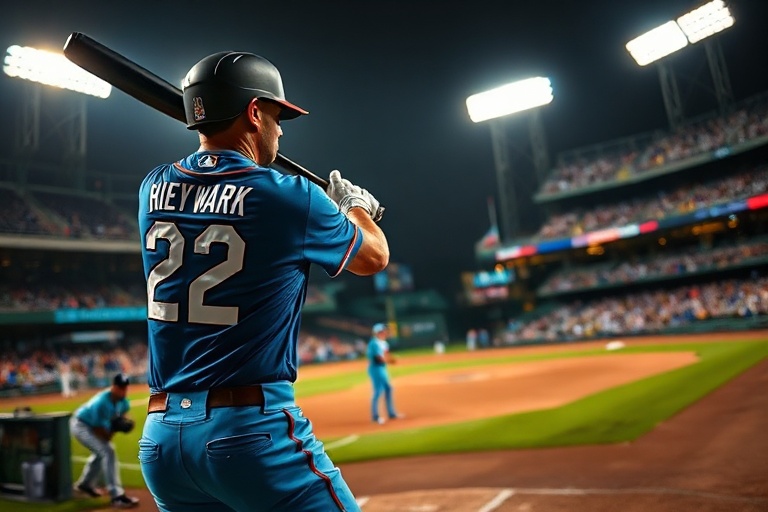
The Atlanta Braves and Miami Marlins may share the same league, but they represent two distinct visions of Major League Baseball in 2024. One is a perennial contender built on power, tradition, and deep pockets. The other is a team rebuilding with young talent, hoping to write its own story in a city where baseball’s future is still being written.
This contrast isn’t just about wins and losses. It’s a reflection of baseball’s broader challenges: the growing gap between haves and have-nots, the struggle to cultivate fan bases in non-traditional markets, and the constant debate over what the sport should prioritize—glory, entertainment, or accessibility. As the Braves chase another postseason run and the Marlins search for consistency, their rivalry offers a window into baseball’s evolving identity.
The Braves’ Dynasty Mentality: Tradition Meets Modern Ambition
Few teams embody the modern MLB dynasty like the Atlanta Braves. Since their 2021 World Series victory, they’ve remained a model franchise, blending analytics-driven decision-making with a roster stacked with both homegrown stars and high-priced acquisitions. Their success isn’t accidental—it’s the result of a carefully constructed blueprint that prioritizes pitching depth, power hitting, and organizational stability.
Manager Brian Snitker, now in his seventh season, has become the steady hand guiding this machine. His leadership style, often described as unflashy but effective, contrasts with the high-energy approaches seen elsewhere in the league. The Braves don’t rely on gimmicks; they win with fundamentals—strong starting pitching, timely hitting, and a bullpen that rarely falters.
Off the field, the Braves have also mastered the art of fan engagement. Truist Park, their gleaming stadium in the heart of Cobb County, is a destination not just for baseball, but for experiences. From concerts to college football games, the venue has become a year-round hub, proving that in today’s sports landscape, the stadium itself can be as much a draw as the team.
A Global Perspective: How Atlanta’s Approach Mirrors Elite Clubs Worldwide
The Braves’ model is reminiscent of European football’s richest clubs, like Real Madrid or Manchester City, where financial power and long-term planning create dynasties. Just as those teams invest heavily in youth academies and data analytics, Atlanta has built a farm system that consistently produces talent—Ronald Acuña Jr. being the crown jewel—while also making calculated splashes in free agency.
This strategy has paid off. The Braves’ 2023 season, despite falling short in the playoffs, reinforced their status as a model franchise. Their ability to adapt—whether by trading for key relievers at the deadline or developing pitching prospects like Spencer Strider—shows why they’re often cited as a blueprint for success in modern baseball.
The Marlins’ Rebuild: Miami’s Quest to Carve Out Its Own Baseball Identity
Across the division, the Miami Marlins are playing a different game. Years removed from their 2020 playoff run, they’re in the midst of a rebuild, trading away veterans for prospects and hoping to build something sustainable in a city where football and basketball dominate the conversation. It’s a strategy that’s both pragmatic and risky—pragmatic because it ensures long-term stability, risky because patience is a luxury few fan bases are willing to offer.
Manager Skip Schumaker, entering his third season, has become the face of this transition. His no-nonsense approach resonates with a young roster that’s still finding its footing. Players like Jazz Chisholm Jr. and Sandy Alcantara embody the Marlins’ philosophy: athleticism, speed, and a refusal to overcomplicate the game.
Yet, the Marlins face an uphill battle. Miami’s baseball culture is still developing. The Marlins Park (now loanDepot Park) is a stunning venue, but attendance often pales in comparison to the high-octane crowds of NFL or NBA games. The team’s leadership has tried to bridge this gap by hosting events like the MLB Mexico Series and emphasizing Latino heritage, but building a die-hard fan base takes time.
The Cultural Divide: Baseball’s Struggle in America’s Most Diverse City
Miami is a global city—where cultures, languages, and sports loyalties collide. Baseball, once the unquestioned king of American sports, now competes with soccer, cricket, and esports for attention. The Marlins’ challenge isn’t just on the field; it’s about relevance in a city where baseball is just one of many passions.
Contrast this with Atlanta, where baseball has deep roots. The Braves’ history dates back to the 1870s, and their fan base reflects the city’s growth into a major metropolis. In Miami, baseball is still fighting for its place in the sun.
What This Rivalry Reveals About Baseball’s Future
The Braves vs. Marlins rivalry isn’t just about standings; it’s a microcosm of baseball’s broader struggles and opportunities. The Braves represent the league’s elite—teams with the resources to compete year after year. The Marlins, meanwhile, embody the hope and uncertainty of rebuilding in a non-traditional market.
This divide raises important questions about the sport’s future. Should baseball prioritize parity, giving every team a chance to compete? Or is it okay for a handful of franchises to dominate while others rebuild? The answer may shape the league’s direction for decades.
Three Key Takeaways from the Braves-Marlins Dynamic
- Financial Power vs. Long-Term Vision: The Braves’ success is built on financial might, but the Marlins’ rebuild shows that smart drafting and player development can level the playing field—eventually.
- Fan Engagement in a Crowded Market: Atlanta’s ability to turn Truist Park into a year-round destination contrasts with Miami’s struggle to fill seats, highlighting the importance of creating experiences beyond the game itself.
- Cultural Relevance: Baseball’s challenge in Miami reflects broader issues of making the sport resonate in diverse, fast-changing cities—a task the Braves have mastered but the Marlins are still learning.
Conclusion: A Rivalry That’s More Than Just a Series
The Braves and Marlins may not always be on equal footing, but their rivalry is a reminder that baseball is more than just a game. It’s a reflection of culture, economics, and the ever-shifting landscape of American sports. As the Braves chase another championship and the Marlins build toward an uncertain future, their story is one worth watching—not just for the wins and losses, but for what it tells us about the soul of the sport.
One thing is certain: in a league where dynasties and rebuilds collide, the Braves vs. Marlins matchup is far more than just another series. It’s a clash of philosophies, a battle for relevance, and a glimpse into baseball’s past, present, and future.
For more sports coverage, visit our Sports section.
Explore baseball’s greatest moments and trends in our Analysis category.