The Indian political landscape has long been a fertile ground for satire, but few creations have matched the absurd yet incisive charm of the Cockroach Janata Party. This meme-turned-movement emerged from the depths of internet culture, blending dark humor with pointed commentary on India’s democratic process. It started as a joke, but its staying power suggests something deeper at play—a public hungry for ways to process political fatigue.
The Origins of a Political Meme
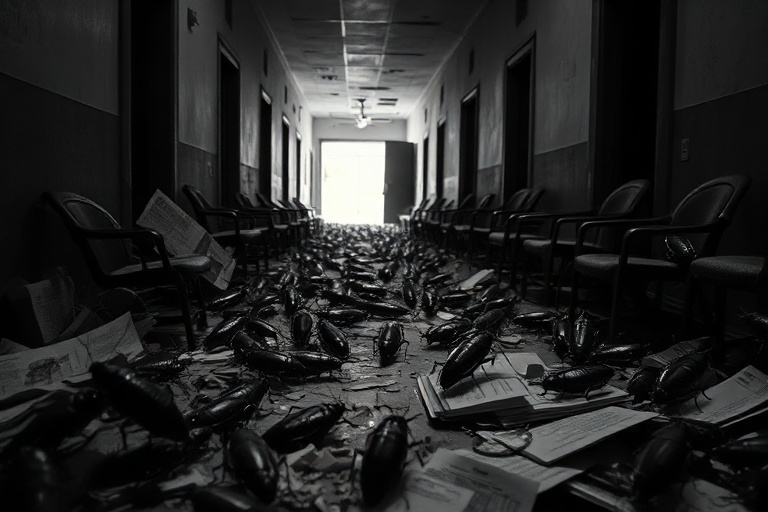
The Cockroach Janata Party (CJP) first slithered into public consciousness in early 2023, when a Twitter user posted a manipulated image of cockroaches dressed in Indian political party attire. The caption read, “When your party wins but democracy loses.” What began as a simple meme quickly spiraled into a broader commentary on political survivalism.
Unlike traditional political satire, which often targets specific leaders or parties, the CJP thrived on universality. Cockroaches, after all, are survivors—adaptable, resilient, and nearly impossible to eradicate. This metaphor struck a chord in an era where political allegiances shift as unpredictably as public sentiment.
The meme’s popularity was amplified by its adaptability. Users began creating variations, placing cockroaches in different political scenarios—negotiating alliances, giving speeches, and even forming shadow cabinets. Each iteration reinforced the idea that, in modern Indian politics, survival often matters more than ideology.
Why It Stuck: The Psychology Behind the Satire
The Cockroach Janata Party resonated because it articulated a collective frustration. In a country where political disillusionment runs deep, humor becomes a coping mechanism. The meme allowed people to laugh at the absurdity of politics rather than succumb to cynicism.
Research into political humor suggests that satire flourishes during periods of instability. When citizens feel powerless, they turn to irony as a form of resistance. The CJP did exactly that—it turned political stagnation into a joke, thereby reclaiming a sense of agency.
Its rise also coincided with the decline of traditional political satire in mainstream media. While late-night shows and news satire once dominated, the internet democratized humor, allowing niche jokes like the CJP to thrive. Platforms like Twitter and Instagram became breeding grounds for this kind of absurdist political commentary.
The Broader Impact on Political Discourse
The Cockroach Janata Party’s influence extended beyond memes. It sparked conversations about the nature of political parties in India, particularly those that seem to outlast scandals and leadership changes. The BJP, Congress, and regional parties all faced scrutiny under this unforgiving lens.
One notable aspect of the CJP phenomenon was its decentralized nature. Unlike structured political satire, which relies on established creators or media outlets, the CJP grew organically from user-generated content. Fans of the meme curated collections, wrote satirical manifestos, and even staged mock “election campaigns” for the cockroach party.
This organic growth highlighted a shift in how political ideas spread in the digital age. Memes, once dismissed as frivolous, now play a role in shaping public perception. The CJP proved that humor could be as influential as traditional campaign rhetoric.
A Look at the Memes That Defined the Movement
The Cockroach Janata Party’s appeal lay in its visual and thematic versatility. Below are some of the most iconic iterations that circulated online:
- “The Survivalist Manifesto” – A parody of political manifestos, listing survival tactics like “blame the opposition” and “reinvent ideology as needed.”
- “Cockroach Parliament Sessions” – Edited clips of real parliamentary debates with cockroach overlays, emphasizing the surreal nature of political discourse.
- “Alliance Negotiations” – A series of memes depicting cockroaches “shaking hands” with other parties, symbolizing opportunistic coalitions.
- “Election Night” – A darkly humorous take on election results, where a single cockroach survives amidst a pile of defeated parties.
These memes weren’t just jokes—they were a form of cultural commentary. By reducing politics to its most basic survival instincts, the CJP forced audiences to confront uncomfortable truths about governance and power.
The Future of Political Satire in India
The Cockroach Janata Party may have started as a fleeting internet joke, but its legacy endures. It demonstrated the power of memes as tools of political critique, proving that even the most absurd ideas can carry weight.
Looking ahead, the CJP could inspire more political satire rooted in resilience and adaptability. As India’s political landscape continues to evolve, so too will the ways in which citizens engage with it—whether through protest, parody, or sheer persistence.
For now, the Cockroach Janata Party remains a reminder that in the world of politics, survival often trumps ideology—and sometimes, the best way to cope is to laugh.
To explore more about political satire and internet culture, check out our News and Culture sections for deeper analysis.