Ferrari in F1: A Legacy of Speed and Innovation Explored
“`html
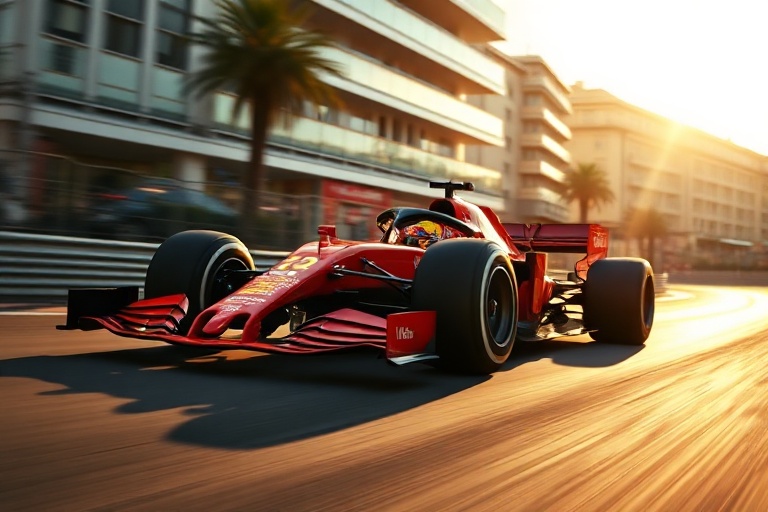
Ferrari in F1: A Legacy of Speed and Innovation
Ferrari’s presence in Formula 1 is not just a team affiliation—it’s a cultural institution woven into the fabric of motorsport history. Since the championship’s inception in 1950, the Italian marque has stood as a symbol of passion, rivalry, and relentless pursuit of excellence. While the team has experienced peaks and valleys, its identity remains inseparable from F1’s identity itself.
The Origins and Early Dominance of Ferrari in F1
Enzo Ferrari founded Scuderia Ferrari in 1929 as a racing team before it evolved into a full-fledged manufacturer. By 1950, when the first official Formula 1 World Championship was held, Ferrari was already a dominant force. The team’s first race, the 1950 British Grand Prix, set the tone for decades to come.
Key to this early success was the Ferrari 125 F1, powered by a 1.5-liter V12 engine designed by Gioacchino Colombo. It wasn’t long before Alberto Ascari delivered Ferrari’s first world championship in 1952, followed by another in 1953. These victories cemented Ferrari’s reputation as a constructor with both engineering brilliance and racing pedigree.
The 1960s saw Ferrari continue its dominance, particularly with John Surtees winning the 1964 drivers’ title and the team securing multiple constructors’ championships. The team’s cars were not just fast—they were works of art, combining aesthetic elegance with mechanical innovation.
Milestones in Ferrari’s Early F1 History
- 1950: Ferrari enters the first F1 World Championship race at Silverstone.
- 1952–1953: Alberto Ascari wins back-to-back world titles, establishing Ferrari as a frontrunner.
- 1961: Phil Hill becomes the first American to win the F1 World Championship, driving for Ferrari.
- 1964: John Surtees secures both the drivers’ and constructors’ titles, marking a historic double.
The Modern Era: Triumphs, Struggles, and the Schumacher Effect
The late 1990s and early 2000s represented a defining chapter for Ferrari in F1. The arrival of Michael Schumacher in 1996 marked the beginning of a golden era. Paired with technical director Ross Brawn and chief designer Rory Byrne, Schumacher and Ferrari redefined success in the sport.
Between 1999 and 2004, Ferrari won six consecutive constructors’ championships and five consecutive drivers’ titles, a record that still stands. Schumacher’s relentless work ethic, combined with Ferrari’s meticulous development process, created a team that was nearly unbeatable. The 2002 season, in particular, saw Ferrari win 15 of 17 races—an unmatched level of dominance.
Yet, this period was not without controversy. Ferrari’s success often sparked debates about team orders, such as in the 2002 Austrian Grand Prix, where Rubens Barrichello was instructed to yield to Schumacher. These moments fueled narratives about Ferrari’s ruthless competitiveness, for better or worse.
The Schumacher era ended in 2006, but Ferrari’s competitive spirit persisted. Kimi Räikkönen won the 2007 drivers’ title in a dramatic final race, while Fernando Alonso brought further success in 2008. However, the team’s competitive decline began to show in the 2010s, as rivals like Red Bull and Mercedes surged ahead.
Key Factors Behind Ferrari’s Modern Success
- Driver Lineup: The pairing of Schumacher with Barrichello, and later Räikkönen with Massa, created a balanced and high-performing duo.
- Technical Innovation: Brawn’s aerodynamic expertise and Byrne’s chassis design led to cars like the F2002 and F2004, which set benchmarks in performance.
- Team Culture: Ferrari’s emphasis on loyalty, long-term planning, and relentless testing fostered an environment of continuous improvement.
- Engineering Synergy: The close collaboration between the race team and the factory in Maranello ensured rapid development and real-world validation.
Ferrari’s Role in Shaping F1’s Commercial and Cultural Landscape
Beyond the track, Ferrari’s influence extends into the broader ecosystem of Formula 1. The team’s historic status has made it a cornerstone of F1’s commercial appeal. Ferrari is the only team to compete in every season of the championship, a feat that underscores its unmatched continuity and prestige.
This consistency has translated into significant financial and marketing power. Ferrari’s brand value is one of the highest in motorsport, driven by a global fanbase known as the “Tifosi.” The team’s iconic prancing horse logo is instantly recognizable, transcending the sport to become a symbol of Italian excellence and automotive artistry.
Moreover, Ferrari has played a pivotal role in shaping F1’s regulatory and commercial landscapes. The team’s demand for competitive balance led to the introduction of cost caps and resource restrictions in 2021. Ferrari’s push for financial fairness reflects its dual identity as both a competitor and a stakeholder in the sport’s future.
In recent years, Ferrari has also embraced sustainability initiatives, aligning its racing ambitions with broader environmental goals. The team’s SF-23 and SF-24 cars incorporate biofuels and energy-efficient technologies, signaling a shift toward greener motorsport.
What’s Next for Ferrari in F1?
As Formula 1 enters a new era with ground-effect aerodynamics and sustainable fuels, Ferrari remains at the forefront of innovation. The 2022 regulatory changes forced teams to rethink their approach, and Ferrari’s adaptation has been a study in strategic patience. While the team has not yet returned to championship contention, its recent performances—including Charles Leclerc’s pole positions and podiums—suggest a resurgence is possible.
Looking ahead, Ferrari’s focus on youth development and technical agility will be critical. The team’s investment in simulators, wind tunnels, and data analytics places it in a strong position to compete with rivals like Red Bull and Mercedes. Additionally, the arrival of new leadership, including team principal Fred Vasseur, has introduced fresh perspectives.
The 2024 season looms as a potential turning point. With a renewed emphasis on aerodynamics and energy recovery systems, Ferrari is poised to challenge for victories. The question is not whether Ferrari will return to the top—but when.
For fans, the wait is part of the romance. Ferrari’s history is a tapestry of near-misses and triumphs, each chapter adding to its legend. Whether it’s a race win in Monza or a drivers’ title in Abu Dhabi, Ferrari’s story in F1 is far from over.
Why Ferrari’s F1 Journey Matters
Ferrari’s story in Formula 1 is more than a tale of speed and competition. It is a reflection of motorsport’s evolution, commercial dynamics, and cultural significance. The team’s ability to endure through technological shifts, regulatory changes, and shifting competitive landscapes underscores its resilience.
For aspiring engineers, drivers, and fans, Ferrari represents the pinnacle of what motorsport can achieve. It is a reminder that success is not just about winning—it’s about passion, perseverance, and the relentless pursuit of greatness.
As F1 continues to evolve, one thing remains certain: as long as there is a Ferrari on the grid, the world will keep watching.
For more insights into motorsport history and current trends, visit Dave’s Locker Sports or explore Automotive Coverage.